



















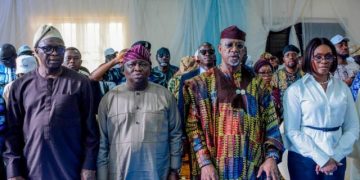


















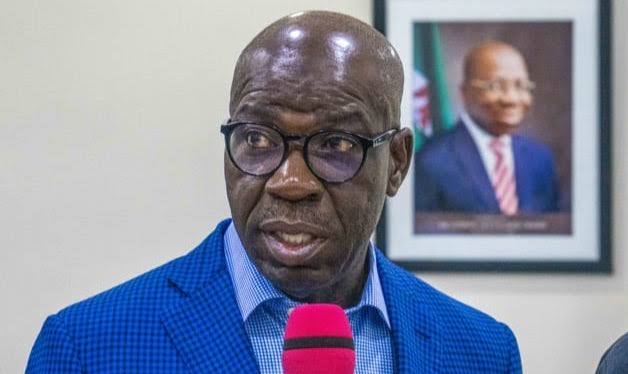
WorldStage– Investigative committee chaired by former Governor Adams Oshiomhole has revealed that the Edo State Government under former Governor Godwin Obaseki spent ₦3.8 billion of taxpayers’ money on the Museum of West African Art (MOWAA) project.
The report, formally submitted on August 20, 2026, to the current Edo State Governor, Monday Okpebholo, concluded an intense probe into the ownership, financing, and status of the controversial cultural project.
The committee noted that Obaseki’s administration repeatedly altered the project’s name for personal reasons. It was initially planned as the Benin Royal Museum, later changed to the Edo Museum of West African Art (EMOWA), and finally to MOWAA.
According to the committee, the state originally committed to funding a royal museum on land provided by the Palace. Instead, the old Central Hospital was demolished to create a repurposed cultural district funded heavily by the state, raising ₦800 million in initial seed money alongside the final ₦3.8 billion
Despite billions in public investment, MOWAA was registered as a charitable trust in Nigeria and the UK, offering no equity or structural ownership rights back to the state government, the committee reported.
The special panel recommended renaming the facility to the Benin Royal Museum of African Art. To ensure proper management and cultural alignment, the committee urged Governor Okpebholo to hand the institution over to the Oba of Benin, Oba Ewuare II.
This, according to it, aligns with previous legislative pressure from the Edo State House of Assembly, which demanded the state take complete possession of the premises since public funds entirely built it.
In response to the mounting controversy, representatives for Godwin Obaseki stated that the ₦3.8 billion contribution was only a fraction of the total project cost.
They claimed the investment successfully leveraged vast global backing from entities like the German government and the Ford Foundation.
Obaseki dismissed the probe as anti-development politics driven by fear, maintaining that the museum remains historical, transparently audited, and culturally rooted in Benin City.