






























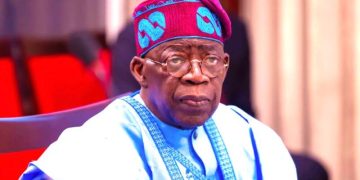









WorldStage– Attempts by opposition leaders in Nigeria to forge a united front ahead of the upcoming general elections have hit a major brick wall, as former Vice President Atiku Abubakar, Peter Obi, and other key political figures failed to agree on a single consensus candidate to challenge President Bola Ahmed Tinubu.
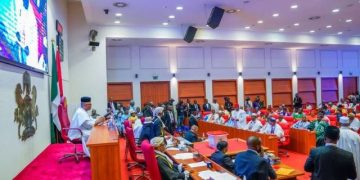
Nigeria’s opposition parties failed to reach an immediate agreement on a single presidential candidate to challenge President Bola Ahmed Tinubu in the 2027 election, as the G-100 opposition summit holds in Abuja on Monday, August 31, 2026.
The summit, held at the Shehu Musa Yar’Adua Centre, brings together representatives of six opposition parties, ADC, APM, NDC, PDP, PRP and SDP. However, major presidential contenders, including Atiku Abubakar and Peter Obi, are absent.
The G-100 has clarified that the immediate objective of the summit is not to select a presidential candidate, but to establish a framework for cooperation, coordination and a possible broader opposition alliance ahead of the 2027 election.
The development highlights one of the opposition’s biggest challenges. While several opposition groups favour cooperation against the ruling APC, major political figures including Atiku, Obi, Rabiu Kwankwaso and others remain associated with different political platforms and presidential ambitions.
The G-100 has proposed a Government of National Competence built around a single four-year transition term. But the politically more difficult question of who ultimately emerges as the alliance’s presidential candidate remains unresolved.
With the latest development, no single opposition candidate has emerged to consolidate the votes of the various opposition blocs against Tinubu.
Whether the ongoing negotiations can overcome competing ambitions and produce a unified candidate could become one of the defining questions of the 2027 presidential election.
According to reports coming from the office of organizers, months of high-stakes, behind-the-scenes negotiations aimed at merging structures or forming a grand coalition have collapsed due to conflicting ambitions, deep-seated party rivalries, and disagreements over zoning formulas.
Insiders close to the talks reveal that neither Atiku, representing the People’s Democratic Party (PDP), nor Obi, leading the Labour Party (LP), was willing to step down for the other, with both claiming the rightful mandate to lead the opposition assault.
Atiku’s camp reportedly pointed to his extensive national political network and established institutional structure as the only viable vehicle capable of unseating the ruling All Progressives Congress (APC).
Conversely, allies of Peter Obi insisted that his massive, youth-driven Obidient movement represents the genuine yearning of Nigerians for a paradigm shift, arguing that presenting an older establishment candidate would alienate voters.
The fragmentation deepens with the stance of other prominent opposition figures, including the New Nigeria People’s Party (NNPP) leadership and disgruntled regional power-brokers, who refused to yield their platforms without strict guarantees on structural power-sharing.
This inability to compromise mirrors the political landscape of previous election cycles, where a fractured opposition inadvertently smoothed the ruling party’s path to victory.
Political analysts warn that this latest deadlock severely weakens the opposition’s chances of disrupting the status quo.
By splitting the anti-incumbency vote across multiple party lines, the opposition risks diluting its collective electoral strength in crucial battleground states.
Meanwhile, the ruling APC has reportedly expressed confidence in its structure, viewing the opposition’s internal discord as a confirmation of its administrative dominance and stability.
As the legal deadlines for official candidate submissions and coalition registrations rapidly approach, the window for a unified alliance is virtually shut, leaving voters with a highly fragmented ballot.
With Atiku, Obi, and other candidates now set to run independent campaigns, the race for the presidency has officially transformed into a multi-pronged battle, elevating the stakes for an already tense political season.