


















































WorldStage– The Federal Airports Authority of Nigeria (FAAN) has committed to prioritising simple, efficient and adaptable technologies to improve airport operations and passenger experience while accommodating the country’s diverse population.
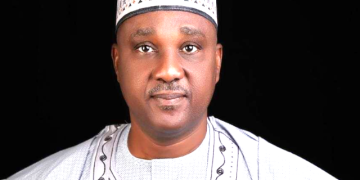
FAAN’s Managing Director, Mrs Olubunmi Onabanjo-Kuku, said this in a statement issued in Lagos on Sunday.
The statement quoted Onabanjo-Kuku as making the remarks during a panel session at the World Aviation Festival in Lisbon, with the theme: “Defining the Airport of the Future: Technology, Partnerships and People.”
She said Nigeria’s more than 250 languages and diverse demographics made it necessary to adopt airport technologies that catered to different categories of passengers rather than rely on a one-size-fits-all approach.
“Nigeria is a very diverse country. We have passengers from different communities, over 250 different languages, which of course I can not put on the e-gates or on the technology.
“So you need to put simple and efficient things that work for the particular demographic that I have; whether it is the younger passengers or the older passengers,” she said.
Onabanjo-Kuku stressed the need to ensure that revenue generated through aviation charges was channelled towards the specific purposes for which the fees were collected, particularly airport modernisation, safety and security.
Acknowledging that technology upgrades and infrastructure improvements could affect pricing, Onabanjo-Kuku said FAAN was engaging the government to ensure that a greater proportion of the revenue remained available for airport development.
“We are also lobbying the government to say, look, we understand that in this particular situation, maybe a portion of the fees are coming back to government, but we want to ensure that the majority of the fees that are collected stays with the airport and is focused on the purpose.
“Whether it is the aviation security charge used for safety and security equipment and modernisation or the passenger service charge used for the terminal upgrades, the landside upgrades, and what is supposed to be used for,” she said.
On airport accessibility, Onabanjo-Kuku highlighted collaboration between the federal and state governments to improve connections between cities and airports.
She said Abuja already had a rail system linking the city to the airport, while efforts were underway to modernise the rail system in Lagos.
She added that FAAN was working towards completing the financing structure for the rail system project.
“What it does is it allows us to connect the city very quickly to the airport.
“With five stops within our airport Murtala Muhammed International Airport (MMIA), connecting our terminals, connecting our cargo terminals to the last stop,” she said.
She described the project as a collaboration between the state government and the federal government.
Onobanjo-Kuku said the Authority’s investment strategy was anchored on three priorities, with safety taking precedence and particular attention given to airside infrastructure to sustain essential airport operations.
She said FAAN had rehabilitated major airports over the past three years, including the six primary international airports in Lagos, Abuja, Port Harcourt, Kano, Enugu and Maiduguri.
The FAAN boss noted that the interventions included complete runway resurfacing, runway extensions where possible at two airports and improvements to airfield lighting systems.
However, she noted that investment decisions had to reflect the distribution of passenger traffic across the country while ensuring that airports with lower traffic volumes were not neglected.
According to her, three airports account for about 80 per cent of Nigeria’s air traffic, with Lagos alone handling 68 per cent.
In spite of the concentration of traffic at the busiest airports, she said FAAN remained responsible for prioritising infrastructure needs across the country’s other 19 airports, in addition to the five airports it supports.
At MMIA, Lagos, Onabanjo-Kuku said Terminal 1 was undergoing comprehensive rehabilitation to improve operational efficiency and passenger movement.
She said the project included reconfiguring the Immigration and Customs counters to make them more passenger-friendly, alongside upgrades to technology and infrastructure.
Reiterating the need for context-specific solutions, she said airport development must reflect the unique operating conditions and passenger needs of each country.
“For each of the countries and for each environment, it’s not a one-size-fits-all.
“We really need to pay attention and understand that the technology needs to be adaptable to that particular environment,” she said.