

































WorldStage– The Central Bank of Nigeria (CBN) has taken concrete steps to strengthen Nigeria’s financial connectivity with Asia, signing a key innovation agreement and engaging top institutions in Singapore in a move expected to unlock greater investment flows, deepen capital markets and support long-term economic growth.
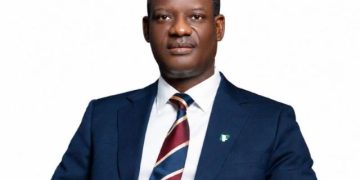
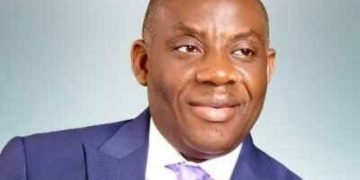
En route to the IMF–World Bank Annual Meetings in Bangkok, CBN Governor Olayemi Cardoso led a series of high-level engagements in Singapore focused on institutional cooperation, financial-market development and innovation.
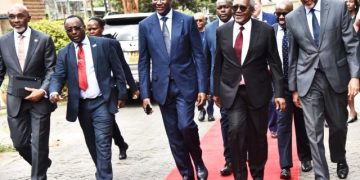
The activities included discussions with the Monetary Authority of Singapore (MAS), the signing of a Memorandum of Understanding (MoU) with the Global Finance & Technology Network (GFTN), and the Nigeria–Asia Financial Connectivity Dialogue convened in partnership with J.P. Morgan, Nigerian Exchange Group (NGX) and FMDQ Group.
The engagements are designed to translate Nigeria’s recent financial-sector reforms into practical channels for investment, trade and financial innovation. By building stronger links with one of Asia’s leading financial hubs, the CBN aims to enhance market confidence, improve liquidity and create more reliable pathways for both domestic and international capital.
In talks with MAS, the CBN exchanged views on financial-sector development, regulation, market connectivity and emerging technologies, identifying areas for ongoing collaboration that could support the growth of deeper and more efficient markets in Nigeria.
The MoU with GFTN establishes a formal framework for cooperation on financial innovation. It is expected to connect Nigerian and Singaporean institutions and innovation ecosystems, opening opportunities for knowledge exchange, technology transfer and joint initiatives that can strengthen Nigeria’s fintech sector and improve financial services delivery.
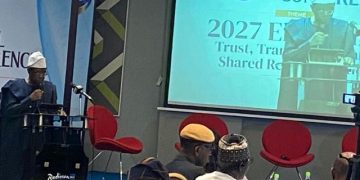
At the Nigeria–Asia Financial Connectivity Dialogue, hosted at J.P. Morgan’s Singapore offices, Governor Cardoso outlined Nigeria’s ambition to build deeper, more liquid and internationally connected financial markets. He positioned the country’s foreign-exchange reforms as critical to removing distortions, restoring transparency and rebuilding investor confidence.
“The real test of reform is not whether you can attract capital once; it is whether you create the confidence for capital to stay, return and grow,” Cardoso said.
He stressed that credible monetary policy, stronger governance, improved market functioning and predictable rules are essential for attracting sustained domestic and international investment.
Stabilisation, he noted, is the foundation for broader participation by long-term institutional capital and stronger connections with global financial markets.
The dialogue brought together investors, financial institutions, businesses and members of the Nigerian diaspora in Asia.
Discussions covered capital formation, foreign-exchange market confidence, the development of deeper markets, and the infrastructure required to support sustained international participation.
Cardoso emphasised that Nigeria’s engagement with Asia aims to go beyond short-term capital inflows. The focus includes building durable relationships between banks and market institutions, developing more efficient payments and settlement channels, and increasing participation by Nigerians living and working across the region.
He also highlighted the growing role of financial technology and artificial intelligence in improving services, risk management, financial inclusion and regulatory capabilities.
The Singapore engagements form part of a broader Asian outreach programme that includes further meetings in Beijing.
Collectively, these efforts are expected to strengthen Nigeria’s position as an investment destination, improve access to international capital, support market depth and liquidity, and create new economic opportunities through enhanced trade, innovation and institutional partnerships.