




















































WorldStage— The Executive Secretary of the Universal Basic Education Commission (UBEC), Dr. Aisha Garba, has said the digital Basic Education Action Plan Management System, BEAPMS, being introduced by the commission is to enable communities to participate in monitoring projects implemented under its roadmap.
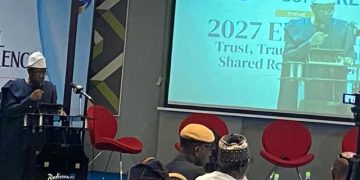
She made the disclosure in Abuja at a 2-day Consultative Workshop with chairmen of the 36 State Universal Basic Education Boards, SUBEBs, and UBEC directors.
She said the platform would be made public to allow parents and community members to track projects, funding and the quality of interventions delivered in their schools.
“This will also allow us to bring in the community to be part of the monitoring of the projects that we do on the ground,” she said.
She added that information on the amount of money accessed by each state would be published on the commission’s website, alongside details of projects being implemented.
“With that, community can hold us accountable to the money we have accessed from UBEC, and then also the projects we’re doing on the ground, as well as the quality of projects we’re doing,” she said.
The commission said the digital platform had been under development for more than a month and that the SUBEB chairmen were now fully onboarded ahead of the commencement of full implementation in October.
Also speaking, the Dean of SUBEB Chairmen, Prof. Shehu Adaramaja, said the consultation was important because it would help stakeholders establish a common direction for the delivery of basic education over the next decade.
“In the next two days, we’ll pay attention to all the strategies and the initiatives toward the development of a roadmap for the next 10 years on how to provide access, provide quality service, and of course, strengthen our systems in line with our new basic education management system,” he said.
Adaramaja, who is also the SUBEB Chairman of Kwara State, said the meeting was designed as a hands-on exercise, with directors of research and statistics expected to actively participate in developing the framework that would subsequently inform their states’ basic education action plans.
He also noted that UBEC’s intervention mandate was no longer limited to physical infrastructure, with other components now being incorporated to strengthen the delivery of basic education services.
Earlier, UBEC Director of Physical Planning, Arc. Nura Ibrahim, said the exercise would enable stakeholders to review and validate the proposed roadmap while drawing on their technical expertise and experience in implementing basic education programmes across the states.