












































A Pan-African credit rating agency, Agusto & Co, has identified critical economic variables that will influence Nigeria’s Gross Domestic Product (GDP) growth in 2024, focusing on interest, inflation and foreign exchange rates.
Agusto & Co is a provider of industry research and knowledge in Nigeria & Sub-Saharan Africa.
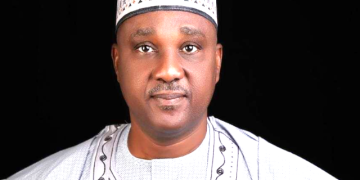
Mr Ayokunle Olubunmi, Head, Financial Institutions Ratings of the company, gave this insight at the bi-monthly forum of the Finance Correspondents Association of Nigeria (FICAN) on Thursday in Lagos.
Olubunmi said these factors play a pivotal role in shaping the country’s economic performance.
He explained how the level of interest rate, inflation rate and the rate of foreign exchange would drive Nigeria’s GDP growth to 2.6 per cent in severe case scenario, three per cent as a base case scenario, but at best, would not exceed five per cent in 2024.
While interest rates are crucial tools for monetary policy authorities to manage inflation and exchange rates, Olubunmi said that there is a trend towards higher interest rates, which is putting pressure on the Naira.
He said this led to a low interest rate environment, explaining that high rates moderate economic activities.
“That is why there are high expectations that the Monetary Policy Committee(MPC) of the CBN will increase interest rate by about 500 basis point at its forthcoming meeting this month.
However, the Nigerian government is borrowing massively and if interest rate is high, the cost of government services will also be high.
“This might discourage the MPC from raising the rates too high, adding that the average interest rate for the year might hover around 18 per cent as the best case scenario, and 16 per cent as the base case scenario, while it is expected that interest rate will not decrease below 15 per cent.
“It should be recalled that the 364-day treasury bills stop rates increased to 19 per cent per annum on Wednesday. Feb. 7, 2024.
“The 182-day and 91-day bills also rose to 18 per cent and 12.2 per cent and some analysts said the rates will likely continue to rise in the coming weeks as the CBN intensifies efforts to combat exchange rate depreciation.
On inflation, he said, “Insecurity is one of the major drivers for inflation. Unfortunately, insurgency, kidnapping and general insecurity are rife in the middle belt where they grow a lot of things that we eat,“ he said.
Nigeria’s inflation has been on the rise for 11 consecutive months, reaching a new high in December 2023, according to the National Bureau of Statistics (NBS).
The annual inflation rate rose to 28.92 per cent in December from 28.20 per cent in November.
According to him, aside from insecurity, the increase in exchange rate is also going to affect inflation.
He said because Nigeria is an import dependent country, rising cost of importation would have effect on the inflationary situation and invariably affect growth.
According to Olubunmi, a lot of factors affect inflation and the projection of the CBN Governor, Olayemi Cardoso, can only be realised if all the countervailing variables have been addressed.
To this effect, he said the best case scenario for inflation targeting is 21 per cent, base case or average inflation rate for 2024 he said would be 26.1 per cent while the worst case scenario would be 28.2 percent.
He said Nigeria’s foreign exchange earnings in 2024 would depend majorly on oil revenue and that the price of crude oil, which averaged 80 dollars per barrel in 2023, would likely settle around 70 dollars to 75 dollars pbl in 2024 .
He also said and that Nigeria’s crude oil production might not exceed 1.5 barrels per day in 2024.