























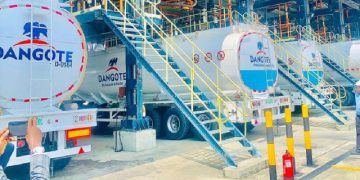


















WorldStage– The Dangote Petroleum Refinery has blacklisted six major oil marketers from purchasing its Premium Motor Spirit (PMS), sparking a severe protectionist rift in Nigeria’s downstream energy sector.
The mega-refinery decided to halt sales to Matrix Energy, A.A. Rano, AYM Shafa, NIPCO, Pinnacle Oil and Gas, and Bono Energy after they secured third-quarter import licences from the Nigerian Midstream and Downstream Petroleum Regulatory Authority (NMDPRA).
The move draws a clear battle line over the volume of foreign fuel entering Nigeria.
Internal data from the $19 billion Lekki facility shows that imported petrol accounted for roughly 43 percent of Nigeria’s total PMS supply in July.
Dangote executives argue that these imports directly erode the domestic market share their plant was built to serve.
Moving forward, the refinery says it will give strict sales priority to non-importing independent marketers.
The split directly changes the operational structure of local oil distribution.
By severing ties with heavyweights like Matrix Energy and A.A. Rano—firms managing over 720,000 metric tonnes of import allocations—Dangote is carving a fractured supply network.
Non-importing traders will rely exclusively on local refining gantries, while licensed importers will double down on international product shipments to feed their massive nationwide retail filling stations.
Furthermore, product traceability has become a central point of contention. Dangote remains concerned that lower-quality imported fuels could be blended with its local premium products at shared depots, making it difficult for regulators to distinguish its brand.
However, market experts caution that complete reliance on a single domestic refinery could expose Nigeria to immense supply shocks if production halts.
As the legal face-off continues in the Federal High Court, this decision guarantees a long-term commercial standoff.
It leaves the fate of Nigeria’s pump prices and energy security dependent on the delicate balance between corporate protectionism and free-market deregulation.