












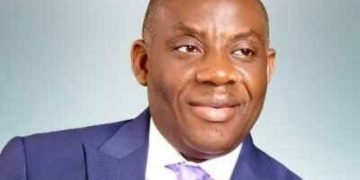


























WorldStage– The recent credit default of Geregu Power Plc on its N40.09 billion Series 1 Bond after missing its 8th semi-annual coupon payment and 4th principal bullet repayment totaling approximately N 6.03 billion has brought into spotlight the recurring corporate ventures’ patterns of its previous major owner, Femi Otedola, a billionaire, and his ongoing accumulation strategy at First HoldCo Plc, the parent company of FirstBank, where his stake has surpassed 26%.
Over ₦600 billion ($460 million) of Otedola’s personal wealth is said to have been deployed into First HoldCo shares in recent time as he signaled that his long-term goal mirrors his past core investments – to expand his holdings toward a potential 51% majority takeover over time.
This ambition is causing a ripple in the market, particularly on First HoldCo stock, as market analysts, investors, and regulators have observed recurring patterns involving intense stock volatility, sharp valuation swings, regulatory scrutiny, and sudden liquidity shocks in previous entities that Otedola ventured into.
https://www.worldstagenews.com/otedolas-interest-in-first-holdco-jumps-to-26-as-calvados-global-services-buys-fresh-138m-shares/: Concerns over First HoldCo as Otedola’s recurring corporate ventures’ patterns receive spotlight following Geregu Power’s N40b bond default https://www.worldstagenews.com/first-holdco-owotuga-transmutes-within-hours-to-executive-director/: Concerns over First HoldCo as Otedola’s recurring corporate ventures’ patterns receive spotlight following Geregu Power’s N40b bond default https://www.worldstagenews.com/first-holdcos-gross-earnings-up-26-83-with-resilient-core-banking-non-interest-incomes/: Concerns over First HoldCo as Otedola’s recurring corporate ventures’ patterns receive spotlight following Geregu Power’s N40b bond default https://www.worldstagenews.com/first-holdco-board-fails-gender-balance-test/: Concerns over First HoldCo as Otedola’s recurring corporate ventures’ patterns receive spotlight following Geregu Power’s N40b bond default https://www.worldstagenews.com/first-holdco-reshuffles-governance-across-subsidiaries/: Concerns over First HoldCo as Otedola’s recurring corporate ventures’ patterns receive spotlight following Geregu Power’s N40b bond default https://www.worldstagenews.com/geregu-powers-search-for-substantive-ceo-continues-after-corporate-bond-default-as-sani-jaoji-replaces-another-interim-boss-in-six-months/: Concerns over First HoldCo as Otedola’s recurring corporate ventures’ patterns receive spotlight following Geregu Power’s N40b bond default https://www.worldstagenews.com/geregu-power-profit-plunges-88-to-%e2%82%a62-50b-in-h1-2026-as-revenue-falls-sharply/: Concerns over First HoldCo as Otedola’s recurring corporate ventures’ patterns receive spotlight following Geregu Power’s N40b bond defaultFirst HoldCo has experienced significant bullish momentum on the Nigerian Exchange (NGX) in recent days, driven by stronger earnings, improved risk management, and a clean-up of legacy asset issues.
With market capitalization of ₦6.22 trillion, price trajectory showed that the stock traded near a 52-week peak of ₦145.40–₦150.00, rallying over 76% in the last month alone and up roughly 192% year-to-date. Over a 1-year period, the stock is up more than 320%, outperforming major sector peers amid high trading volume.
The fear in the market is that this price movement pattern is similar across Otedola’s major corporate ventures – African Petroleum (AP), Forte Oil, and Geregu Power.
Across these three corporate cycles, market commentators highlight a distinct operational footprint: high-profile listings or acquisitions accompanied by steep valuation expansion, followed by significant structural/liquidity strains or defaults coming to light shortly around periods of ownership changes and divestment.
AFRICAN PETROLEUM (AP) PLC
Allegations of Market Rigging & Price Collapse (2008–2009)
Extreme Valuation Trajectory: Under Otedola’s leadership via Zenon Oil, AP’s share price skyrocketed to an all-time high of over N293 per share before suffering a devastating crash to under N49 per share in early 2009.
Allegations & Investigations: Otedola publicly accused market rivals (specifically Nova Finance and Aliko Dangote) of orchestrating share price manipulation to crash AP’s value. Simultaneously, counter-petitions some entities alleged market-rigging by companies tied to Otedola.
Regulatory Outcome: The Securities and Exchange Commission (SEC) sanctioned stockbroking firms involved, but the incident highlighted structural vulnerabilities in exchange surveillance and liquidity management.
FORTE OIL PLC
Extreme Volatility & Post-Exit Devaluation (2014–2019)
Peak Boom-and-Bust Cycle: After rebranding AP as Forte Oil, the stock underwent another massive rally, driving Otedola’s wealth past $1.8 billion on the Forbes list. However, between 2016 and 2018, the stock tumbled by over 80% due to plunging global crude prices, local currency devaluation, and retail investor sell-offs.
Divestment & Rebranding: Otedola exited Forte Oil in 2019 by selling his controlling 75% stake to Ignite Investments (Ardova Plc). Following his exit, minority retail shareholders faced significant restructuring challenges and prolonged share price depression.
GEREGU POWER PLC
Capital Market Surge & Post-Exit Bond Default (2022–2026)
Rapid Capital Expansion: Geregu listed on the Nigerian Exchange (NGX) in October 2022 and quickly grew to become a market darling, seeing its stock price surge nearly 800% to peak above N1,100 per share.
Strategic Exit: In December 2025, Otedola divested his controlling interest in Geregu’s parent company (Amperion Power) to MA’AM Energy Limited in a transaction valued at $750 million, resigning as chairman.
Immediate Liquidity & Rating Shock: Eight months after the ownership transition, Geregu Power defaulted on a N6.03 billion obligation (covering its 8th coupon payment and 4th principal repayment on its N40.09 billion Series 1 bond). The default—occurring despite previously reported cash deposits of N31.77 billion led Agusto & Co. to withdraw its credit rating due to a lack of reliable financial disclosures, while the stock plummeted over 27% from its highs.
TRANSCORP PLC
Otedola Vs Elumelu, two captains in a ship
Before the romance with Geregu and now First HoldCo, Otedola who is not known to have built any major enterprise from the scratch had in April 2023 acquired a significant minority stake in Transcorp Plc (Transnational Corporation of Nigeria), a conglomerate chaired by Tony Elumelu with interests in power, hospitality, and oil & gas. Elumelu responded by sharply increasing his own holdings, after which Otedola sold his stake to Elumelu’s vehicle and exited.
Specifically, around April 11–12 and subsequent days, Otedola (via his investment vehicle) bought roughly 2.24–2.6 billion shares, starting at about 5.52% and rising to around 6.3%. This made him the largest individual shareholder at the time (Elumelu’s direct/indirect holdings were previously much smaller, around 2%). Some reports linked part of the purchase to shares from AMCON.
The move was sudden and market-moving. Transcorp’s share price more than doubled (gains of over 100–170% in weeks) as investors reacted to a high-profile buyer entering. Otedola was seen as targeting the company (particularly its power assets) and reportedly sought board influence. He later stated that he offered to buy the whole company for ₦250 billion to unlock value and push its market cap toward ₦2 trillion (from ₦40 billion then), but the offer was rejected.
Elumelu publicly welcomed the investment at first, and there was brief talk of collaboration.
Elumelu (via HH Capital / Heirs Holdings) later rapidly bought large blocks of shares—reports cite 9.7 billion additional shares in deals between about April 19–25—raising his stake to 25.5–25.9% (and later higher, toward 29.5% in some filings). This cemented his control as the dominant shareholder.
With Elumelu holding a clear majority of the key voting/control block, Otedola could not realistically take control. Sources describe negotiations (reportedly involving mutual friends/interveners such as Aliko Dangote in some accounts). Otedola sold his entire 6.3% stake (around 2.4–2.6 billion shares) to Elumelu’s side in late April 2023 (off-market deals around April 27–28).
Official reported price was around the then-market level (₦3.12 in one filing, for a nominal ₦7.5 billion), but multiple sources claimed Otedola exited at a substantial premium (some unconfirmed reports of 400% over a prior close, potentially netting tens of billions of naira $70 million range). Otedola said he sold because “two captains cannot man a ship” and he respected the majority shareholder’s position; he also framed it as healthy competition/market dynamics.
In May 2023, after the sale, Otedola publicly detailed a longer history of dealings with Elumelu dating to 2005 (including funding help for UBA-related moves, later share issues during Otedola’s 2008 financial difficulties involving UBA and AFC shares, an earlier Transcorp Hotels episode where Otedola said he sold shares thinking it was to an American firm that turned out to be linked to Elumelu, and a power-plant bidding story).
He portrayed the 2023 Transcorp move partly against that backdrop and noted his full-company bid was rejected. Elumelu did not issue a detailed public rebuttal in the immediate coverage.
FIRST HOLDCO PLC
Meanwhile, market participants and financial analysts have noted several clear parallels between Femi Otedola’s playbook in African Petroleum, Forte Oil, and Geregu Power and his ongoing accumulation strategy at First HoldCo Plc where his stake has surpassed 26%.
Aggressive Share Accumulation & Capital Market Surge
First HoldCo Alignment: Through vehicles like Calvados Global Services Limited, Otedola rapidly scaled his stake from 5.65% prior to becoming chairman in early 2024 to over 26.1% via multi-billion-naira transactions.
Historical Pattern: Mirroring the dramatic valuation runs in AP (2008), Forte Oil (2014–2015), and Geregu Power (2022–2024), heavy open-market buys and capital placements at First HoldCo have coincided with a sharp rally in the stock’s market capitalization.

Otedola assumed the Chairmanship of First HoldCo’s Board of Directors in January 2024, consolidating decision-making power while outmaneuvering legacy long-standing rivals (such as Oba Otudeko and Oye Hassan-Odukale) who exited their holdings.
The historical pattern shows that in AP, Forte Oil, and Geregu, Otedola consistently sought majority governance or chairman leadership to dictate capitalization initiatives, private placements, and corporate direction.
Otedola has publicly signaled his goal of reaching a 51% controlling stake in First HoldCo, leveraging the bank’s capital raise initiatives to corner share allocations.
His corporate investments typically follow a trajectory from activist minority shareholder to absolute single-handed majority owner before any strategic divestment or restructuring occurs.
However, sources believed that where the First HoldCo situation diverges is that unlike Geregu Power – where his divestment preceded immediate financial friction (such as the Series 1 bond default) – First HoldCo remains in the growth and accumulation phase of his investment cycle.
Also because First HoldCo is a systemically important financial institution under tight Central Bank of Nigeria (CBN) oversight, capital maintenance and regulatory scrutiny operate under much higher systemic guardrails than purely commercial energy or petroleum entities.
Menawhile, stakeholders in a strategic energy platform have raised questions such as how would the defaulted Geregu bond be paid? They also raised questions over PwC audited accounts and responsibility for the payment of subscribers to the bond.
A prominent power sector stakeholder who spoke to WorldStage on the condition of anonymity raised question of why the Securities and Exchange Commission (SEC) has not issued any statement concerning the bond default.
“We’re aware that the Securities and Exchange Commission has not issued an official public statement or regulatory intervention regarding Geregu Power Plc’s recent bond default,” he said.
The default was officially flagged by FMDQ Securities Exchange, which updated the listing status of Geregu’s N40.09 billion Series 1 Bond to “credit default” after the company missed its 8th semi-annual coupon payment and 4th principal bullet repayment (totaling approximately N 6.03 billion . Rating Agency, Agusto & Co afterward completely withdrew its A- credit rating for both Geregu Power and the bond, citing a lack of reliable financial information as the company undergoes an independent audit of its accounts.
The board of Geregu Power Plc in a notice on the Nigerian Exchange assured the investment community of its commitment to resolving the various challenges confronting it.
It acknowledged the concerns among stakeholders, including regulators following the reports, saying it is actively engaged with relevant stakeholders to resolve the various challenges and ensure “an orderly and mutually beneficial outcome.”

The statement by The Structure HQ, its company secretary, said discussions are ongoing between Geregu Power Plc with the various parties, assuring that “the company will continue to act in good faith in fulfilling its responsibilities.”
While reassuring shareholders, investors, regulators and the general public of its full commitment “to the task of generating power for its consumers,” the company expressed the commitment of its board and management “to transparency, responsible corporate governance and constructive engagement with all stakeholders.
“Since assuming responsibility for the Company’s affairs, the current board and management have undertaken a comprehensive review and reconciliation of the Company’s transactions, liabilities, operational commitments, financing arrangements, financial obligations and related corporate documentation. This process is aimed at ensuring transparency, accuracy and prudent financial management.”
When WorldStage contacted the spokesperson of the Securities and Exchange Commission on when to expect an official public statement or regulatory intervention regarding the Geregu Power’s bond default, she said, “I am not at work, will find out.”
FIRST HOLCO CONCERNS
On whether the fear that First Holco can follow the pattern of AP, Forte Oil and Geregu power with Otedola involvement is founded, an industry analyst said there are causes for concern, comparing what is going on with the Geregu bond default as drama in “African Magic”.
The source said, there is no doubt that there are some untouchables in the market who can get away with anything.
The source said alarm had been raised that it didn’t make financial sense for a power generating player that hardly received 30% of revenue inflow to be declaring profit and 100% dividend with everyone happy without asking question.
Another source said, the fear has a factual basis in Otedola’s repeated pattern of building controlling stakes, turning around companies, and later exiting or reducing control at substantial gains, but it is not strongly founded as an inevitable outcome for First HoldCo, given his explicit statements, the scale of his commitment, and differences in the banking sector.
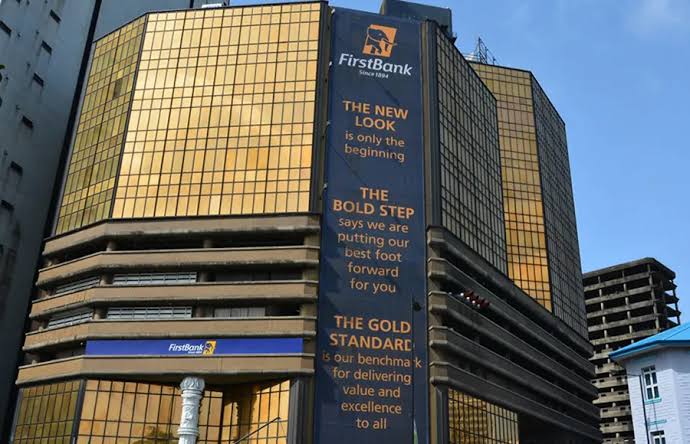
FirstBank headoffice
“The pattern with AP/Forte Oil and Geregu, Femi Otedola has a clear track record of acquiring significant/controlling positions in energy firms, driving operational improvements and value creation, then divesting,” the source said.
“In both cases, the model involved control to execute reforms, value creation, and eventual (or progressive) exit when strategic priorities shifted -often after multi-year holds and significant returns. He has publicly referenced these as examples of his approach of seeking stakes above 51% for effective control and reform.”
OTEDOLA’S FIRST HOLDCO JOURNEY
Otedola emerged as a major shareholder around 2021–2022, became Chairman, and has steadily increased his beneficial stake through direct holdings and vehicles like Calvados Global Services (reaching the mid-to-high 20% by mid-2026 in various reports, with ongoing purchases).
He has stated that he has invested over N600 billion of personal wealth and aims for a stake beyond 50%/51%.
Under his involvement, the group has pursued balance-sheet clean-up (including large impairment charges on legacy NPLs, e.g., hundreds of billions of naira), recapitalisation efforts, governance changes, and reported improved underlying performance metrics in subsequent periods.
He has repeatedly framed this as a long-term commitment, explicitly distinguishing it from prior exits: he has said he has “no intention of exiting the institution in the near future as he did with some of his previous investments” and is “on the same trajectory” of building control for reforms and sustained value.
Recent large share purchases (tens to hundreds of billions of naira in blocks) and public comments reinforce an intent to consolidate control rather than prepare an exit.
On whether the fear of what befell AP, Forte, Geregu will happen to First Holdco is founded, an industry expert said yes and no.
“Yes, to a degree as pattern recognition is rational. Past behaviour shows he is willing to build control, create value, and later monetise or pivot when opportunities or priorities change (e.g., from oil marketing to power, then heavily into banking after the Geregu exit). Investors or stakeholders who worry about a similar eventual exit, potential short-termism relative to a multi-decade bank franchise, or concentration risk are extrapolating from documented history. Banking also involves heavier regulation (CBN oversight, recapitalisation rules, systemic importance of First Bank), which can constrain pure private-equity-style exits,” the source said.
“No, it is not strongly predictive or inevitable with First Holdco as Otedola has directly addressed and rejected the parallel in recent interviews, emphasising permanence of commitment, the size of capital already deployed, and the nature of the turnaround (governance reset, NPL clean-up, capital raising toward higher bases). The time horizon so far is shorter than some prior holds, but the rhetoric and continuing accumulation point the other way. Exits in prior cases occurred after clear strategic shifts and value realisation; he is still in the build/control phase at First HoldCo and has tied personal reputation and large personal capital to its success.
“In short, the historical pattern makes caution understandable, but Otedola’s own statements, ongoing share accumulation, and the distinct regulatory/strategic context of a major Nigerian bank holding company provide concrete counter-evidence that he intends a longer-term (or controlling) role rather than a repeat of the AP/Forte or Geregu playbook. Outcomes will depend on future performance, regulatory developments, and any changes in his priorities – none of which are predetermined by the past pattern alone.”
HOW SYSTEMIC IMPORTANCE OF FIRSTBANK MAY STOP CORPORATE VULTURES
First Bank of Nigeria is fundamentally different from commercial corporate entities like Zenon, Forte Oil (AP), or Geregu Power. The structural and regulatory nature of First Bank makes it impossible for any single investor – even a majority owner – to run or treat it like a private corporate playbook.
Designated Systemically Important Bank (D-SIB)
FirstBank controls roughly 10% to 11% of the entire Nigerian banking sector’s total assets (over ₦20+ trillion). Because it is legally designated as a Domestic Systemically Important Bank by the Central Bank of Nigeria, it is deemed “Too Big to Fail.” A failure or misstep at First Bank poses a catastrophic risk to Nigeria’s broader macroeconomic stability.
Strict Central Bank Governance & Supervision
Unlike non-financial listed companies where a majority shareholder can overhaul boards and operational strategies at will, commercial banks operate under hyper-strict regulatory oversight:
The CBN Intervention Precedent: When board squabbles and governance issues threatened First Bank’s stability in 2021, the CBN dissolved the board of both FBN Holdings and First Bank overnight, showing that shareholder control is secondary to regulatory mandate.
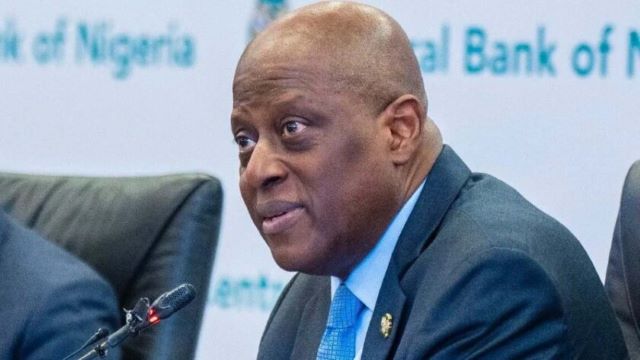
Fit and Proper Approvals: The CBN must approve every single board appointment, executive management change, and significant ownership stake.
Public Custodian vs. Private Enterprise
Forte Oil and Geregu were commercial operating entities driven by capital expenditure, asset sales, and corporate restructuring. First Bank is primarily a custodian of public confidence and systemic liquidity:
Deposit Liability: Managing tens of trillions in retail and institutional customer deposits requires extreme risk management, capital adequacy adherence, and liquidity buffers.
Capital Requirements: Under Basel III frameworks, D-SIBs face stringent higher capital conservation buffers and loss-absorbency rules.
The Limits of Shareholder Control in Banking
Even if an investor achieves a 51% majority equity stake in First HoldCo Plc:
Separation of Bank and Holding Co: Ownership of the holding company does not grant direct control over the day-to-day operations or credit allocation of the underlying bank subsidiary.
No Unilateral Asset Asset Asset Monetization: In past ventures, non-core physical assets could be liquidated to settle debts or restructure balance sheets. Bank assets, reserves, and loan portfolios are heavily guarded by banking acts (BOFIA) and cannot be stripped or reallocated at owner discretion.