















































*Targets Abuja gas supply before end of 2026
By Abiodun Folarin
WorldStage– The Nigerian National Petroleum Company (NNPC) Limited has attributed delays in the completion of the Ajaokuta-Kaduna-Kano (AKK) gas pipeline project to disruptions caused by the Middle East conflict, saying it expects critical equipment to be delivered by November 2026 and gas supply to Abuja to commence before the end of the year.
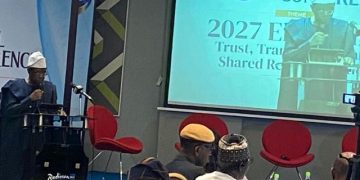
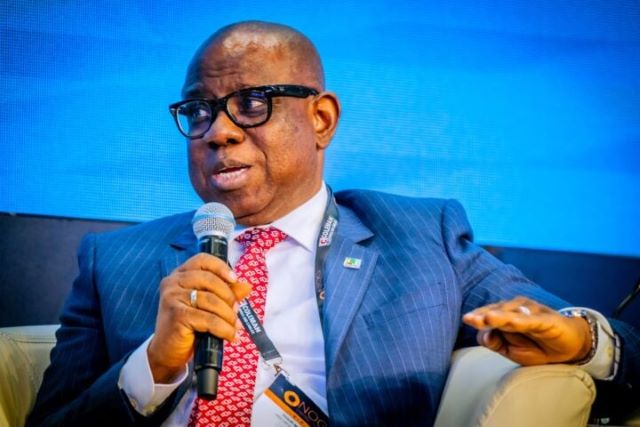
The Group Chief Officer of NNPC Limited, Bashir Bayo Ojulari, disclosed at a press conference in Abuja, while responding to questions on the project, explaining that the conflict disrupted the supply of equipment expected from Dubai, United Arab Emirates.
Ojulari acknowledged that the project had suffered delays, noting that some factories involved in producing the required equipment were forced to suspend operations before recently resuming production.
“It is true that we had a delay,” he said, adding that the disruption had resulted in a loss of about three months in the project schedule.
He said NNPC had secured commitments for the delivery of the outstanding equipment by November, expressing optimism that gas would reach Abuja before the end of 2026 to support the project’s intended operations.
The AKK pipeline is a major component of Nigeria’s gas infrastructure expansion programme, designed to transport natural gas from the country’s eastern gas-producing areas through Ajaokuta and Kaduna to Kano, while supporting power generation, industrial development and commercial gas utilisation.
The project is expected to improve access to natural gas across northern Nigeria and strengthen the country’s domestic gas supply network.
While defending the government’s decision on subsidy removal, the Minister of State for Petroleum Resources, Senator Heineken Lokpobiri, said the policy was necessary to prevent the country’s resources from being consumed by an unsustainable subsidy regime.
Lokpobiri cited Venezuela, which has the world’s largest proven crude oil reserves, as an example of an oil-producing country whose extensive subsidies, in his assessment, had failed to guarantee economic prosperity.
He said Nigeria’s estimated 37 billion barrels of crude oil reserves could not, on their own, guarantee prosperity if government revenues continued to be committed to subsidising petroleum products.
The minister urged Nigerians to appreciate the economic implications of the subsidy policy, arguing that its removal had created room for greater private-sector participation in the downstream petroleum industry.
He cited the expansion plans of private investors, including the Dangote refinery, as evidence of increased investment opportunities following the policy change.
According to him, maintaining the subsidy under a government-dominated import regime would have limited opportunities for private investors to participate in the petroleum market.
He argued that the Petroleum Industry Act (PIA) provides for market-based pricing of petroleum products, citing Section 205 of the legislation.
Furthermore, he maintained that the legal framework supports the deregulation of petroleum product prices and cautioned against policies that could return Nigeria to the previous subsidy system.
The Federal Government has continued to defend the removal of petrol subsidy as part of its broader economic reforms, while the resulting increases in fuel prices have remained a major concern for households, transport operators and businesses.
Ojulari, in his remarks on the government’s temporary petrol discount initiative, said NNPC would continue working with the relevant ministry to explore ways of sustaining the relief for consumers.
He said the company considered economic and social stability more important than maximising profits from the initiative under the prevailing circumstances.
“At this point, profit is of less importance in this particular case than the stability of the economy and society,” he said.