









































WorldStage– As foreign capital retreats from African fossil fuel investments, Nigeria’s energy sector is shifting toward domestic financial ecosystems and local service consolidation to fund long-term infrastructure and capital projects.
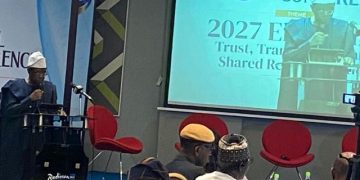
Speaking at the 2026 NAEC Energy Conference in Lagos, organized by the Association of Energy Correspondents of Nigeria (NAEC), energy executives and oilfield service leaders stressed that developing robust, local patient capital mechanisms is critical to sustaining output and executing large-scale field developments.
Bridging the Global Capital Deficit with Local Syndication
The pull-back by international commercial banks and ESG-focused multilateral lenders has created a persistent funding gap for upstream and midstream expansion across Africa.
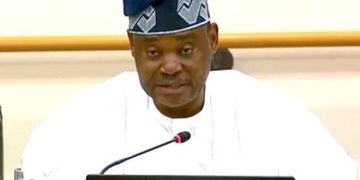
According to Mrs. Alero Balogun, General Manager of Corporate Communications at Oando PLC, international lending structures no longer align with the risk profile and investment horizons required for African hydrocarbon development.
“There is a mismatch between the kind of capital that Nigeria or Africa’s energy sector requires and what the international lending system is currently prepared to provide,” Balogun noted. “Nigerians have to start to build our own financial ecosystem so that we are doing the financing ourselves.”
Strategic Economic & Investment Takeaways
Demand for Domestic Patient Capital: Hydrocarbon exploration and production (E&P) require long development cycles and substantial risk-weighted capital. Expanding local syndication—via domestic commercial banks, pension fund assets, and private equity vehicles—is emerging as the primary vehicle to replace external credit lines.
Mitigating Regulatory and Execution Risk: Western financial institutions increasingly cite policy instability, foreign exchange volatility, and operational risks when limiting exposure to African energy. Deepening local liquidity pools reduces currency mismatch risks and insulates project pipelines from international policy shifts.
Value Retention Within the Domestic Economy: Developing local credit markets and service capacity ensures that a larger percentage of total upstream expenditure (CAPEX) and operating expenditure (OPEX) remains within the domestic economy, expanding multiplier effects across banking, insurance, and engineering sectors.
Service Sector Consolidation: Scaling PETAN Capabilities
Alongside financial capital, physical execution capacity remains a central bottleneck for indigenous operators taking over divested assets from international oil companies (IOCs).
To address scale constraints, Mr. Wole Ogunsanya, Chairman of the Petroleum Technology Association of Nigeria (PETAN), disclosed that local oilfield service companies are actively forming joint operational syndicates and technical consortia to bid for capital-intensive contracts.
Upstream Project Contract ($10M+ Scope)
PETAN Service Company Consortium
├── Company A (20% Capacity / Drilling)
├── Company B (30% Capacity / Wellhead)
└── Company C (50% Capacity / Engineering)
│
Integrated Execution at Competitive Unit Cost
Ogunsanya highlighted that individual service providers often lack the balance-sheet size or asset scale to bid independently on large-scale engineering, procurement, and construction (EPC) packages.
“There is a job of 10 million dollars, and you can only do two million dollars,” Ogunsanya explained. “We are consolidating within PETAN by forming groups that can work together and deliver big projects… combining capabilities to execute at competitive costs without shutting out new industry entrants.”
Outlook for Institutional Investors
As domestic operators assume greater operational ownership over Nigeria’s onshore and shallow-water assets, investment opportunities are shifting toward:
Structured Debt & Energy Infrastructure Funds: Increased demand for naira-denominated long-term debt and yield-bearing energy notes.
Oilfield Services M&A: Consolidation among mid-tier service companies creating larger, integrated service providers capable of competing across the Gulf of Guinea.
Midstream Logistics & Processing: Localized capital investments targeted at gas processing, domestic pipeline networks, and refining integration to maximize field netbacks.