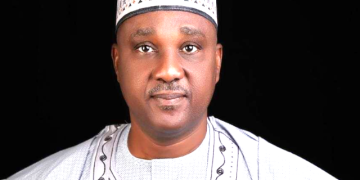








































Minister of State Petroleum Resources (Gas), Rt. Hon. Ekperikpe Ekpo has reaffirmed the country’s commitment to utilizing gas as its transition fuel of choice, citing its cleaner nature compared to liquid fuels, abundance in Nigeria, and versatility in power generation, industrial use, and transportation.
Speaking at the 24th edition of the NOG Week 2025, Ekpo noted that gas enables both decarbonization and development, underscoring its critical role in Nigeria’s energy strategy.
“Nigeria boasts one of the largest proven gas reserves in the world with over 200 trillion cubic feet of proven natural gas reserves, yet we recognise that value is only created when resources are developed and utilised,” he said, adding: “I am deeply aware of the pivotal role natural gas must play in Nigeria’s journey toward economic transformation, industrialization, and net-zero ambition.”
The Decade of Gas Initiative, according to him, is a national development strategy, not just a slogan, backed by policy reforms, infrastructure expansion, and strategic collaborations.
“Through the Decade of Gas Initiative, we are focused on translating our vast gas wealth into tangible socio-economic benefits. This includes driving industrialization, expanding power generation, increasing domestic LPG usage, deepening gas-to-transport adoption, and growing gas export capacity,” said Ekpo.
According to Ekpo, the activation of the Midstream and Downstream Gas Infrastructure Fund now provides a dedicated vehicle for capital mobilization, just as investment incentives are being aligned with project execution, including modular gas plants, pipeline expansion, and virtual gas networks.
Considerable progress has been made in addressing legacy debts to gas producers and ensuring commercial frameworks for key infrastructure are viable, he also said.
Highlighting the country’s commitment to strategic partnerships and infrastructure development in the gas sector, Ekpo noted that energy development requires collaboration and partnerships that deepen cooperation, expand market access, and enhance energy security.
He announced that the AKK Gas Pipeline Project has achieved a significant milestone, marking a major leap in industrializing Northern Nigeria and strengthening internal gas distribution, while the OB3 Gas Pipeline and River Niger crossing are expected to reach similar progress soon, further interconnecting the national gas grid.
He also said Nigeria’s regional gas pipeline projects are progressing well with the the West African Gas Pipeline delivering gas to neighboring countries, promoting regional energy cooperation.
Ekpo lauded President Bola Ahmed Tinubu for his visionary leadership and unwavering support for the gas sector. He also commended all stakeholders for their continued commitment to building a resilient, inclusive, and innovative energy sector.
He called on participants at the conference to engage in meaningful discussions and forge partnerships that will drive the growth of Nigeria’s gas sector, stressing the need for stakeholders to remain anchored on a shared vision of a Nigeria where every home has access to clean cooking fuel, gas powers industries, and the country becomes an energy hub for West Africa and the world.
“We must move beyond policy documents to project execution. We must translate frameworks into infrastructure. And most importantly, we must sustain the trust of investors, communities, and citizens,” he said.