











































By Abiodun Folarin
WorldStage— The Federal Government has said its single largest expenditure line wage adjustments, at ₦9.39 trillion accounted for a significant portion of the ₦15.8 trillion savings from subsidy removal between June 2023 and December 2025, under the economic reforms implemented by the administration of President Bola Ahmed Tinubu.
The government said the ₦15.8 trillion subsidy savings, ₦5.4 trillion accrued to the Federal Government, while ₦10.4 trillion was shared among states and local governments.
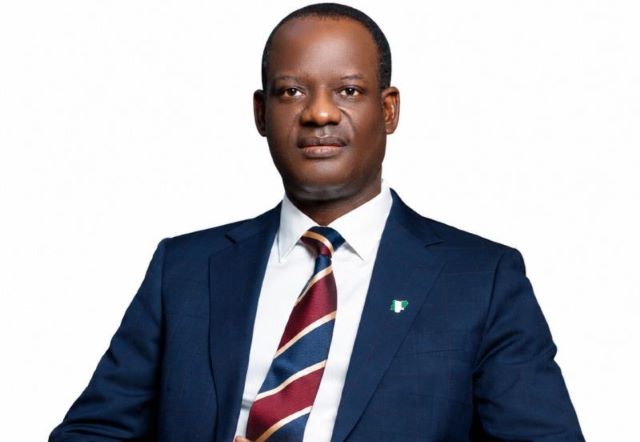
The Minister of Finance and Coordinating Minister of the Economy, Prof. Taiwo Oyedele, disclosed this on Wednesday in Abuja while presenting the government’s “Nigeria’s Reform Scorecard: The Benefits, Costs and Harms Prevented.”
He added that the Federal Government generated an additional ₦3.1 trillion in independent revenue, principally through remittances from government-owned entities, while ₦11.9 trillion came from incremental borrowing.
“Altogether, the Federal Government’s incremental resources over the period came to ₦20.4 trillion,” Oyedele said.
He explained that the resources partly funded incremental expenditure of ₦30.64 trillion, with ₦9.39 trillion spent on wage adjustments, minimum wage increases and allowances for public servants; ₦9.37 trillion on external debt service arising from exchange rate depreciation; and ₦6.5 trillion on strategic infrastructure.
Oyedele said 58 per cent of the ₦20.4 trillion incremental resources came from borrowing, 27 per cent from subsidy savings and 15 per cent from other revenue.
Oyedele said the reforms, particularly the removal of fuel subsidy and unification of the foreign exchange market, came with significant costs but created fiscal space and prevented the economy from sliding further into crisis.
He stressed that the reforms were not primarily introduced to generate revenue but to address distortions and corruption associated with the fuel subsidy and multiple foreign exchange regimes.
Reform save deeper economy crisis
Oyedele highlights some of the negative impact avoided if the reform had not been implemented by the present administration.
He said 27 states were unable to reliably pay salaries in May 2023, but that figure had fallen to zero, adding that government estimates showed at least 30 states could have been unable to meet salary obligations under the pre-reform trajectory.
On the foreign exchange market, Oyedele said the premium between the official and parallel market rates, which was above 60 per cent before the reforms, had fallen to below five per cent.
He projected that without the reforms, the premium could have exceeded 150 per cent, with foreign exchange becoming increasingly unavailable at the official rate.
He also said the ₦30 trillion Ways and Means stock inherited by the administration had been curtailed, rather than doubling as projected under the pre-reform trajectory.
Minimum wage, student loans, social intervention
Oyedele said the reforms had also produced tangible benefits for households, including regular payment of salaries and pensions, settlement of pension arrears and an increase in the minimum wage from ₦30,000 to ₦70,000.
He said the Nigerian Education Loan Fund (NELFUND) had supported more than 1.5 million students, while cash transfers, subsidised mortgages and agricultural interventions had also been deployed to cushion the impact of the reforms.
According to him, the new Tax Act exempts low-income earners and small businesses from tax while simplifying the tax system.
Government admits reforms came at a cost
The minister acknowledged that the reforms had imposed substantial costs on Nigerians, particularly through higher interest rates and fuel prices.
He said the Monetary Policy Rate had increased from 18.5 per cent to 26.5 per cent, while petrol prices rose from about ₦185 per litre to between ₦1,100 and ₦1,400.
Oyedele, however, argued that maintaining the pre-reform system would have resulted in even greater economic distortions, with petrol potentially trading above ₦3,000 per litre on the black market while remaining unavailable at the former official price.
He also acknowledged that household welfare and poverty reduction remained areas requiring further intervention.
“Food inflation has eased from 24.82 per cent to 17.52 per cent as at June 2026, but poverty and household welfare recovery is still classified in our own scorecard as unfinished business,” he said.
Inflation, reserves, GDP improve
The minister said headline inflation had declined to 15.91 per cent in June 2026 from 22.41 per cent in May 2023.
Gross external reserves, he said, had risen from about $35 billion to $52.5 billion, while net reserves increased from roughly $3 billion to $34.8 billion.
He added that stock market capitalisation had grown from about ₦31 trillion to approximately ₦150 trillion, while real GDP growth strengthened to 3.89 per cent from a baseline of 2.31 per cent.
Oyedele further noted that S&P Global upgraded Nigeria’s sovereign credit rating to ‘B’ in May 2026, describing it as the country’s first upgrade in 14 years.
He also said Nigeria exited the Financial Action Task Force (FATF) grey list in October 2025 and the European Union’s Anti-Money Laundering and Combating the Financing of Terrorism Deficiency List in January 2026.
FG targets further reforms
Oyedele said the government would continue with the reforms, with greater emphasis on translating macroeconomic improvements into better living conditions for Nigerians.
He said implementation of the Nigeria Tax Act would continue alongside further reforms in budgeting, reporting and accountability.
The government, he added, would also work to reduce inflation towards single digits, maintain a unified and predictable exchange rate, improve spending quality and expand interventions targeting vulnerable households.
“On the areas this scorecard honestly marks as unfinished business poverty and household welfare chief among them the next phase of our work is squarely about translating macroeconomic stability into relief that households actually feel,” he said.
He listed expanded cash transfers, deeper agricultural interventions and stronger collaboration with state and local governments among measures planned to achieve that objective.
Oyedele urged Nigerians to support positive government policies while constructively criticising government and seeking facts rather than relying on misinformation and sensational narratives.
“We are not here to pretend these reforms were painless. We are here to show you, honestly and with the numbers, what they cost, the benefits they delivered, and the harm they prevented,” he said.