

















































WorldStage– Just as it happened in 2014 when the dreaded, health-punishing Ebola virus hit Nigeria in July 2014 through, Patrick Sawyer, an index case that arrived in Lagos from Liberia and infected 20 people, causing eight deaths before the WHO officially declared Nigeria Ebola-free on October 20, 2014, Nigeria is at it again.
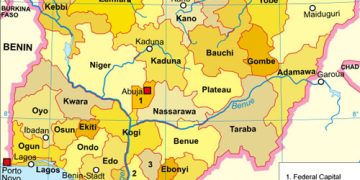
The familiar anxiety of that past health crisis re-emerged in Nigeria’s capital this week following the official confirmation of a new Ebola virus disease case in Abuja.
Government confirmed the Ebola case in Abuja after a female traveler arriving from Uganda tested positive.
Admitted to Nizamiye Hospital on October 11 after showing symptoms on October 7, the patient is currently in isolation.
Health Minister Muhammad Pate announced that 44 close contacts are being actively traced.
The patient reportedly first began showing symptoms on October 7, 2026, and seeking medical attention she was admitted to Nizamiye Hospital, a prominent private medical facility in Abuja, on October 11.
Following several days of targeted care and diagnostic testing, medical authorities verified the presence of the Ebola virus.
The patient has since been moved into strict isolation where she continues to receive specialized medical treatment.
The sudden detection has mobilized a swift response from the Federal Ministry of Health, with Health Minister Muhammad Ali Pate announcing that surveillance teams have already identified and begun tracing 44 close contacts linked to the patient.
“We are doing everything possible to contain this case by tracing all the contacts the individual may have had,” Pate assured the public, emphasizing the government’s commitment to prevent localized transmission.
The case has also triggered diplomatic and epidemiological discussions across the continent.
While the patient arrived on a flight originating from Uganda, the Ugandan Ministry of Health clarified that the individual had only transited through their territory after her business trip to the DRC.
Ugandan officials noted that regional transit alone does not prove the infection occurred within their borders, especially given that the DRC is currently battling a severe, ongoing epidemic that has recorded thousands of cases.
For Nigeria, the stakes are remarkably high. The country famously won global praise in 2014 for its rapid and decisive defeat of an Ebola outbreak using aggressive contact tracing and strict quarantine protocols.
As health workers swing back into action at Nizamiye Hospital and across Abuja, the nation relies on that same public health infrastructure to halt the virus before it can establish a foothold in the capital.
Public health agencies urge residents to remain calm but vigilant, reaffirming that early detection and containment remain the ultimate shield against a wider outbreak
In retrospect, one Patrick Sawyer had arrived at Lagos airport on July 20, 2014, and died four days later at First Consultants Hospital.
In Sawyer’s case, Dr. Ameyo Stella Adadevoh (who herself later died in line of duty while treating Sawyer) and her team diagnosed and quarantined him, stopping a wider disaster.
At the time, 20 confirmed cases, including 12 survivors and eight deaths were recorded while cases were contained primarily in Lagos and Port Harcourt.
On account of Nigeria’s effective handling of situation, the World Health Organization (WHO) declared the country free of transmission on October 20, 2014, after passing 42 days with no new cases.
Following in the emergency response pattern of 2014, health authorities have identified and initiated tracking for 44 individuals who came into close contact with the patient.
The patient remains in strict medical isolation receiving specialized treatment, and Health Ministry is reportedly coordinating with regional bodies to monitor ports of entry and prevent community spread and spare the country the tragedy of lethal health risk, mass death and social confusion.
“The FG calls on all public and private healthcare facilities nationwide to be on high alert. Healthcare workers must maintain a high index of suspicion, promptly identify and isolate suspected cases, observe strict infection prevention and control measures, and immediately report suspected cases to public health authorities.
“Investigations are ongoing, and we will continue to provide accurate and timely information,” Pate had said.
The development had made many Nigerians look towards the direction of Uganda, just like Patrick Sawyerr, a Liberian who imported the disease into Nigeria in 2014.
But in a statement issued after Pate’s comment, Charles Olaro, Director-General of Health Services in the East African country, clarified that the patient is a Nigerian.
Olaro said the woman had travelled to Eastern Democratic Republic of the Congo (DRC), which has over nearly 10,000 active cases with 4,500 deaths from Ebola, for business and transited through Uganda in early October.
According to Olaro, she showed no symptoms while in Uganda but developed symptoms after arriving in Nigeria.
“Travel through Uganda does not establish that infection occurred here. The location of exposure remains under investigation,” the ministry said.
“The Government of Nigeria is yet to provide detailed information on her travel itinerary and clinical history which will guide further investigations and any necessary contact tracing. “We wish to clarify that, as at the time of this statement, Uganda has NO confirmed active Ebola cases.”
The Ugandan government said it had maintained limited provisions for humanitarian and diplomatic movement, adding that it would strengthen screening and public health controls at points of entry.
Symptoms, spread and what to avoid Ebola is a severe viral disease that can cause high levels of mortality.
The WHO says the average case fatality rate across Ebola disease outbreaks is approximately 50 per cent, although the rate varies substantially according to the virus, outbreak circumstances and access to care.
The virus is not airborne in the manner of infections that spread through ordinary breathing in shared indoor spaces. According to the WHO, transmission between people occurs primarily through direct contact with the blood or other body fluids of an infected person who has developed symptoms, or someone who has died from the disease.
Infection can occur when contaminated fluids enter the body through broken skin or the eyes, nose or mouth. Objects contaminated with infectious body fluids, including clothing, bedding and medical equipment, can also spread the virus.
People may also become infected through contact with infected animals, particularly when handling sick or dead wildlife or consuming inadequately handled products from infected animals.
Traditional burial practices involving direct contact with the body of someone who died from Ebola can contribute to transmission if appropriate precautions are not taken.
Healthcare workers and family members caring for patients without suitable protective measures can face a heightened risk.
The WHO says people infected with Ebola do not transmit the disease before symptoms develop. Once symptoms begin, they can remain infectious while the virus is present in their blood.
The incubation period — the time between infection and the appearance of symptoms — ranges from two to 21 days. The health minister explained that Ebola spreads through direct contact with the blood or body fluids of someone who is sick with the disease or has died from it, or through contact with contaminated materials. Prof Pate noted that a person with Ebola cannot spread the disease before symptoms begin.






