



































The Nigerian Senate has advanced a major legislative reform to revamp public high schools nationwide as it passed the National Senior Secondary Education Commission (NSSEC) Amendment Bill, 2026 for second reading.
The bill aims to boost funding, upgrade dilapidated infrastructure, and establish stricter academic oversight across all states and the Federal Capital Territory (FCT).
Sponsored by Senate Leader Opeyemi Bamidele (APC, Ekiti Central), the executive bill seeks to amend the original 2023 Act.
It establishes dedicated senior secondary education boards in every state. Crucially, the new framework expands federal financial interventions to reach federal unity colleges and Armed Forces senior secondary schools, which were previously constrained by limited funding pathways.
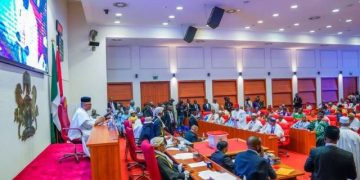
Leading the debate at plenary, Senator Bamidele emphasised that the legislation will foster seamless collaboration between federal and state governments.
“This amendment is critical to addressing structural deficiencies, enhancing teacher quality, and ensuring that our learning environments meet standard specifications,” he noted.
The legislative push aligns with the administration of President Bola Tinubu, who transmitted the bill after its approval by the Federal Executive Council.
It also coincides with broader education reforms announced by the Minister of Education, Dr. Tunji Alausa. The Ministry is currently phasing out the “disarticulation policy” that administratively separated junior and senior secondary schools.
Government data indicates that structural fragmentation has hindered student retention, leaving millions of primary school pupils unable to transition into senior secondary levels.
While the bill enjoyed overwhelming support, the debate was not entirely without friction.
Senator Adams Oshiomhole raised procedural concerns, urging the leadership to ensure copies of the draft were distributed immediately to all lawmakers for exhaustive scrutiny.
Following the successful second reading, Senate President Godswill Akpabio referred the bill to the relevant Senate committee for further legislative processing.
The committee is mandated to engage with key stakeholders and report back to the full chamber within one week.
If passed into law, the bill is expected to unlock billions of Naira in infrastructure funding, paving the way for a more unified and globally competitive secondary school system across Nigeria.