









































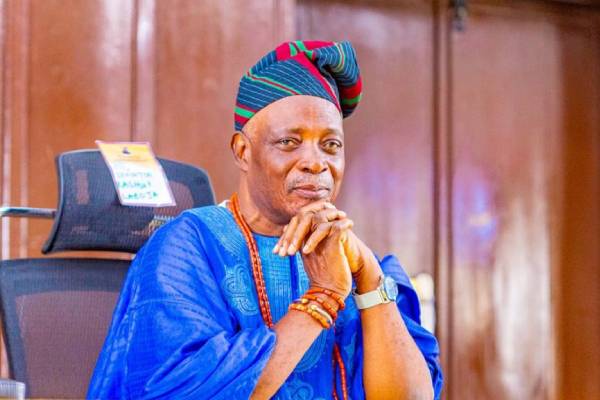
WorldStage– The Alaafin of Oyo, Oba Abimbola Akeem Owoade I, is reportedly considering litigation against Governor Seyi Makinde over the reconstitution of the Oyo State Council of Obas and Chiefs.
This is coming after Governor Makinde inaugurated a new council on January 15, 2026, introducing a rotational chairmanship that serves two-year terms.
This ended the Alaafin’s long-standing status as the permanent chairman of the council.
The Alaafin’s palace issued a statement on January 15, 2026, vehemently refuting Governor Makinde’s claim that the monarch had been consulted or had endorsed the rotational arrangement.
As a show of Alaafin’s dissatisfaction with the development, he shunned the inauguration of the council, which saw Oba Rashidi Ladoja, the Olubadan of Ibadanland, installed as the first rotational chairman.
Sources close to the palace indicate a high likelihood of a court challenge, citing the precedent of the late Alaafin, Oba Lamidi Adeyemi, who also used legal means to defend the stool’s permanent chairmanship.
The Alaafin, at the same time, faces separate legal threats from rival candidates, such as Prince Lukman Gbadegesin, who has challenged Oba Owoade’s appointment and demanded its nullification within 30 days.
The state government maintains that the Oyo State Council of Obas and Chiefs (Further Amendments) Bill, 2025, which was signed into law on August 14, 2025, provides the necessary legal framework for these changes to promote equity among the state’s top traditional rulers.
The arrangement, codified in the Oyo State Council of Obas and Chiefs (Further Amendments) Bill, 2025, rotates the chairmanship every two years among three key monarchs: the Olubadan, the Alaafin of Oyo (Oba Akeem Owoade), and the Soun of Ogbomosoland (Oba Ghandi Olaoye), ending the Alaafin’s historical permanent chairmanship.
Adding perspective, an Ogun State monarch, the Eselu of Iselu, advised the Alaafin against public confrontation with the governor, highlighting that rotational systems exist in other states and urging caution to avoid potential consequences.
Observers note that this development reflects broader tensions between tradition, governance, and historical precedence within Oyo State’s traditional institutions.
No formal court filing has been confirmed, but speculation over potential litigation continues to dominate discussions.