










































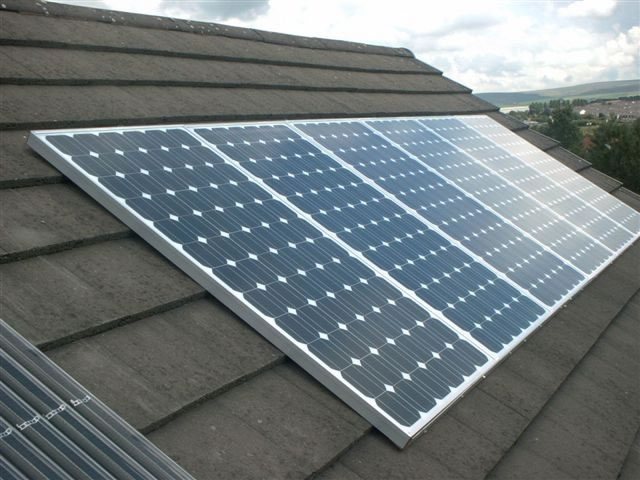
WorldStage– The Federal government through the Energy Commission of Nigeria (ECN) has on Friday inaugurated the groundbreaking ceremony of 2-megawatts solar hybrid project worth N3.8 billion at the Aliko Dangote University of Science and Technology (ADUSTECH) Wudil in Kano State.
The project under the flagship of Renewed Hope Solarization project of President Bola Tinubu’s administration also witnessed commissioning of 200 solar powered streetlights within the institution.
The Director General of the Commission, Dr Mustapha Abdullahi alongside the Minister of Innovation, Science and Technology, Kingsley Tochukwu-Udeh SAN carried out the groundbreaking ceremony at the university.
Dr Abdullahi said contractors handling the project were given a mandate of three months to complete the work.
He said the project was designed to provide sustainable energy generation for the institution and address its expenses of N22.4 million spent on electricity bills every month.
“Today’s groundbreaking at Wudil follows our ceremony at Aminu Kano Teaching Hospital in September 2025 where a 4MW system is being installed and last week’s groundbreaking at Bayero University Kano.
“Each project is a standalone delivery and a building block in a national programme covering hospitals and tertiary institutions in all 36 states and the FCT.
“The contract for this project, worth N3.8 billion has been awarded to Safiatu Global Resources Limited with a firm three-month completion mandate, no variation in contract sum, and full accountability under the Commission’s project monitoring framework,” he said.
Abdullahi said every groundbreaking under the programme is preceded by rigorous technical work energy audits, load 21,877 assessments, site surveys, and system design.
According to him, our team arrived on this campus with that precise mandate, and the findings were unambiguous. ADUSTECH is home to a combined population of 24,339 persons students, 2,462 staff, and hostel facilities providing 5,200 bed spaces.
“Against that scale of activity, the assessed actual energy demand on this campus ranges between 12.3 and 16.4 Megawatts. Yet the total connected load on utility records stands at only 8.26 Megawatts – a figure that already exceeds what the grid reliably delivers.”
He noted that the institution spends an average of N22.4 million every month on electricity bills, while its entire on-site diesel backup capacity amounts to a mere 2.07 Megavolt-Amperes.
“This is the energy reality that confronts a university of this mandate and ambition. It is unacceptable and it is what we are here to begin addressing.”
He said that based on the full load profile and the 59 hectares of available land identified within a 2.5-kilometre radius of the campus, the Energy Commission’s technical recommendation is a 7-Megawatt Solar Mini-grid as the complete solution for energy needs.
Also speaking, the Minister of Innovation, Science and Technology, Kingsley Tochukwu-Udeh, said the installation of the 2MW in the institution is not an act of philanthropy but it is an act of strategic national policy and national action under the Renewed Hope Solarization project.
He said the Federal government is making the investments because it believes in what the institution and others do in terms of groundbreaking innovations to provide solutions to most pressing challenges faced by Nigerians.
Earlier, the Vice Chancellor of the university, Prof. Musa Tukur-Yakasai said the landmark event represents not just an infrastructural milestone but a bold step towards sustainable energy, innovation and academic excellence.
Tukur-Yakasai said the intervention is a significant step in strengthening its academic and research capacity.