






















































By Bamidele Famoofo
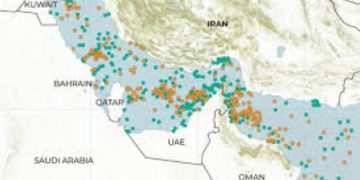
WorldStage– Food security in Africa could face major disruption due to continuing uncertainty in the Strait of Hormuz.
The conflict between the United States, Israel and Iran is disrupting global fertiliser trade flows – and this stands to leave millions of African farmers without the ammonia, urea, phosphate, sulphur and other fertiliser inputs vital to growing more food in sub-Saharan Africa.
Experts from the World Bank and the African Development Bank, Chakib Jenane and Martin Fregene, in an article published on the website of AfDB, disclosed that fertiliser shipments passing through the Strait of Hormuz account, for example, for roughly one quarter of global ammonia trade and more than a third of seaborne urea. Even the slightest perceived risk can drive up fertiliser prices, stall shipments, and cause a seismic shift in food price inflation.
This food insecurity scenario is not new: COVID-19 pandemic disruptions and the war in Ukraine drove fertiliser prices to record highs, exposing how dependent we have become on a handful of export hubs and bottlenecked transport routes.
The experts further revealed that about 80 percent of fertiliser used across sub-Saharan Africa is imported, often at prices much higher than in Europe due to freight, financing and logistics. When global supply faulters, Africa’s farmers often feel the economic shocks the hardest. For many governments fertiliser security is tied to food security, which, in turn, is linked to economic and social stability.
Africa’s smallholder farmers are at the forefront of this crisis. They produce nearly 70 percent of sub-Saharan Africa’s food, and unlike large commercial farms which have the cash to secure a supply earlier, smallholder farmers often have limited fertiliser options or face steep price hikes.
According to the Food and Agriculture Organization, even a 10 percent reduction in fertiliser availability could result in up to 25 percent less maize, rice, and wheat grown in sub-Saharan Africa. This could trigger food inflation of up to 8 percent on the continent.
In 2022, the African Development Bank Group launched the USD 1.5 billion African Emergency Food Production Facility to help countries respond to these supply disruptions. The initiative has supported nearly 16 million smallholder farmers in 35 countries with climate-smart seeds and fertilizer, helping generate 46 million tonnes of food worth about USD 19 billion, with nearly USD 323 million in co-financing from international partners. Having delivered 3.5 million metric tons of fertiliser to date, the Facility is rolling out a second phase that supports a Bank shift from immediate emergency relief to consolidating, scaling up and institutionalizing long-term national food sovereignty. This African-created solution has a role in helping African countries mitigate fertiliser flow uncertainty in the Strait of Hormuz.
“To cushion the Iran conflict’s immediate risks and build long-term resilience, African policymakers, partners and allies should act across five fronts,” the World Bank and AfDB experts explained.
First, they need to strengthen market intelligence. Real‑time tracking of trade flows, shipping routes, and price trends helps policymakers anticipate disruptions. UN Trade and Development’s Strait of Hormuz ship traffic monitoring demonstrates how trade data can guide before shortages escalate. Data sharing between regional institutions like those led by the African Fertilizer and Agribusiness Partnership would allow countries to assess exposure and coordinate action.
Second, African governments and regional organisations need to coordinate regional procurement and buffer stocks. By pooling fertiliser demand, they can negotiate better prices and reduce the risk of export bans or freight spikes. Shared, commercial channel reserves can stabilise markets during shortages. Partnerships with Africa’s major fertiliser producers like Morocco and Nigeria could help stabilise markets and limit panic buying.
Third, African states need to urgently expand domestic and regional production. Countries such as Morocco, Nigeria, Kenya, and Ethiopia are building fertiliser manufacturing and blending capacity, but the scale remains limited relative to demand. Public-private partnerships should invest in upgrading blending plants, ports, and railways while promoting organic fertilisers and soil‑specific nutrient management.
Fourth, African governments need to protect smallholder farmers from price spikes. Well-targeted subsidies, digital voucher systems and expanded access to seasonal credit can help reduce the burden of global volatility falling on those least able to absorb it.
“Finally, we must support the Africa Fertiliser and Soil Health Initiative. Adopted during the African Union-hosted Africa Fertiliser and Soil Health Summit in 2024, the initiative’s ten-year action plan is designed to reverse Africa’s soil degradation, boost agricultural productivity, triple fertiliser use, restore almost a third of degraded soil, and double cereal yields,” Jenane and Fregene advised.