












































*As American tested positive transferred to Germany
The U.S. says it is “rapidly supporting” the Ebola outbreak response by funding up to 50 treatment clinics in the Democratic Republic of the Congo (DRC) and Uganda.
The U.S. Department of State said it is actively responding to the Ebola outbreak in the affected regions of DRC and Uganda.
The department said the U.S. was also funding associated frontline costs being established in Ebola-affected areas of the two countries.
”These rapidly deployed clinics would enable implementing partners to establish clinical care and containment perimeters around affected areas.
”Clinics will provide emergency Ebola screening, triage, and isolation capacity,” the department said.
The U.S. ssid its funding commitment will accelerate the delivery of frontline medical care, life-saving humanitarian assistance, and critical outbreak response capabilities to communities at greatest risk.
”Incremental rapid U.S. funding will stimulate the expansion of emergency treatment capacity, strengthen field operations, and accelerate the delivery of protective equipment, diagnostics,” it said.
The department added that the rapid U.S. funding would ensure essential health services where they were needed most.
”We know from previous outbreak response that ensuring partners rapidly scale up containment and treatment efforts in the affected regions is the most critical variable.
”This is to ensure an effective response and that the disease does not spread.”
The U.S. said the additional funding announcement, in the first days of the epidemic, “sent a clear message”.
”The United States has an ironclad committed to ensuring this response is fully resourced, rapid, and cooperative between key global health and humanitarian partners,” it said.
”Healthcare and humanitarian workers heading to the frontline should know that the United States has their back and is urgently mobilizing all available resources to assist frontline providers and response efforts.”
The U.S. said it would deliver the funding primarily via UN’s Central Emergency Response Funds (CERF) pooled funding vehicles administered by the UN Office for the Coordination of Humanitarian Affairs (OCHA).
It said it was building upon its landmark partnership with OCHA to deliver life-saving assistance faster, more efficiently and more accountable.
”Our combined reforms helped OCHA deliver a record disbursement timeline in our December 2025 funding tranche.
The U.S. said the 2025 funding was disbursed with a “proven speed at scale that will be critical in ensuring resources the frontline in these critical first days of this outbreak response”.
The department said the U.S. continues to mobilize its global resources in support of this outbreak response.
TRANSFERRED TO GERMANY
The UN World Health Organisation (WHO) says an American national confirmed tested positive for Ebola in DRC has been transferred to Germany for treatment.
The American doctor was in the Democratic Republic of Congo (DRC) working with a medical missionary group and has tested positive, the Centers for Disease Control and Prevention said.
WHO Director-General Tedros Ghebreyesus gave the update this while addressing the 79th World Health Assembly on Tuesday.
Health ministers and diplomats are in Geneva for the 79th World Health Assembly.
It is week of negotiations on key topics such as pandemic preparedness, health financing and how to manage public health across borders to save the most lives.
The WHO chief said that Uganda had also informed WHO of two confirmed cases in the capital Kampala, including one death, among two individuals who travelled from DRC.
“We’re working with the DRC, Uganda and the United States.
“There are several factors that make us concerned about the potential for further spread and further deaths.
“First, beyond the confirmed cases, there are more than 500 suspected cases and 130 suspected deaths,’’ he said.
Ghebreyesus said these numbers would change as field operations are scaling up, including strengthening surveillance, contact tracing and laboratory testing.
He said some cases had been reported in urban areas, including Kampala and the city of Goma in the DRC;
The WHO Chief also said deaths had been reported among health workers, indicating healthcare-associated transmission.
“There is significant population movement in the area.
“The province of Ituri is highly insecure, as you may know. Conflict has intensified since late 2025, and fighting has escalated significantly over the past two months, resulting in civilian deaths.
“Over 100 000 people have been newly displaced, and in Ebola outbreaks, you know what displacement means,” he said.
Ghebreyesus said the area was also a mining zone, with high levels of population movement that increase the risk of further spread.
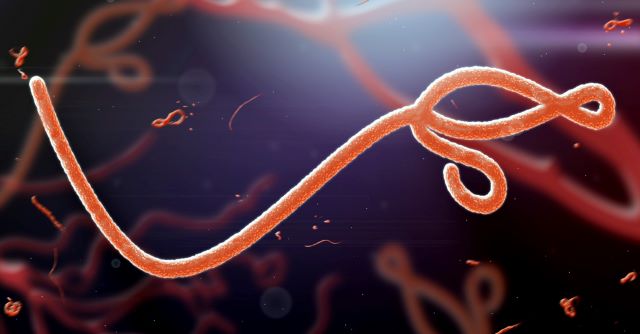
He explained that the epidemic was caused by Bundibugyo virus, a species of Ebola virus for which there are no vaccines or therapeutics.
He said in the absence of a vaccine, there are many other measures that countries could take to stop the spread of the virus and save lives.
This is even without medical countermeasures, including risk communication and community engagement.
Ghebreyesus thanked the Government of Uganda for postponing the annual Martyrs’ Day celebrations, which could attract up to two million people, because of the risk posed by the epidemic.
“WHO has a team on the ground supporting national authorities to respond. We have deployed people, supplies, equipment and funds.
“I have approved an additional 3.4 million dollars from the Contingency Fund for Emergencies, bringing the total to 3.9 million dollars.
“I would like to use this opportunity to thank all countries who contribute to the CFE, and we will continue to keep all Member States informed,’’ he said.
The session in Geneva comes at a turbulent moment for international health systems, as humanitarian crises, climate-related shocks and widening economic pressures increasingly strain public health responses.
WHO itself has faced growing financial uncertainty following steep reductions in donor funding over the past year, forcing the organisation to restructure programmes and reduce staffing.
According to WHO budget documents, unpaid assessed contributions from current and previous financial periods totalled nearly 360 million dollars at the end of 2025.
Ghebreyesus at the opening of the session acknowledged the impact of the cuts but insisted WHO had emerged more resilient after nearly a decade of reforms.
“We have now completed the restructuring process,” he said.
“We have reached a position of stability and are moving forward, with purpose and confidence.”
He argued that reforms launched nine years ago had already transformed the organisation’s scientific, emergency and financial health.
The initiatives highlighted were the creation of the WHO Hub for Pandemic and Epidemic Intelligence in Berlin, and the mRNA Technology Transfer Hub in South Africa.
Others are the Pandemic Fund established jointly with the World Bank, which has provided 1.4 billion dollars in grants to 128 countries.
Ghebreyesus also pointed to the negotiations that produced the Pandemic Agreement adopted by Member States last year.
This is alongside amendments to the International Health Regulations aimed at strengthening global preparedness for future pandemics.
“The final unresolved element remains negotiations on the Pathogen Access and Benefit Sharing system, which countries had hoped to finalise before this week.
“It hasn’t happened yet, but I am confident it will,” Ghebreyesus said.
He also linked the current debate over global health financing to broader calls from developing countries for greater “health sovereignty” and less dependence on external aid.
“In the past year, many countries have experienced severe disruptions due to sudden and steep cuts in development assistance.
“But they had an unintended benefit: they prompted many leaders to say now is the moment to leave behind the era of donor dependency and open a new era of health sovereignty,” Ghebreyesus said.
Over the coming week, delegates are expected to debate a wide-ranging agenda covering malaria elimination, antimicrobial resistance, mental health.
Others are immunisation, universal health coverage, digital health and artificial intelligence (AI), emergency preparedness and health conditions in the occupied Palestinian territory.






