















































*Tinubu’s administration on track to address humanitarian crises
The United Nations Resident and Humanitarian Coordinator in Nigeria, Mr Matthias Schmale has canvassed for sustained support to meet the humanitarian needs in northeast Nigeria.
Schmale said this while answering questions from the UN correspondent of the News Agency of Nigeria (NAN) in New York during a news conference on the humanitarian situation in Nigeria.
Schmale, who was in New York to attend Resident Coordinators retreat told NAN that he had earlier visited Washington DC, where he discussed humanitarian, development and peacebuilding challenges and opportunities.
“I’ve spent two days with my colleague in United Nations Office for the Coordination of Humanitarian Affairs, (OCHA )Washington to try and drum up support to get funding gap closed.
“But you know, we are part of the global trend in Nigeria of increasing humanitarian needs with funding not holding up to that,’’ he said.
He also met with officials from the U.S. State Department, USAID, the U.S. Institute of Peace, civil society and the media as well as senior staffers from the Senate Foreign Relations Committee and the House of Representatives Foreign Affairs Committee.
He highlighted the troubling humanitarian situation in northeastern Nigeria and the importance of international support and strengthened partnerships to address humanitarian needs, accelerate progress towards the Sustainable Development Goals, and combat violent extremism.
According to him, the organisation will soon launch its Humanitarian Response Plan 2024 and it will be realistic about funding trends and prioritise its support to the vulnerable girls and women.
“We’re trying to make sure that 700,000 malnourished children severely malnourished kids get the food they need and the protection they need.
“We’re trying to prioritise and use the resources; we hope we will get next year as effectively and efficiently as we can.
“There’s no doubt that neither this year nor we anticipate next year we will get what we want which really forces us into difficult decisions, and some people will be left out.’’
The UN official said humanitarian response plan funding had remained low, citing the Humanitarian Response Plan 2023, saying, it remains significantly low at roughly a bit over a third of what the organisation needed.
Schmale said that the situation in northeast Nigeria was far from over, nothing the presence of a continued non-international armed conflict that is affecting a lot of people.
“We think more than eight million people remain in need of assistance.
“We will soon launch the humanitarian response plan for next year and we aim to reach five million that are in need of assistance.
“So one element of the humanitarian dimension of this armed conflict, as you know, that has to do with Boko Haram. I use Boko Haram as a summary term.
“You will be aware there’s different factions and I think the second point I want to make is that Nigeria remains very much a part of the fight against violent extremism,’’ he said.
According to him, the situation in the northeast is a protection crisis and advocating that the UN stays involved in supporting the Nigerian government to protect these vulnerable people.
He said it was not just about addressing humanitarian needs like food, but it’s protecting people and especially women and girls.
“Secondly, we see the investment into the humanitarian work there as prevention, preventing the violent extremism from spreading further,
“You are aware, there’s very much a dimension of the Sahel in this, we are very worried about the situation in Niger of course, which remains unresolved.
“This could have further impact on neighbouring countries also in humanitarian terms, including Nigeria,’’ he said.
In addition, he said Nigeria had come out of the seventh election since 1999.
“I think we need to recognise that with all the uncertainty and the troubles across the Sahel and West Africa, Nigeria remains a stable country, a democratic country, and we owe it to them to recognise that and to partner up with them.’’
He, however, expressed regret that UN sought support to reach four million in 2023 but could not reach them as it had to prioritised its support due to funding challenge.
“It’s not always easy to look at what impact that has but I will argue that the 700,000 severely malnourished children that I mentioned, that is an increase over last year is an example.
“It is an example that of a fact, if you can’t do the preventive humanitarian work, you will see rising numbers of malnourished children as we saw this year, that’s how that shows.
“So it’s not necessarily at the point of starvation, and dramatic consequences like that but especially children and vulnerable women are beginning to feel the brunt of us not being able to support what we should be supporting,’’ the official said.
TINUBU’S ADMINISTRATION ON TRACK
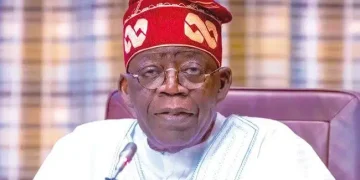
United Nations Resident and Humanitarian Coordinator in Nigeria, Matthias Schmale says President Bola Tinubu-led administration is on track in addressing humanitarian crises in Nigeria.
Schmale said this while answering questions from the UN correspondent of the News Agency of Nigeria (NAN) in New York on his experience working with the Nigerian Government.
Schmale, who was at UN headquarters in New York to attend Resident Coordinators retreat commended the efforts of the Government of Nigeria on addressing humanitarian crises.
“I think that the Tinubu’s administration is on a good track; the President recently launched Presidential Humanitarian Trust Fund and he is asked at this trust to address humanitarian crises.
“He’s asked that this trust fund is resourced two thirds from within Nigeria, private sector and government, each and a third international community solidarity.
“So, we think that’s the right way to go in Nigeria, despite some desperate indicators around poverty and so on as a middle income country.
“We welcome that the government under President Tinubu sees it as their responsibility to drive preparedness and response to humanitarian concerns,’’ he said,
The Federal Executive Council had on October 24 approved the creation of a Humanitarian and Poverty Trust Fund to raise at least a sum of five billion dollars annually.
The goal of the trust fund is to enable the Federal Government to respond promptly to humanitarian situations in the country.
The funds will be sourced from the Federal Government, private and international organisations as well as well-meaning individuals.
According to him, development Agenda is very high for the government and some people will argue you can prevent the fertile ground from combat for violent extremism growing if you invest into development.
“You will have heard from our leadership, the UN Secretary General and the Deputy Secretary General and around rescuing the Sustainable Development Goals (SDGs) agenda.
“The new government is very much up for that. We are urging the international community to take up the request for partnership to rescue the SDG agenda and help them accelerate development.’’
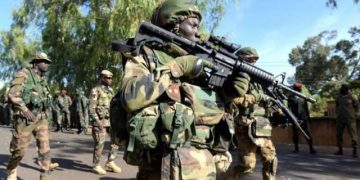
Answering questions on the security situation in the Northeast, he said that the Nigerian military had achieved what they call kinetic success in fighting the Boko Haram.
“So, Boko Haram, again, as a summary term is weaker than it used to be.
“Our assessment would be that they cannot sustain the kinds of military campaigns against the military but instead, what they are doing is inflicting violence on civilians, you know their violence has become more unpredictable.’’
The UN envoy said the organisation had been seeing rising numbers of civilians being killed and tortured because they do random attacks all over the places, which also means it’s become less safe for civilians, but also humanitarian, so that hasn’t changed.
In addition, he expressed concern over the instability in Niger that Islamic violent extremist groups from the country might also spread to the northeast Nigeria.
“So right now, North Nigeria I think is relatively safe and protected from those influences as much as it can be but the region itself is not.
“For the UN, I think it’s fair to say the influence of violent extremist groups remains of grave concern,’’ Schmale said.
NAN reports that Schmale, also visited Washington, DC, where he discussed humanitarian, development and peacebuilding challenges and opportunities with interlocutors from the United States.
He met with officials from the U.S. State Department, USAID, the U.S. Institute of Peace, civil society and the media as well as senior staffers from the Senate Foreign Relations Committee and the House of Representatives Foreign Affairs Committee.
He highlighted the troubling humanitarian situation in northeastern Nigeria and the importance of international support and strengthened partnerships to address humanitarian needs, accelerate progress towards the Sustainable Development Goals, and combat violent extremism.
In Nigeria’s northeast, where some 700,000 children are suffering from life-threatening severe acute malnutrition, UN colleagues – working in support of the Nigerian Government – have managed to reach 3.5 million people with critical aid – in the areas of food, healthcare and shelter.