







































By Elijah Olusegun
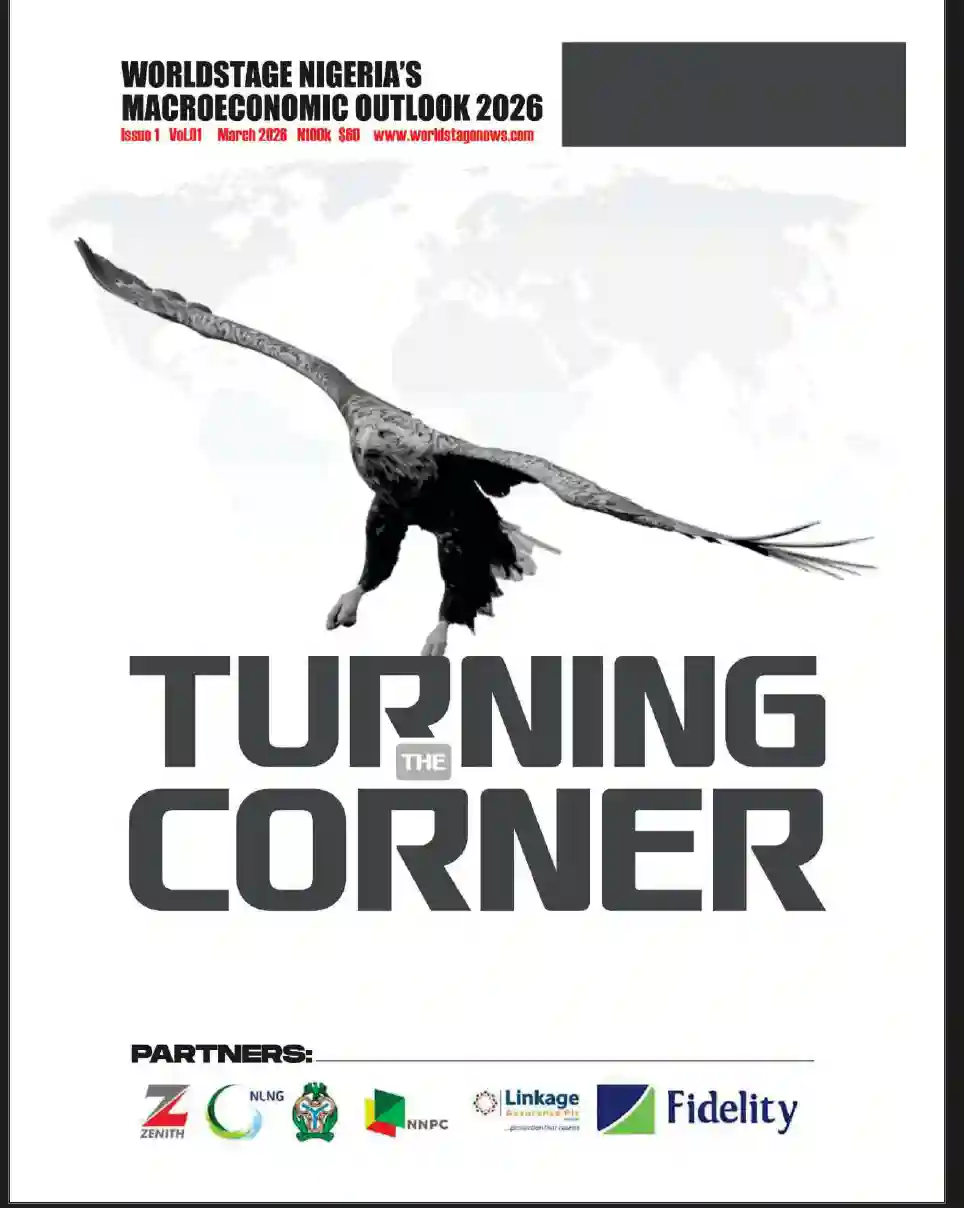
WorldStage Nigeria’s Macroeconomic Outlook 2026– Demand and Trade Dynamics: It makes sense to view the Nigeria’s power sector through the lens of continuous transition in 2026. And its path to consolidating previous reforms will emerge from rising electricity demand thanks to population growth and GDP expansion.
There will be government initiatives, too. One of them is the 30-30-30 Roadmap. It aims at 30 GW of power generation by 2030 with 30 percent coming from renewables.
Other initiatives to look out for are increasing adoption of renewable energy, including solar and wind power; and growing interest in decentralized power solutions, such as mini-grids and off-grid systems.
Nigeria’s power market will grow from 15.45 GW in 2025 to 17.38 GW in 2026, with a projected CAGR of 12.47 percent from 2026 to 2031. Renewable energy has a bigger part to play. Forecasts indicate it will grow at 25.02 percent CAGR through 2031.
Many believed that past reforms, especially the 2005 Electric Power Sector Reform (ESPR) Act and the 2013 privatization have not lived up to expectation. And the reasons for this include weak regulation, debt, gas supply bottlenecks, and ageing infrastructure.
The sector has since stalled on 6,000 MW capacity with about 45% of Nigeria still lacks access to grid electricity supply.
It’s obvious that the 17.38 GW capacity projection for 2026 rests on the new Electricity Act reforms, increased gas-to-power investments, and distributed energy resources focusing on solar power expansion. The N1.11 trillion power allocation, 1.9 percent of the 2026 budget, will only supplement.
Investment and Funding
The power sector has endured years of illiquidity owing to legacy debt making the sector unattractive. This might have changed. The Presidential Power Sector Debt Reduction Programme through its N501-billion inaugural bond has set out to repay what the government owes.
The debt burden, including chunks from electricity subsidies, stood at N4 trillion before the intervention.
The federal government will now enforce the pay-as-you-go tariff model to end subsidy. And whatever intervention cost it deems necessary also becomes a shared responsibility with the states.
Besides the power allocation in the 2026 budget, the government has secured a $1.1 billion facility from the African Development Bank (AfDB). This will provide electricity access to 5 million Nigerians.
The International Finance Corporation (IFC) has also committed $70 million to support mini-grid projects across the country. The World Bank and the Japanese International Development Corporation (JICA) have also pledged $950 million for the Distributed Access through Renewable Energy Scale-up (DARES) program. The goal is to supply electricity to 17.5 million Nigerians.
In addition to that, the Islamic Development Bank (IDB) has announced plans to deepen its partnership with Nigeria to address infrastructure gaps in the power sector.
For mini-grids, the potential annual market is already testing $8 billion, and the homes system, $2 billion. Attention will most likely shift to investment in the energy mix, renewables generally, and solar power in particular in 2026.
Wind energy (and its wind-solar hybrid) will also draw attention. As projection goes, it will experience a high Compound Annual Growth Rate till 2031.
Nigeria has the capacity to generate 3200 MW or 68 GW from wind. Katsina, Sokoto and Plateau hold the biggest potential here.
Hydroelectric energy, through the Private-Public Partnership model, will also attract investors and international funding. Large-scale power plants will generate more interest.
Cases in point include the Katsina Ala Hydroelectric Project ($878 million investment), and the $5.8-billion Mambila Hydroelectric Project. There are other small hydropower (SHP) projects like the Balanga Dam SHP which UNIDO and the EU support.
Most of these are already in the 2022 Energy Transition Plan (ETP) that seeks to eradicate energy poverty in Nigeria by 2060.
Exploring the energy mix, and transitioning to the renewables have thus become necessary in consolidating the power sector reforms.
Government Reforms
The Nigerian government has introduced several reforms in the power sector to improve electricity supply and achieve universal access.
One of them is the decentralization of the sector. Its amendment of the Electricity Act 2023 will allow states to license, regulate, and manage their own generation, transmission, and distribution.
There’s also the National Integrated Electricity Policy (NIEP). It seeks to reshape Nigeria’s power landscape, enhance sector governance, and drive investment across the electricity value chain.
Another is the Nigeria Independent System Operator (NISO) to manage grid operations, independent of the Transmission Company of Nigeria (TCN).
In the renewable subsector, the Renewable Energy Integration mandates GENCOs and DISCOs to integrate renewable energy into their energy mix to meet national net-zero targets.
Efforts are also underway to modernize transmission and distribution networks, with a focus on improving capacity and resilience.
Challenges
Along the way of the power sector consolidation stand hurdles like infrastructure, financial restraints, and economic impacts.
Of the abundance of energy resources Nigeria has, thermal energy remains the leading source of power generation. About 80 percent of electricity the nation generates comes from that source—23 gas-powered stations. Other sources include hydroelectric generation, the biggest of the renewables. It contributes 27 percent. Nigeria has yet to harness biomass to generate electricity.
But vandalism/insecurity, ageing infrastructure, debt, and regulatory uncertainties have crippled the stations’ output. They generate about 5000MW when they have capacities for 14,000MW.
Broken Infrastructure- Power infrastructure in Nigeria is ageing, especially those facilities for transmission and distribution.
Apart from the plants that the Nigeria Integrated Power Project (NIPP) added between 2000 and 2015, most of the infrastructure has been around since the 1960s. By 1999, only 19 of the 79 generation plant were functioning well. This sub-optimal operation is the leading cause of frequent power grid collapses and related outages.
The identified lapses in earlier reforms have entrenched the infrastructure problem. Again, the problem won’t just disappear in 2026 despite the best of efforts and intentions. In fact, the success of other efforts in the year depends on how and when the power infrastructure undergoes renewal or modernization.
Regulatory Bottlenecks- The Nigerian Electricity Regulatory Commission (NERC) has taken up a number of tasks in regulating the sector such as fixing cost-reflective tariffs, enforcing renewable power generation, monitoring the market, and others.
Its consultative approach, however, limits its ability to enforce decisions. Nigerians are stil lamenting the chaos that results from this- slow metering, estimated billing, power cuts, and DISCO’s impunity.
The problem will manifest still in 2026. Government interventions will keep tariffs and other subsidized revenue sources unfunded. It can’t help it.
That means more debt and tariff fluctuation. The uncertainty this creates doesn’t just hurt the consumers, it discourages investors too.
Debt Burden – Notwithstanding the presidential initiative to clear the past debt it owes the sector, the government will still rack up more liabilities.
The reason is that the gaps remain. For instance: Who pays for capacity charges—the power GENCOS are capable of generating but cannot evacuate for lack of grid capacity? There will also be unpaid invoices for power GENCOs supply to the grids; DISCOs will default, too. And subsidies continue one way or the other.
Gas supply debts, FX fluctuation, and decaying infrastructure can only increase liabilities.
Apart from the trillions it owes GENCOs and DISCOs, including the legacy debt, the government remains indebted to gas suppliers to the tune of $1.3 billion.
The debt overhang will keep pressure on resources that could have gone in pursuit of the consolidation.
Insecurity– Bandits and terrorist organizations like Boko Haram have been targeting national assets. Power grids, distribution facilities, and transmission lines now run the ever increasing risk of sabotage.
No fewer than 128 transmission lines have been vandalized across the nation, according to the Transmission Company of Nigeria (TCN). It recorded 131 vandalism cases last year. The Shiroro-Mando transmission line has witnessed this often, sometimes plunging about 17 northern states into darkness for days. This may continue in 2026 as the menace persists in the northern part of Nigeria.
Opportunities
Funding gaps in generation, transmission, and distribution currently stand at over $40 billion. No doubt, the sector remains attractive, especially to investors looking for opportunities in renewable energy and distributed generation. This includes solar mini grids, home solutions, renewable, and battery storage solutions.
Grid modernization and distribution will come with opportunities like smart metering, grid upgrade, and distribution market.
Policy-backed opportunities like net billing regulations, decentralized regulations, and rural electrification initiatives will also emerge. The Gas-to-Power and Conventional Energy policy backing some of them will explore gas plants expansion and commercialization.
Key Takeaway
The power sector in 2026 will be transitioning. Opportunities and risks inherent in a transitioning sector abound. Private and public participants can take advantage of these.
Many of the factors that turn out the key drivers of the 2026 consolidation will equally create the bumps that will impede the momentum. It’s in the nature of the environment.
*Extract from WorldStage Nigeria’s Macroeconomic Outlook 2026.