








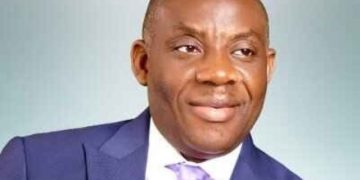

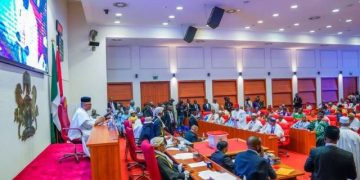




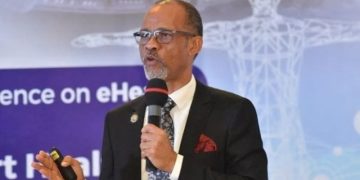




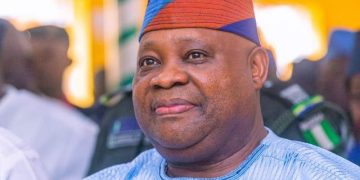
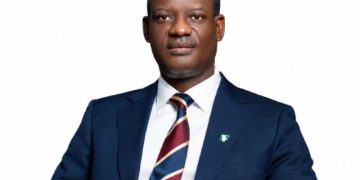
























WorldStage— The Deputy President of the Senate, Senator Barau Jibrin, has challenged the gloomy assessment of Nigeria’s economy and democratic governance presented by former Vice President Yemi Osinbajo.
Barau firmly asserted that both federal and state governments are actively implementing strategic measures to tackle the country’s longstanding structural challenges.
Speaking in Yola, Adamawa State, at a public lecture marking Governor Ahmadu Umaru Fintiri’s 59th birthday, Barau responded to Osinbajo’s keynote address.
Osinbajo had cited data showing declining public satisfaction with democracy and widespread economic pessimism across Africa.
While conceding these anxieties, Barau countered that the former vice president overlooked active government interventions, attributing discontent to a communication gap rather than inaction.
He affirmed that federal and state authorities are addressing these issues, pointing to initiatives like the Nigerian Education Loan Fund (NELFUND) and major infrastructure projects including the Lagos-Calabar and Badagry-Sokoto highways.
Furthermore, he noted that current economic hardships stem partly from global supply chain disruptions, urging leaders to improve policy communication to restore public trust.
Osinbajo, who served as vice-president from 2015 to 2023, cited Afrobarometer survey findings highlighting dissatisfaction with democratic governance and worsening economic conditions across Africa.
According to figures he referenced, 64 per cent of Africans preferred democracy, but only 38 per cent were satisfied with how it was functioning.
He also cited findings that 59 per cent viewed their national economies negatively, while 51 per cent believed economic conditions had deteriorated.
The former vice-president warned that rising living costs, unemployment, inadequate healthcare, and declining youth participation in elections could weaken public confidence in democratic institutions.
His concerns centred on the need for governments to deliver tangible improvements in citizens’ living conditions and ensure that democratic governance responds to public expectations.
Responding, Barau identified inadequate communication between political leaders and citizens as a major factor contributing to negative perceptions of government performance.
He maintained that authorities needed to explain their policies, ongoing projects, and development interventions more effectively, while acknowledging the difficulties Nigerians face.
On education, Barau highlighted the Nigerian Education Loan Fund (NELFUND), introduced under President Bola Tinubu’s administration, as an intervention intended to widen access to tertiary education.
He argued that student financing could help young Nigerians from financially disadvantaged backgrounds pursue higher education, although the scheme’s wider impact depends on effective implementation and access to the programme.
The deputy senate president also cited major road projects, including the Lagos-Calabar Coastal Highway and the Badagry-Sokoto Highway, alongside infrastructure initiatives in the North-East and North-West.
He argued that investments in roads, water supply, and other essential infrastructure were necessary to stimulate economic activity, improve connectivity, and support long-term national development.
Barau further attributed part of the pressure on living costs to international economic disruptions, including the Russia-Ukraine war and tensions in the Middle East, which can affect energy prices and global supply chains.
However, the central test for government remains whether its policies produce measurable improvements in household purchasing power, employment, public services, and living standards.
His response underscores the importance of transparent communication alongside verifiable results in strengthening public trust and democratic accountability.






