




















































WorldStage— Nigeria’s Minister of Finance and Coordinating Minister of the Economy, Taiwo Oyedele, has acknowledged that a section of Nigerian households is spending up to 120 per cent of its monthly income on food, forcing families to borrow just to put meals on the table.
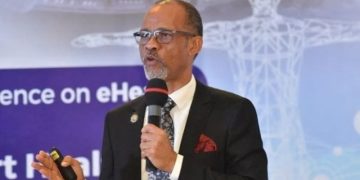
Speaking at Chatham House in London, Oyedele stated that recent government data highlights the severe squeeze on everyday living standards.
“When food expenses surpass total monthly earnings, families have no choice but to take on debt, lean on extended family members, or cut back on other crucial expenses like health and education.
“In fact, there was a survey we did that shows that up to 120 per cent of household income is spent on food. Like how do you spend 120 per cent of your income? You borrow food before the end of the month,” Oyedele said during the engagement.
The disclosure underlines the heavy toll persistent inflation and macro-economic adjustments continue to exact on ordinary Nigerians.
While the federal administration has defended its broader economic restructuring—including the removal of the petrol subsidy and the unification of foreign exchange windows—Oyedele acknowledged that soaring food costs and high living expenses remain acute realities for the populace.
The minister’s comments have drawn swift reactions from citizens and economic analysts, spotlighting the plight of the working poor—households where employment no longer guarantees basic food security.
As the administration pushes forward with its fiscal consolidation phase, pressure is mounting for targeted interventions to ease food inflation and protect vulnerable communities.
To counter the crisis, the National Economic Council (NEC) recently approved a 90-day economic action plan designed to prioritize food affordability, support vulnerable households, and mitigate transit costs through the expansion of compressed natural gas (CNG) public transport.
Additionally, the Ministry of Finance plans to publish regular scorecards tracking poverty and real income per capita to accurately measure the impact of its reforms.
Analysts warn that without immediate and effective agricultural interventions, the practice of borrowing to eat will deepen the country’s poverty trap.
For millions of struggling Nigerians, the primary expectation remains a tangible reduction in market prices so that basic food stops being a luxury funded by debt.






