







































WorldStage— The Nigeria Labour Congress (NLC) and the Trade Union Congress (TUC) are now in face off over the Federal Government’s proposed ₦70,000 monthly transport allowance for public servants.
The initiative, designed as a six-month palliative starting November 2026 to cushion the country’s harsh economic realities, has exposed deep operational divisions between Nigeria’s two primary labour centers.
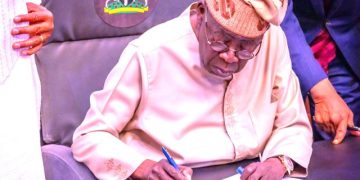
The friction follows a memorandum of understanding (MoU) signed on Tuesday, October 27, 2026 during a conciliation meeting in Abuja between the Federal Ministry of Labour and Employment and NLC.
The agreement grants civil servants across all levels a ₦70,000 monthly transport intervention alongside the phased payment of outstanding peculiar allowance arrears.
However, the TUC swiftly issued a joint statement on Wednesday fiercely rejecting the deal.
TUC President Festus Osifo and Secretary-General Nuhu Toro argued that temporary wage awards are unsustainable and entirely inadequate to tackle the country’s soaring inflation.
Instead of short-term relief, the TUC demanded an immediate baseline salary restructuring to lift the lowest-paid worker’s pay to ₦300,000, asserting that “workers are demanding social and economic justice, not favours.”
The TUC further accused the government of dragging its feet on previous agreements, including crucial adjustments for health workers under the Joint Health Sector Unions (JOHESU).
In a sharp counter-response on Thursday, NLC President Joe Ajaero openly criticized the TUC’s opposition during a live television interview.
Ajaero clarified that the NLC acted entirely independently during the negotiations after the TUC had previously distanced itself and threatened the NLC over joint media reports.
“Why is TUC challenging what was gotten for the workers when we stated clearly that NLC was acting alone,?” Ajaero questioned, expressing confusion over why a union would reject a deal it was never a party to.
He noted that while the NLC pushed for immediate committee action, the TUC had ironically suggested delaying formal wage review processes until mid-2027.
Adding to the tension, the Nigeria Union of Pensioners (NUP) entered the fray, blasting both the NLC and the Federal Government for excluding retirees from the transport package.
NUP National President Godwin Abumisi described the omission as “unjust” and insensitive, noting that elderly retirees face the exact same high transportation costs to access healthcare and food markets.
As the November rollout approaches, the public face-off leaves organized labour deeply fragmented, raising significant questions about their collective bargaining power moving forward.






