









































WorldStage— The Minister of Education, Dr. Rauf Tunji Alausa, had questioned the long-standing estimates placing Nigeria’s out-of-school population at between 15 million and 17 million, saying the figures had been repeatedly cited without a sufficiently comprehensive household-level count.
According to him, emerging evidence from state-level household surveys suggests that the historical estimates may significantly overstate the actual number.
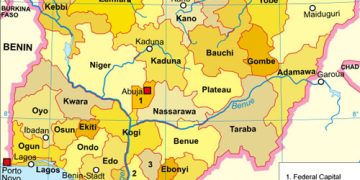
He cited Kaduna State, where a household survey covering more than 90 per cent of households reportedly produced a figure of less than 190,000 out-of-school children against an earlier estimate of about 585,000.
He also referred to another Kaduna estimate of about 1.2 million, which he said fell to less than 100,000 following a general household survey.
Jigawa State, he added, had also recorded significant differences between existing estimates and the results of its own household-level assessment.
Alausa said reliable data would enable government to determine where children are out of school, understand the reasons for exclusion, target infrastructure and interventions more accurately, and monitor whether children who return to school remain there.
He, however, stressed that any reduction in the estimated national figure would not lessen the urgency of the problem.
“Even if there’s significant reduction, any child out of school is still too many,” he said.
The Minister disclosed that more than one million children had been moved from the streets into school nationally over the past two and a half years, while Jigawa State alone had reportedly moved more than 180,000 children into school over the last two years.
He said the next challenge was to sustain enrolment, keep children in school and prevent new cases of school exclusion.
Alausa said the government was increasingly relying on digital education data to achieve this, noting significant progress in the 2026 Annual School Census through the digitised Nigerian Education Management Information System (NEMIS).
According to him, more than 56 per cent of public schools had entered their 2026 Annual School Census information, while 41 per cent of private schools had populated their records on the digital platform.
He described the growing participation of both public and private schools as a major step forward in strengthening education planning and accountability.
“Without data, you’re flying blind. Data will tell you everything,” the Minister said.
He explained that the data being generated would help the Ministry identify gaps in access and participation, monitor enrolment, plan infrastructure and assess the impact of education interventions more accurately.
The Minister said this was why education planning under NESRI was increasingly being anchored on reliable data rather than assumptions and historical estimates.
He also disclosed that the Ministry had conducted a national assessment to establish a baseline for literacy, numeracy and cognitive development among learners at the primary, junior secondary and senior secondary levels.
According to him, the assessment would provide a clearer picture of learning outcomes and enable government to measure the effectiveness of interventions over time.
Alausa said the data and reforms being generated across the education sector were directly relevant to the Child Foresight Analysis because the future of Nigerian children could not be secured through projections alone.
He said the foresight initiative provided an opportunity to embed long-term thinking, systems thinking, adaptive innovation and youth participation into national planning, while ensuring that decisions taken today protect the interests of future generations.






