













































By Abiodun Folarin
WorldStage– As part of the initiatives to achieve a $1trillion economy by 2030, the Federal Government, in partnership with the World Bank, has launched the Sustainable Power and Irrigation for Nigeria (SPIN) Project, a major initiative designed to strengthen irrigation infrastructure, improve dam safety and expand sustainable power generation in a bid to enhance food security and stimulate economic growth across the country.
Strategies to achieve the lofty goal of a $1trillion Gross Domestic Product ( GDP) by 2030 include creation of jobs and improvement of infrastructure.
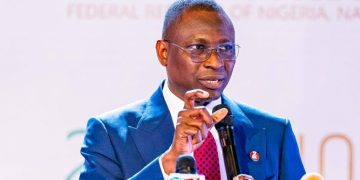
Speaking at the official flag-off and the second meeting of the project’s Steering Committee in Abuja on Tuesday, March 10, 2026, the Minister of Water Resources and Sanitation, Joseph Utsev, said the initiative would significantly enhance sustainable water management, agricultural productivity and energy access nationwide.
Utsev described the SPIN Project as a flagship programme under the Renewed Hope Agenda of Bola Ahmed Tinubu, aimed at strengthening food security, boosting economic resilience and accelerating infrastructure development.
According to him, the project supported by the World Bank will strengthen dam safety, improve water resource management, expand irrigation systems and support hydropower generation.
He explained that the initiative would also help Nigeria transition from reliance on rain-fed agriculture to climate-resilient irrigation systems capable of supporting year-round farming and increased food production, alongside improved monitoring and project management.
Utsev further highlighted the role of Water Users Associations (WUAs) in ensuring participatory irrigation management, noting that farmers would play active roles in the operation and maintenance of irrigation facilities to ensure long-term sustainability.
He commended states that have already met participation requirements and urged others to take the necessary steps to join the programme, stressing that strong collaboration among the Federal Government, state governments, development partners, farmers and the private sector would be crucial for the project’s success.
Also speaking at the event, the Minister of Power, Adebayo Adelabu, represented by the Permanent Secretary in the ministry, Mahmouda Mamman, reaffirmed the ministry’s commitment to supporting the project.
He said the initiative aligns with the administration’s priorities of strengthening food security, improving energy access and promoting economic growth.
Adelabu added that the project would enhance dam safety, irrigation development and hydropower generation while expanding access to reliable electricity.
The Permanent Secretary of the Federal Ministry of Water Resources and Sanitation, Emanso Umobong, who also serves as Secretary of the Steering Committee, presented a report on the activities of the committee since its inauguration.
In his goodwill message, the World Bank Global Director for Water, Saroj Kumar Jha, said the project builds on the achievements of the Transforming Irrigation Management in Nigeria (TRIMING) Project, which reached over 1.7 million people and expanded irrigation to more than 43,000 hectares of farmland before concluding in 2025.
According to him, the SPIN Project will further strengthen irrigation development, improve water management institutions, promote hydropower development and attract private sector investment into irrigation and agricultural value chains.
He noted that the programme aims to rehabilitate about 40,000 hectares of irrigated land while improving dam safety and water storage management across Nigeria’s more than 400 dams.
The World Bank Country Director for Nigeria, Mathew Verghis, said recent economic reforms by the Tinubu administration have helped stabilise the economy and positioned the country for sustainable growth and job creation.
Verghis explained that the bank’s new Country Partnership Framework for Nigeria covering 2026 to 2032 will focus on job creation, water security, food security and energy development, while increasing engagement with state governments and mobilising private sector investment.
The National Project Coordinator for the SPIN Project, Ipinlaye Olaiya, presented an overview of the project’s implementation progress, while the vote of thanks was delivered by the Director of Irrigation and Drainage at the ministry, Oyeronke Oluniyi.
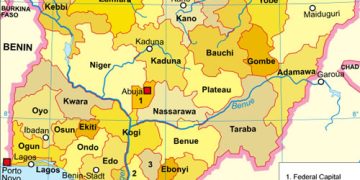
The Steering Committee meeting was attended by representatives of several state governments, including Caleb Muftwang of Plateau State, represented by Deputy Governor Josephine Piyo; Babagana Umara Zulum of Borno State, represented by Secretary to the State Government Bukar Tijani; and Muhammad Inuwa Yahaya of Gombe State, represented by Deputy Governor Manassah Daniel Jatau.
Also in attendance were commissioners of water resources and agriculture from participating states, development partners, chairmen and managing directors of River Basin Development Authorities, as well as other key stakeholders in the water sector.
Highlights of the event included the presentation and discussion of the SPIN Project’s 2026 budget and work plan, high-level discussions with the World Bank, panel sessions and the official launch of the initiative






