










































WorldStage– The Federal Government of Nigeria has outlined key economic gains recorded in 2025, citing declining inflation, steady economic growth, improved external reserves, and strengthened investor confidence.
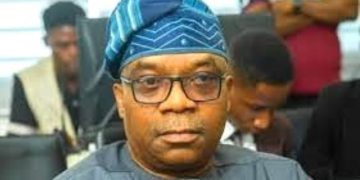
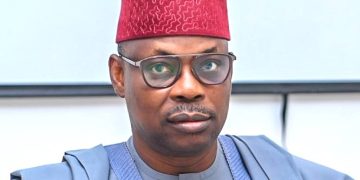
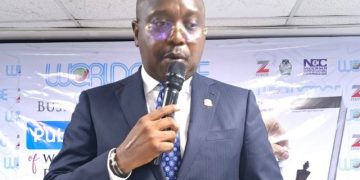
The Minister of Information and National Orientation, Mohammed Idris, disclosed this on Monday during his end-of-year press briefing in Abuja.
According to the minister, headline inflation fell to 14.45 percent in November 2025, marking eight consecutive months of decline, while food inflation also trended downward.
He added that the country’s Gross Domestic Product (GDP) grew by about 3.9 percent in the third quarter of the year, driven largely by resilience in the non-oil sector.
Idris further revealed that Nigeria recorded a trade surplus of N6.69 trillion in the third quarter of 2025, while external reserves rose steadily to about $44.56 billion, providing a buffer to stabilise the naira and boost investor confidence.
He also highlighted improvements in electricity supply, noting that maximum daily energy generation reached 128,370.75 megawatt-hours nationwide in March.
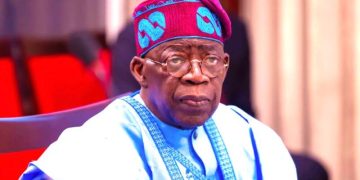
Among other major achievements, the minister listed Nigeria’s exit from the Financial Action Task Force (FATF) Grey List and the N1.5 trillion recapitalisation of the Bank of Agriculture, approved by President Bola Ahmed Tinubu, which he described as the largest single injection into agricultural financing in the country’s recent history.
“The economy has shown strong resilience. GDP growth of about 3.9 percent in the third quarter reflects improved performance, particularly outside the oil sector,” Idris said.
He assured Nigerians that the Tinubu administration remains committed to further easing the cost of living in 2026 through sustained economic reforms.
On foreign relations, the minister explained Nigeria’s continued cooperation with France at a time when some West African countries are reassessing their ties with the European nation.
Responding to questions, Idris said Nigeria remains open to partnerships that serve its national interest. He cited a recent cooperation agreement between the Federal Inland Revenue Service (FIRS) and France aimed at strengthening revenue systems, enhancing digital capacity, and improving cross-border tax compliance.
He also referenced French President Emmanuel Macron’s recent affirmation of solidarity with Nigeria in addressing security challenges, including a pledge to deepen cooperation with Nigerian authorities and support affected communities.
“Nigeria is an open country,” the minister said. “We have partnerships with countries around the world and will continue to seek cooperation with all members of the international community in the interest of our security, growth, and overall prosperity.”
Addressing questions on the death penalty for kidnappers, Idris said the Federal Government operates strictly within the provisions of the law.
“The government will not do anything inconsistent with the laws of the Federation,” he said. “If there is a need to adapt or modify these laws, the National Assembly is there to deliberate and decide.”
On the Safe Schools Initiative and concerns over mass abductions, the minister expressed optimism, noting that the government is intensifying efforts to improve security nationwide.
“We must remain optimistic. That is the optimism President Bola Ahmed Tinubu wants Nigerians to share. Government is working to ensure that mass abductions do not continue,” he added.