
















































*As Tinubu increases CCB budget from N3b to N20b
The Code of Conduct Bureau (CBB) says it is investigating corruption cases involving former ministers, current top government officials and senior public office holders at both federal and state levels.
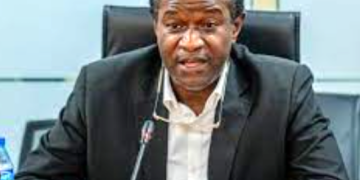
The CCB Chairman, Dr Abdullahi Bello disclosed this in an interview with the News Agency of Nigeria (NAN) on Sunday in Abuja.
“We have started investigating high-profile individuals. There is a former minister we have already taken to court.
“Right now, we are investigating another former minister and also a serving top government official.
“I won’t mention names because we are still at the investigation stage. We don’t want to turn it into a media trial,’ he said.
Bello added that the bureau had also secured interim forfeiture orders from the courts and recording recoveries from investigations involving local government chairmen and senior state officials
Bello noted that the Nigeria’s anti-corruption war did not target only low-level offenders while shielding politically exposed persons, as alleged in certain quarters
The CCB Chairman dismissed the allegation, insisting that ministers, senior government officials and other high-profile individuals are currently under investigation.
He explained that the Bureau’s operations are guided strictly by law and due process, not media pressure or political considerations.
Defending the bureau’s quiet approach, the chairman warned against public condemnation before evidence is established.
“From my experience working with the EFCC, sometimes people write frivolous petitions.
“Once the media starts reporting it, the person is already labeled corrupt.
“But, if investigations later show he is innocent, his name is already damaged. That is why we only speak when we are ready to go to court,” he said.
According to him, asset declaration remains the core tool of the bureau’s work.
“Every public officer is required to declare assets at the beginning and at the end of their tenure. It is within this window that corruption is detected.
“If you declare your assets at the beginning of your tenure and we verify it, we don’t have any issue with you again until the end of your tenure.
“But if at the end of your tenure you suddenly move from ₦10 million to ₦200 million and you cannot explain the source of that increase, that is where we come in,” he explained.
Bello noted that investigations are not limited to asset comparisons alone.
He said the bureau also acts on petitions and allegations from members of the public and public servants.
“If there is a petition against you, we investigate.
“If we find that you did not declare your assets or cannot explain the source of your income, we will take you to court,” he said.
Addressing concerns about Nigeria’s low anti-corruption rating, the CCB boss pointed to structural and operational challenges, including limited manpower, funding and reliance on manual systems.
“We are talking about 4.5 million public servants in Nigeria. We cannot investigate or verify all of them with the resources.
“To manage this, the bureau has adopted a risk-based approach, focusing its limited resources on high-risk and high-profile individuals where the impact would be greatest.
“That is why it may look like we are selective, but it is not about protecting anyone.
“It is about using scarce resources wisely to get the highest results,” he explained.
Bello added that the planned transition to an online asset declaration system would significantly improve efficiency, verification and prosecution.
TINUBU INCREASES CCB BUDGET TO N20B
President Bola Tinubu has approved a massive increase in the Code of Conduct Bureau (CCB)’ budget from about N3 billion to nearly N20 billion.
The Chairman of the Code of Conduct Bureau (CCB) Dr Abdullahi Bello disclosed this in an interview with the News Agency of Nigeria (NAN) on Sunday in Abuja.
Bello said the increase was to overhaul the nation’s outdated asset declaration system, strengthen verification and enforcement to make the bureau more virile.
He added that the budget increase was necessary to fund technological upgrades, improve the bureau’s working environment and strengthen verification processes and enhance enforcement capacity.
The CCB chairman recalled that when he assumed office, he discovered that asset declaration was still largely manual, relying on paper forms that were scarce, expensive to print and difficult to store, analyse and verify.
He noted that public servants across ministries and agencies constantly requested tens of thousands of forms that the bureau could not provide.
According to him, the situation was worsened by the fact that the 2025 budget made provision of only about N70 million for printing forms.
He said the amount could only produce just about 50,000 to 60,000 forms for over 4.5 million public servants nationwide.
To address the challenge, he said the bureau adopted a temporary model inspired by Kenya, uploading asset declaration forms on its website for public servants to download.
However, he said the method only solved the problem of availability, not the deeper issue of a manual system.
Bello revealed that the bureau is now at an advanced stage of developing a fully online asset declaration platform, following extensive consultations with stakeholders.
He said the system, expected to be ready by the first quarter of 2026, will allow public servants to declare assets from anywhere in the world.
The CCB chairman said the digital platform will be a “game changer” because it will link directly with key databases.
According to him, the platform will link, Corporate Affairs Commission (CAC), Federal Inland Revenue Service (FIRS), Bank Verification Number (BVN) system, land registries and other government records to enable instant verification.
He added that artificial intelligence will also be deployed to analyse asset declarations, compare net worth at the beginning and end of a public servant’s tenure
The AI platform, according to him, would flag unexplained wealth or possible breaches of the Code of Conduct for further review.
As part of reforms, Bello said the bureau has begun inviting ministers, permanent secretaries and other senior officials for asset verification, stressing that “verification is not investigation.”
He disclosed that the Attorney-General of the Federation and Minister of Justice, Lateef Fagbemi personally appeared to verify his assets, sending a strong signal of leadership by example.
The CCB chairman said verification had already led to interim forfeiture orders in cases where public servants failed to declare assets or could not explain their sources, including properties within and outside Nigeria.
According to him, some recovered funds were already transferred to the Central Bank of Nigeria.
He warned public servants that failure to declare assets or refusal to honour verification invitations could trigger investigations and possible prosecution before the Code of Conduct Tribunal.
Bello urged compliance with the bureau’s guiding principle: “Declare or Forfeit.”