














































By Abiodun Folarin
WorldStage— The implementation of Nigeria’s new tax laws has coincided with a 27 per cent increase in revenue performance across 23 states in the first half of 2026, as the Joint Revenue Board (JRB), says the reforms are shifting the focus of taxation towards high income earners and easing the burden on low income taxpayers.
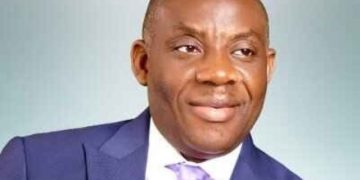
The Executive Secretary of the JRB, Olusegun Adesokan, disclosed this on Wednesday in Abuja at a media parley marking the first year of implementation of the tax reforms.
Adesokan said a comparison of revenue returns from the 23 states between January and June 2026 and the corresponding period of the previous year showed a 27 per cent improvement.
“From the returns we got from 23 states, when compared to their performance last year, the same 23 states, we’ve seen a 27% increase. This is between January and June this year,” he said.
He attributed the performance to a deliberate effort to focus taxation on high-net-worth individuals rather than low income earners, in line with the reforms’ objective of protecting vulnerable households while ensuring that those with greater financial capacity contribute appropriately.
“The vision is to tax prosperity, not poverty,” Adesokan said.
According to him, data from the 23 states indicate that about 92 per cent of income earners who pay tax now fall under lower tax rates or are no longer liable to pay personal income tax under the new regime.
Under the revised personal income tax structure, the first ₦800,000 of income is taxed at zero per cent, while the next ₦2.2 million attracts a 15 per cent rate. The top personal income tax rate stands at 25 per cent, which Adesokan described as the lowest among Africa’s 12 largest economies.
He said the changes were designed to increase disposable income and provide relief to workers, citing an example in which an income earner with applicable deductions could save more than ₦80,000 monthly, or nearly ₦1 million annually.
The JRB chief also dismissed concerns about the introduction of additional taxes, insisting that the reforms were focused on simplifying the tax system rather than increasing the number of tax obligations.
“No new tax has been introduced. Instead, multiple levies have been consolidated into nine taxes, and the model harmonisation law has been adopted by 21 states,” he said.
He explained that the harmonisation framework was intended to tackle multiple taxation at the subnational level, where individuals and businesses often face overlapping levies and inconsistent collection practices.
Adesokan said the board had also issued uniform guidelines to improve tax administration across states, while the National Tax Identification system, developed in collaboration with the Nigerian Revenue Service, would enable tax authorities to verify taxpayer records across state boundaries.
According to him, the system is expected to reduce repeated verification processes and address situations in which taxpayers are subjected to demands from more than one state.
On illegal roadside collections by unions and associations, the JRB executive secretary said the board was working with the police and state authorities to establish a national framework to curb the practice.
He called for greater use of technology and stronger enforcement, warning that individuals and groups should not stop, intimidate or harass motorists and traders under the guise of collecting revenue.
Adesokan further stated that informal sector traders were exempt from income tax under the applicable provisions and should not be subjected to unlawful demands. He urged the public to seek accurate information about the reforms to counter misinformation and prevent illegal collections.
On the next phase of implementation, he said the National Economic Council had approved a 90 day action plan covering measures such as harmonisation of subnational taxes, expressing optimism that more states would adopt the model law within the period.
He also urged taxpayers with complaints against revenue agencies to approach the Office of the Tax Ombud, noting that its complaint resolution services are free.
Adesokan expressed confidence that the benefits of the reforms would become more evident over time, saying implementation was expected to improve further in 2027 and by 2030.