





















































WorldStage Newsonline– The re-constituted Monetary Policy Committee (MPC) of the Central Bank of Nigeria (CBN) rose from its two day meeting on Wednesday with unanimously decisions to retain the Monetary Policy Rate (MPR) at 14.0 per cent; Cash Reserve Rte (CRR) at 22.5 per cent; Liquidity Ratio at 30.0 per cent; and Asymmetric corridor at +200 and -500 basis points around the MPR.
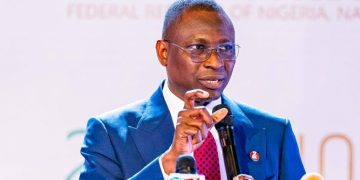
The Governor of the Central Bank of Nigeria Godwin I. Emefiele who read the communique at the end of the meeting in Abuja said the Committee was of the view that further tightening would strengthen the impact of monetary policy on inflation with complementary positive effects on capital flows and exchange rate stability.
Though, he said that the decision could potentially dampen the positive outlook for growth and financial stability, but that the Committee was of the view that loosening would strengthen the outlook for growth by stimulating domestic aggregate demand through reduced cost of borrowing.
“This may, however, lead to a rise in consumer prices, generating exchange rate pressures on the currency in the process,” he said.
“The Committee also believes that loosening could worsen the current account balance through increased importation. On the argument to hold, the Committee believes that key macroeconomic variables have continued to evolve in a positive direction in line with the current stance of macroeconomic policy and should be allowed more time to fully manifest.”
On the committee’s considerations before reaching the decision, he said it noted with satisfaction the gradual return to macroeconomic stability as reflected in the third consecutive quarterly growth in real GDP in the fourth quarter of 2017.
He said it also noted the continued moderation in all measures of inflation as well as sustained stability in the naira exchange rate and urged the Bank to sustain the stability to avoid a mission drift.
He said, “In particular, the Committee welcomed the narrowing of the exchange rate premium between the BDC segment and the Investors’ and Exporters’ (I&E) window of the foreign exchange market. Overall, the Committee noted that the recovery of the economy was strengthening, in view of the return to growth of the Services Sector. As the fiscal sector continues to settle its outstanding liabilities, it reduces its domestic debt profile, thus increasing the liquidity of the banking system. However, the Monetary Policy Committee observed increasing monetization of oil proceeds as evident in the growing FAAC distribution, relative to the 2017 level of disbursements. The Committee urged the Government to initiate strong stabilization programmes and to freeze the growth in its aggregate expenditure and FAAC distributions in order to create savings; needed to stabilize the economy against future oil price related shocks.
“Notwithstanding the general improvement in macroeconomic conditions, the Committee noted the rather slow pace of moderation in food inflation. It also took note of the potential risk of a pass-through from rising global inflation to domestic prices. Members, however, expressed confidence that the tight stance of monetary policy would continue to complement other policies of government in addressing some of the structural issues underlying the stickiness of food prices. The Committee noted that at 14 per cent, the policy rate was tight enough to rein-in current inflationary pressures. The Committee, therefore, reaffirmed its commitment to price stability conducive to sustainable and inclusive growth.
“The Committee noted with satisfaction the gradual implementation of the Economic Recovery and Growth Plan, in an effort to stimulate economic recovery. In the same vein, the Committee urged quick passage of the 2018 Appropriation Bill by the National Assembly, so as to keep fiscal policy on track and deliver the urgently needed reliefs in terms of employment and growth for the citizenry.
“The Committee noted the relatively strong balance sheets of the deposit money banks’ and the stable outlook. This is in spite of the concentration of non-performing loans in a few sectors, which the Committee observed was satisfactorily being addressed by adequate mechanisms established by the Bank to address the phenomenon. The Committee also noted that as Government pays off its huge contractor debts, a sizeable portion of these non-performing loans will be addressed. The Committee urged the Bank to strengthen its supervisory oversight and early warning systems to promptly identify, monitor compliance with extant prudential regulations, sustain macro-prudential policy and manage emerging vulnerabilities in the banking system.
“The Committee reiterated the Bank’s commitment to delivery of low interest credit as evidenced in its bold steps to adopt unconventional monetary policy to aid credit flow to vulnerable and growth enhancing sectors of the Nigerian economy. The Committee, therefore, enjoined the Bank to continue to support and encourage credit delivery at single digit interest rate through other mechanisms in the interim, while encouraging the banking system to establish frameworks to increase credit delivery to the employment generating sectors of the economy. In consideration of available data and evolving macroeconomic indicators, the Monetary Policy Committee is committed to revisiting its decisions in the short to medium term as the fundamentals evolve.”
In reaching its decision, he said the Committee appraised potential policy options in terms of the balance of risks and also took note of the gains made so far as a result of its earlier decisions; including the stability of the foreign exchange market, the moderation in inflation rate as well as the restoration of economic growth.
“The launching of the Food Security Council by the Federal Government to improve food sustainability is a step in the right direction. The Committee was concerned about the fiscal distortions associated with absence of buoyancy between GDP growth and tax revenue, and urged the fiscal authorities to deploy appropriate corrective measures to address this phenomenon,” he said.



