









































*Calls for immediate establishment of Nigerian Blue Economy Commission
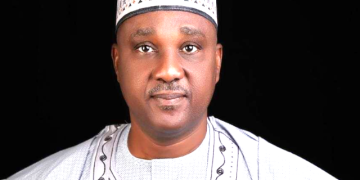
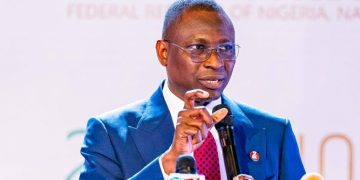
WorldStage Newsonline- On the strength of current clamouring that Nigeria’s blue economy holds untapped potential to become the primary driver of economic diversification, job creation, and sustainable development, Mr Soji Adeleye, CEO, Alfe City Institution has released a breakdown of how the critical sector will contribute about $1.5 trillion to the current $450 billion Gross Domestic Products (GDP) of Nigeria.
In a paper, he shared at the Citizens/Stakeholders’ engagement forum on effective implementation of the National Policy on Marine and Blue Economy in Lagos on July 3, 2025, he said the Blue Economy is a universal realization of the boundless resources of the ocean and how we can all use this to improve the livelihoods of all people in a sustainable way.
At the forum organised by the Ministry of Marine and Blue Economy, Adeleye, a leading advocate of blue economy in Nigeria listed what different components of the blue economy will contribute to the GDP if well explored to include; Maritime Trade & Port Logistics $150–$200 billion; Integrated Transport Infrastructure $180 billion; SEZs & Industrial Hubs $350 billion; Offshore Energy & Marine Resources $250 billion; Services, Employment & Blue-Tech $120 billion; and AfCFTA-enabled Regional Trade $150 billion.
“This projection hinges on speed, scale, coordination, and policy discipline—a Marshall Plan–style transformation with Nigerian ingenuity at the helm,” he said.
The Alfe City Institution boss said while there may be discriminatory and condescending views on green economy, the blue economy where the application of the principle is case specific as the developmental requirements of each country is unique to each one.
“For the purpose of Nigeria’s unique economic, goals it is important to de-emphasize marine and underline BLUE because it’s already in it, it is a component. Blue is inclusive, symbolic and serve the maximalist interpretation of Nigeria’s own Sustainable Blue Economy objectives,” he said.
Sharing the outlines of a strategy to develop 10 new ports as dynamic economic growth centers, integrated with transport corridors and industrial zones, targeting a national GDP expansion to $1.5 trillion plus in the short to medium term, he said Nigeria has a 853 km coastline, underutilized for national productivity; Existing ports are overburdened; regional competitors have outpaced Nigeria in maritime logistics; Ten new ports would dramatically increase Nigeria’s cargo handling capacity which will attract regional transshipment business currently going to hubs like Lomé and Tema, enable exports of value-added goods (not just raw commodities) via efficient logistics, create jobs in port operations, logistics, customs, and maritime services, while AfCFTA) will unlock regional demand that Nigeria must meet or risk marginalization.
For the proposal on the blue economy to yield the projected GDP, Adeleye said it’s important to establish the Nigerian Blue Economy Commission, a twenty first century autonomous entity for the purpose of oversight and coherence.
“A Bill has been introduced in the National Assembly – to ensure urgent passage of the bill the Federal Government should immediately push for enactment,” he said.
He said that the bill should enact legislation for Blue Economy special status zones, implement customs reform and digital port processes, partner with private sector.
Moreover, in order to accelerate Nigeria’s transformation into a blue economy powerhouse, he said it is important for the country to learn from global blue economy champions as international best practices offer valuable insights.
The countries he said had made immense advancement in blue economy include Seychelles- Pioneered Blue Bonds to finance marine sustainability; Norway- Showcased how ecosystem-based policies and marine data governance can enable oil, fisheries, and ocean tech to thrive in harmony; Gambia- Demonstrated that local, gender-inclusive aquaculture can rebuild ecosystems and empower communities; Morocco- Integrated food systems, climate resilience, and coastal regeneration through its Blue Belt; Portugal- Positioned itself as Europe’s blue-tech innovation hub with robust marine R&D.
“Conclusively, a Nigerian Blue Economy more than any other policy initiatives provides the country the most singular and unique opportunity to confront most of its headline economic challenges – low productivity, unemployment, transportation infrastructural deficit, absence of enough centers of economic growth and sustainable development that none of the patch works initiatives can address,” he said.
“Building 10 new modern ports creates the flag poles for this bold design that would be visible to the generations that are coming behind. It would be difficult for a sensible person to understand how and why Lagos remains the only place young aspiring graduating children think of going to better their prospects in life for a county as large as Nigeria. It’s really sad.
“There are already policy discussions about deep sea ports in nearly all the littoral states and in most cases remains just that – Paper talk. Reason why consistently in all our (Alfe City Institution) advocacy series we have stressed the need for the National government to understand the littoral states are the staging posts and fulcrum of a sustainable Nigerian Blue Economy therefore must be fully integrated into the Blue Economy discuss.
“The seriousness of this government about the Nigeria Blue Economy will be only made clear by the immediate establishment of the Nigerian Blue Economy Commission – a twenty first century establishment, an Institution that would be research driven, financial and technology savvy to anchor what is a pivotal policy that must be at the center of Nigerian economic universe.
“It must put its enormous weight behind the NBEC Bill at the House of Representatives to this effect so that it will methodically oversee the implementation of a sustainable Nigerian Blue Economy. It is time to properly put Nigeria at the helm of Africa’s economic future and guarantee the coming generations of a place to be proud of and assure their life prospect.”