
















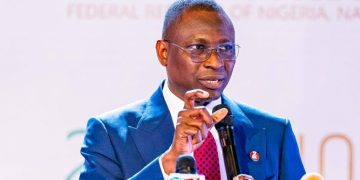











Chief Executive Officer of Alfe City Institution, Mr Soji Adeleye, has advocated securitisation as an alternative means of funding for the nation’s Blue Economy.
Adeleye, an investment banker said this at the Nigerian Blue Economy Discovery Conference with the theme: ‘Discovering Nigeria’s Own Sustainable Blue Economy ‘ on Tuesday in Lagos.
Securitisation is the conversion of an asset, especially a loan, into marketable securities, typically for the purpose of raising cash by selling them to other investors.
Adeleye said the blue economy required a lot of physical infrastructure.
“So, there is a need to look at alternative means of financing, one of which is securitisation, and this is because of the fact that we have gas and petroleum in abundance.
“And we know what is happening to petroleum now, it is going out of fashion but while it last we have more gas than oil.
Relatively, gas is considered cleanser than crude oil, the European countries do their heating during winter with gas and it is also happening in Ukraine, we can utilise our gas,” he said.
Adeleye called for the establishment of a special purpose vehicle, an entity, where the funds realised from securitisation would be warehoused.
“The bone I am picking with Akinwumi Adesina, President, African Development Bank on reasons why Nigeria is not pursuing this means is from the fact that his understanding is that the money will come to government.
“This money is sent to special purpose vehicle, not even to ministry that existed. It is called special purpose because it is meant for the implementation and management of the blue economy development.
“It is different from the alternative funding or financing that is mostly known which is low interest and others,” he said.
Adeleye predicted that a lot of people would embrace the initiative because of the assurance that their money would be safe.
On the suggestion that money be generated from companies that pollute the waterways, he argued that the companies had been paying one form of compensation or the other for the last many decades.
“The size of their penalty is not sufficient for us to undertake the kind of project that we are talking about that runs into billions of dollars. Government cannot afford to over penalise the oil companies because they are partners,” he said.
On location of more ports for the blue economy, he explained that the Federal Government was not mandated to spend money, or own port.
“We expected the Infrastructure Concession Regulatory Commission (ICRC) to be here to speak on concession and activities that they oversee but unfortunately they could not make it.
“There are some states that have been trying to build ports for the last decade and have been struggling with it because of the level of regulatory requirements and politics that are involved.
“If there is a recognition that the blue economy is good for us, what we are expecting the ICRC to speak on is what could be done to mitigate the present regime, make things easier for them to facilitate the issuance of licenses for autonomous ownership that is now the Federal Government,” he said.
Also speaking, Dr Oluseye Ajuwon, from the Department of Economics, University of Lagos, listed other alternative means for funding as crowd funding and venture capital, among others.
Ajuwon noted that there a lot of prospects in the new ministry which should be harnessed for economic growth and development.
“Fish consumption in the country is high and the country imports $70 million worth of fish and we have fish farmers in the country, what are they doing?
“Securitisation is good for this venture but for one to invest in it, ensure that the project you are embarking on will foot the loan taken,” he said.