



















































WorldStage– Brazil’s Petrobras and Dangote Refinery are demystifying some of the maritime legends surrounding the Strait of Hormuz on the Persian Gulf as the U.S.-led war on Iran escalates.
Petrobras has refused to join crude exporters jacking up prices following threats to the strait—just as Dangote Refinery sustains production still relying on import amidst the rising geo-political tension.
The six crude suppliers to the private refinery, including Petrobras and the NNPCL, are either plying alternative routes to the strait—or have no reason sailing the Persian Gulf.
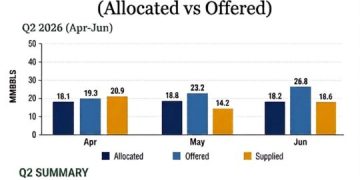
Days ago Dangote Refinery revealed it faces crude supply limitation from its domestic supplier, and so relies on import from international traders to keep producing.
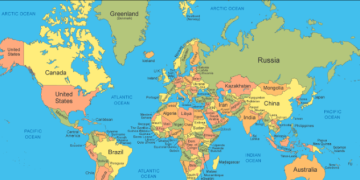
The steady supply indicates the strait might have been cracked up to be much more than it is: the chokepoint through which 20 percent of global oil supply passes, from the Middle East to Asia mostly, and Europe.
Except Petrobras, other crude exporters who risk no insurance policy taking alternative routes, but sell at the international commodity market rates are merely riding on volatility—not risk control.
“Petrobras has alternative routes outside the conflict zone, which gives us security and competitive costs for our operations,” Claudio Schlosser, executive director, logistics and market, told Baird, a maritime publication, on March 3
So the closure of the strait might not necessarily disrupt the entire crude supply chain outside the Middle East. Dangote Refinery supplying 62 percent of Nigeria’s daily petrol consumption has faced no such disruption.
After commission, the refinery imported 60 percent of its feedstock. Its major suppliers have since included the US, Brazil, Angola, Algeria, and Equatorial Guinea, apart from its domestic supplier Nigeria.
For the US, only 7 percent of its export, including crude (shale), passes through the Iranian strait to Asia. The Indian Ocean and the Atlantic Ocean are alternative routes the US takes to ship to Africa.
Equatorial Guinea sits right on the Atlantic Ocean, its primary route (and the Mediterranean Ocean) for shipping its crude to China, India, Spain, Italy, and Nigeria.
Petrobras can also take the Cape of Good Hope at the southern tip of Africa route reach its buyers, including Dangote Refinery.
Algeria in North Africa supplies Europe and Africa, taking the Mediterranean Ocean route.
Sitting on the Gulf of Guinea, too, Angola, another of Dangote’s suppliers, has no use for the Persian Gulf. It ships through the Atlantic Ocean to Nigeria and other buyers.
As volumes go, the closed strait does not hamper crude supply to Dangote refinery. But the ripples the closure generated have spiked up both crude and refined oil prices.
Nigeria, the company confirmed, sells its crude to the refinery higher than the $85 per barrel Brent currently sells for, from $64 per barrel a week ago.
Other suppliers can only follow suit.
In response, Dangote adjusted its gantry price twice in five days, which currently stands at N995 per litre, up from N774 last week.
The company claimed during the week it had already absorbed 20 percent of the cost escalation.
”Selling below costs will undermine our ability to procure crude, sustain production, and guaranteed uninterrupted production,” it said in a press release.
The guarantee disregarded the bottleneck that is the Strait of Hormuz.