

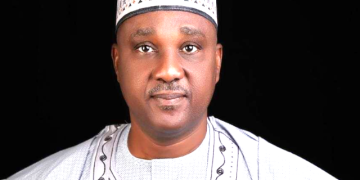








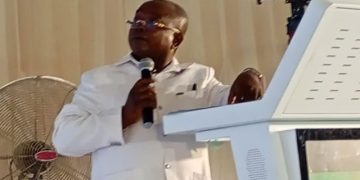


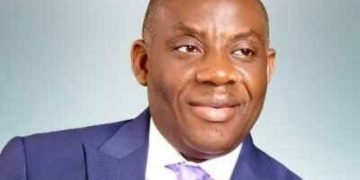








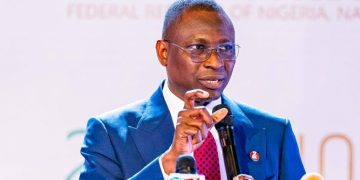









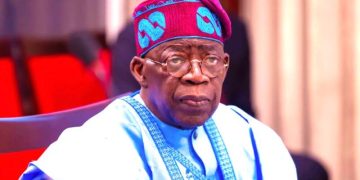





WorldStage— Festus Osifo, the outgoing president of the Petroleum and Natural Gas Senior Staff Association of Nigeria (PENGASSAN) has said that Nigeria’s state-owned refineries were shut down primarily because their operations were commercially unviable, not because they were incapable of processing crude oil.
Speaking to journalists and labour writers in Lagos, Osifo clarified that the facilities were bleeding financially rather than being physically broken.
He explained that the Nigerian National Petroleum Company Limited (NNPCL) systematically halted operations at the plants because continuing to run them created massive operational deficits.
Osifo challenged the widespread public narrative that the state infrastructure was completely incapacitated.
“The refineries were actually shut down, not that they were not functioning,” he stated.
He noted that while the plants were technically capable of refining crude, the financial framework under which they operated meant that the cost of production consistently exceeded the market value of the refined output.
To illustrate the systemic loss, the PENGASSAN leader offered a simple numerical breakdown:”If you put, let’s say, $5 million worth of crude, you feed it through. When the product comes out, you are supposed to get a product worth, let’s say, $6 million. But when you fed in that crude, what you now got at the end would be like $4 million. So, you are losing money.”
He emphasized that keeping the facilities running strictly for the sake of claiming domestic production was an unsustainable strategy that only compounded the financial burden on the NNPCL.
The oil union chief lamented the historical management of the assets, revealing that Nigeria spent an estimated $4.15 billion alongside ₦11.35 trillion on the Port Harcourt, Warri, and Kaduna refineries before 2021.
Despite these massive allocations for turnaround maintenance and rehabilitation, the plants remained largely dormant.
Osifo noted that meaningful, verifiable rehabilitation work only truly commenced after structured contracts were formally executed in 2021.
The commercial failure of the past has prompted a shift in policy advocacy from the union.
PENGASSAN has thrown its weight behind a structural overhaul of refinery ownership. Rather than total state ownership or full privatisation, the association is pushing for the federal government to sell a 51% private equity stake in the state refineries while retaining a 49% minority share.
Osifo argued that bringing in private sector operators, including proposed partnerships with international firms, would fundamentally reduce bureaucratic bottlenecks and political interference.
This hybrid ownership model is also designed to safeguard employment within the local oil sector while stabilizing national energy security.
Osifo warned that without clear regulatory frameworks and commercially viable operations, Nigeria will continue to struggle to attract the long-term investment capital desperately needed for its energy sector.