












































WorldStage— Nigeria needs a coordinated national strategy combining security, justice, climate adaptation, livestock development and economic empowerment to tackle the growing challenges of internal displacement and farmer herder conflicts, Deputy President of the Senate, Senator Barau I. Jibrin, has said.
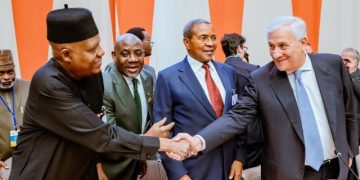
Barau made the call in a country report presented at the Second Parliamentary Seminar of the Sixth Legislature of the ECOWAS Parliament in Accra, Ghana, where he identified pressure on land and water resources, climate variability, environmental degradation, changing migration patterns and insecurity as major factors fuelling conflicts and displacement in Nigeria.
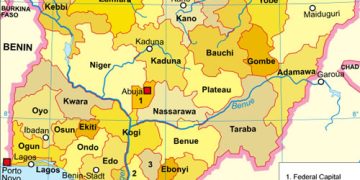
According to the report, Nigeria’s North-East had more than 2.2 million internally displaced persons and over two million returnees as of March 2025, while more than 1.3 million internally displaced persons were recorded in the North-Central and North-West in February 2025.
The Deputy Senate President said the figures showed that internal displacement was no longer merely a humanitarian concern but also a development, governance, security, environmental and economic challenge requiring a comprehensive response.
He said farmer herder conflicts were driven by a combination of crop destruction, competition over land and water, blockage of livestock routes, cattle rustling, disputes over land ownership, shrinking natural resources, seasonal migration and the proliferation of firearms.
Barau stressed that the conflicts should not be reduced to a simple confrontation between farmers and herders, noting that they increasingly intersect with communal disputes, banditry, organised criminality, climate pressures and weaknesses in local conflict resolution mechanisms.
He identified climate change as a significant pressure multiplier, as drought, flooding and environmental degradation reduce the availability of productive land and water and intensify competition among livelihood groups.
The report called for stronger early-warning and rapid-response systems, improved land-use governance, negotiated access to shared resources, modern livestock production, effective justice mechanisms and sustained community dialogue.
It said Nigeria’s transition from unregulated open grazing to modern livestock production should be supported by investment in ranches, veterinary services, water, feed, breeding, transportation, processing and markets.
The report noted that the Federal Ministry of Livestock Development had stated that Nigeria had 273 gazetted grazing reserves covering more than 4.5 million hectares, with the Federal Government working with states to rehabilitate and utilise the reserves.
On internal displacement, Barau said Nigeria must shift decisively from emergency relief to durable solutions, including safe and voluntary return, local integration or voluntary relocation where return was not feasible.
He said returning displaced persons required more than transportation to their communities, stressing the need for security, reconstructed homes, schools, healthcare, water and sanitation, roads, access to farmland, documentation, markets and livelihood opportunities.
The report also highlighted the National Policy on Internally Displaced Persons, Nigeria’s engagement with the Kampala Convention, state-level durable solutions plans and the establishment of the Federal Ministry of Livestock Development as key institutional developments.
It, however, identified inadequate funding and institutional capacity, climate pressures, weak coordination, unreliable data and mistrust between communities and public institutions as major obstacles to effective implementation.
Barau said Parliament had an important role in addressing the crisis through legislation, budget oversight, monitoring of government programmes, community engagement and parliamentary diplomacy.
He urged lawmakers to ensure that the voices of displaced persons, farmers, pastoralists, women, youth and host communities were reflected in relevant legislation and policy processes.
The report concluded that sustainable peace required more than security operations, stressing that justice, livelihoods, effective institutions and inclusive development were necessary to enable farmers to cultivate safely, pastoralists to pursue lawful livelihoods and displaced persons to rebuild their lives in safety and dignity.