













































By Abiodun Folarin
The Nigerian Independent System Operator (NISO), has warned that Nigeria’s decentralised electricity market must be driven by coordinated infrastructure planning and stronger stakeholder collaboration to unlock investment opportunities rather than create fragmented power networks.
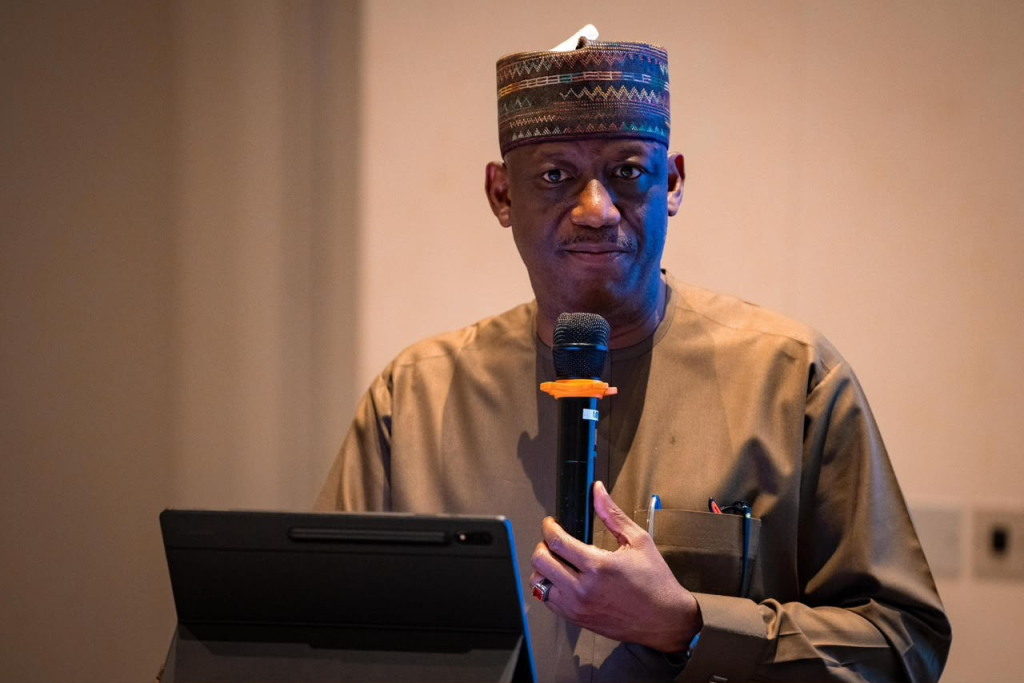
The Managing Director and Chief Executive Officer of NISO, Engr. Abdul Mohammed, said the expansion of state electricity markets under the Electricity Act 2023 required closer coordination among governments, regulators, investors and operators to ensure that new investments supported the overall development of the Nigerian Electricity Supply Industry (NESI).
Mohammed spoke at the ongoing Africa Energy Leadership Summit 2026 at the Landmark Centre in Lagos, where he highlighted the growing complexity of Nigeria’s electricity market following the emergence of state-level regulatory institutions, decentralised generation and new distribution networks.
He said the transition towards multiple electricity markets and independent transmission infrastructure providers presented significant opportunities for investment and growth but could undermine sector-wide efficiency if infrastructure development and system operations were poorly coordinated.
According to him, Nigeria must ensure that decentralisation promotes broader participation and investment without creating disconnected electricity networks or duplicating infrastructure.
Mohammed explained that NISO was expanding its role beyond conventional grid operations to function as a neutral technical integrator, system coordinator and market facilitator, providing the interfaces required for different institutions and market participants to operate efficiently within the wider electricity ecosystem.
He, however, clarified that the expanded coordination role did not confer regulatory authority over state electricity markets on NISO or diminish the statutory responsibilities of the Nigerian Electricity Regulatory Commission (NERC) and State Electricity Regulatory Authorities.
The NISO chief noted that effective coordination had become increasingly important as state electricity networks connect to the national transmission grid, exchange power across state boundaries or depend on shared transmission infrastructure.
He warned that investments undertaken without adequate technical and operational alignment could weaken the benefits of decentralisation, despite the opportunities created by the Electricity Act 2023.
To address the challenge, Mohammed said NISO was promoting Integrated Resource Planning methodologies to ensure that investments in generation, transmission and distribution were complementary, technically compatible, economically viable and consistent with the industry’s long-term development requirements.
He also identified digitalisation and access to reliable industry data as critical to improving coordination, strengthening transparency and boosting investor confidence in the electricity market.
As part of this effort, he disclosed that NISO was pursuing the development of a centralised NESI data infrastructure to consolidate, validate, manage and share critical electricity industry information.
The proposed infrastructure is expected to support better informed investment decisions and improve coordination among stakeholders operating across Nigeria’s evolving electricity markets.
“Our vision is a Nigerian electricity industry that is decentralised in its development opportunities, integrated in its infrastructure planning, coordinated in its operations, transparent in its market administration and attractive to sustainable private investment,” Mohammed said.
He called on state governments, regulators, investors, development partners and technology providers to collaborate with NISO in translating the opportunities offered by the Electricity Act 2023 into measurable improvements in electricity access, reliability, affordability and economic development.





