









































WorldStage– The Federal Government of Nigeria has reiterated the central role of water in driving national development, stating that sustainable water management remains critical to achieving economic growth, environmental stability, and community resilience.
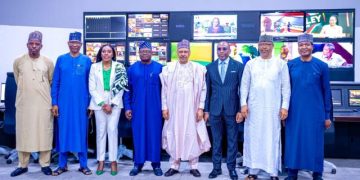
This commitment was restated at the Lokoja Dialogues held on Tuesday at the Rotunda Hall of the Federal Ministry of Foreign Affairs, Abuja.
Delivering her address, the Wife of the President, Senator Oluremi Tinubu, represented by the Wife of the Vice President, Hajia Nana Shettima said the Lokoja Dialogues was designed to confront water-related challenges in local communities.
She noted that the initiative serves as a bridge between communities and policymakers by defining problems and linking them with policies, partnerships, and investment pathways that support sustainable water solutions and help break the cycle of water scarcity and climate-induced poverty.
She added that the programme aligns with President Bola Ahmed Tinubu’s Renewed Hope Agenda, emphasizing the need to integrate knowledge, compassion, policy, and practical action to strengthen community sustainability. According to her, families across Nigeria continue to yearn for improved access to clean water, food, and energy.
In his goodwill message, the Minister of Water Resources and Sanitation, Engr. Prof. Joseph Terlumun Utsev, FNSE, described water as “the lifeblood that sustains ecosystems, powers our economy, and nourishes our people.” He highlighted the profound link between water and development, underscoring its importance to energy production, food security, and environmental balance.
Prof. Utsev explained that forests, wetlands, and river basins help regulate water supply and purification, while hydropower and thermal plants depend heavily on adequate water resources for electricity generation and cooling. He stressed that prioritising water and food security is essential for rural resilience, agricultural productivity, and national stability, calling for stronger policies that mainstream water management across all sectors.
In his remarks, the Minister of Finance and Coordinating Minister of the Economy, Mr. Wale Edun, said closing Nigeria’s water gaps requires collective effort, effective partnerships, and sustainable financing from all stakeholders, especially state and local governments.
Also speaking, the Minister of Foreign Affairs, Ambassador Yusuf Maitama Tuggar, reaffirmed Nigeria’s readiness to deepen collaboration with development partners and other nations in combating climate change and addressing water scarcity challenges across communities.
Earlier, Mrs. Polly Alakija, Chief Executive Officer of the Lokoja Dialogues, said the forum provides a strategic platform for stakeholders in the water sector, policymakers, and experts to examine the impact of climate change on livelihoods and develop actionable solutions to water scarcity nationwide.
The keynote address was delivered by the United Nations Secretary General’s Water Envoy, Her Excellency Retno Marsudi.
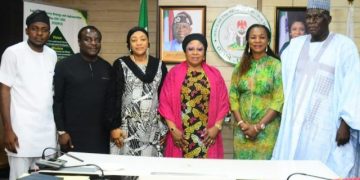
The event brought together senior government officials, academics, media practitioners, private sector leaders, political officeholders, and His Royal Highness, Alhaji Samaila Muhammad Mera, Emir of Argungu and Patron of the Lokoja Dialogues.
A special highlight of the programme was a presentation by pupils of the Bethharbel Foundation Free IDP Elementary School.
The event was officially declared open by the Minister of Finance, Mr. Wale Edun, on behalf of the Minister of Budget and National Planning.





