





















































By Abiodun Folarin
WorldStage– Federal Government of Nigeria has unveiled a package of financing and procurement reforms aimed at dismantling structural barriers facing women owned businesses, with a focus on expanding access to credit, markets, and long-term capital to drive inclusive economic growth.
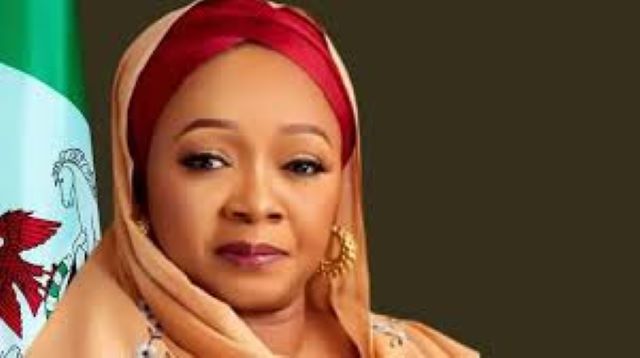
Speaking at the grand finale of the “Give to Gain” Summit in Abuja to mark the 2026 International Women’s Month, Monday, the Minister of Women Affairs and Social Development, Hajiya Imaan Sulaiman-Ibrahim, said the government is shifting from advocacy to targeted interventions designed to unlock the economic potential of women.
The minister disclosed that over 80 per cent of women-owned businesses in Nigeria currently lack access to formal credit, largely confining them to the informal sector and limiting their growth.
To address this, she noted the rollout of the Renewed Hope Social Impact Interventions (RH-SII 774), a nationwide programme structured to deliver grants, microcredit, and enterprise financing to women across all 774 local government areas.
According to her, the initiative goes beyond funding to include skills acquisition, vocational training, agricultural value-chain support, clean energy solutions, and structured mentorship, all aimed at helping women scale their businesses sustainably.
She said: “This landmark intervention ensures structured and equitable access for women-owned enterprises to participate in public procurement processes, thereby opening government contracting systems as engines of inclusion and shared prosperity.”
On the financial markets side, the Director-General of the Securities and Exchange Commission, Dr. Emomotimi Agama, represented by Executive Commissioner, Operations, Mr. Bola Ajomale, emphasised the need to move women entrepreneurs from reliance on short-term financing to long-term wealth creation through the capital market.
He said while millions of Nigerian women are actively engaged in micro and small businesses, the key challenge is their limited access to investment instruments that enable business expansion and asset ownership.
According to him, “Nigerian women currently own 41 percent of micro-businesses in this country, with 23 million female entrepreneurs operating in that segment — placing Nigeria among the highest rates of female entrepreneurship globally, surpassing the 21 percent global average.
“These women are not waiting to be empowered. They are already driving commerce. What they lack is not ambition. They lack access to the instruments that would allow their ambition to compound”.





