










































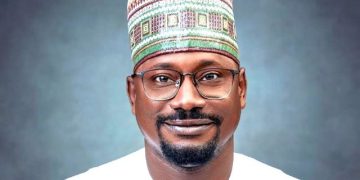



WorldStage– Since the creation of the Economic and Financial Crime Commission (EFCC) under the former President Olusegun Obasanjo’s regime, the crime fighting body has continued to be assailed by public accusation of impartiality and pandering to the executive arm of government in the course of carrying out its duty. This sentiment hasn’t ceased to fester under current leadership of the Commission by Olanipekun Olukoyede, who many have thumbed up for doing waging a true operation against economic and financial crimes across the country.
While that popular applause subsists, many others have also cast aspersion on the Commission’s mode of operation, accusing it of going more after those who are not federal government’s favourites or political opposition figures. Arguments and evidence of political interference have been expressed in perception of the Commission being an arm of government and therefore often seen as an instrument of the incumbent government, lacking the independence to carry out its mandate effectively.
Some observers and the EFCC itself have acknowledged that political actors sometimes question the commission’s motives, perceiving it as a tool to deal with political enemies. Political interference, according to some of these observers, is a significant constraint, contributing to slower trials and weakening the overall effectiveness of anti-corruption efforts.
Watching its operation under Olukoyede, the EFCC appears to have evolved with focus from advance-fee fraud to high-profile political corruption and, at times, even to acting as a “debt collector” for large private sector actors, suggesting a deviation from its core anti-corruption mandate.
The EFCC, according to the statute that establishes it, is to operate with a non-partisan mandate to combat corruption. However, critics believe it is frequently subject to political interference, leading to questions about the genuineness and independence of its operations. They observe that while the EFCC has achieved successes in investigating and prosecuting high-profile cases and recovering stolen assets, its effectiveness is often reduced by political pressures and perceptions that it is used by the government to target political opponents.
When President Bola Ahmed Tinubu assumed office in May 2023, he has expressed substantial resolve to tackle graft, which is a cardinal priority of his campaign agenda. Perhaps, some observers acknowledge, such necessitated the renewed vigour seen in the anti-graft agency under the leadership of Olukoyede. In recent months, the agency under him has brought in new vision and impetus into the battle against sleaze. In a country where corruption is always fighting back, the agency believes that determination is required in sustaining the crusade.
To prove the Commission’s genuineness of purpose and operational independence, Olukoyede, who took over from Abdulrasheed Bawa, spoke about his vision and target while addressing officers of the Lagos Zonal Command of the EFCC in November last year.
He said: “There is need to redirect our focus towards what we were set up to do in Nigeria, which is to drive economic development. We will tilt our focus towards that area. We will work to drive economic development, create wealth and employment.” Consequently, since charity begins at home, he charged the officers and men to declare their assets. Leading by example, Olukoyede declared his assets.
In Nigeria, the fight against corruption is not new. It has been on for decades. How to curb theft and graft has been a major concern from the sixties. It was a major reason the first and second republics crumbled. But corruption has lingered till today for obvious reasons.
The cankerworm would not have survived if previous governments had tackled it with all seriousness and with appropriate strategies.
The starting point under Olukoyede was the reform of the anti-graft body to purge it of the peculiar societal vices. The revelation by the chairman was mind-boggling. In lamentation, Olukoyede, who once visited President Bola Tinubu in Aso Villa, disclosed that EFCC investigators were prone to gratification and bribery, thereby casting doubt on their capacity for thoroughness, probity and efficiency. It is ironic. But with that background knowledge, Olukoyede kicked off the battle from the agency.
The reasons are not far-fetched. A bribe taker is not less vicious and dubious than a giver because they are both enveloped by greed. It is a paradox, an anathema.
If those saddled with the investigation of financial crimes are fraudulent, the process and the outcome are laced with lies, prevarications, compromise, and hypocrisy.
Olukoyede has not spared the rod to save dishonest investigators who have failed the test of integrity. He has intensified efforts to fish out the culprits and sent them packing, thereby preventing the few bad eggs from damaging the time-tested reputation of the agency beyond panel-beating.
The result is that bribe-taking investigators are not permitted to act as willing tools for frustrating investigations. Also, the commission has asserted its independence, saying it is not strictly tied to the apron strings of the federal Attorney-General. But some Nigerians, particularly opposition elements, do not perceive it so but rather as an outfit of oppression and witch-hunting in the hands of the power that be.
To prove their allegation of witch hunt against the Commission, the opposition elements cite some recent clamp down on political figures recently, alleging that EFCC is engaged in politically motivated investigations which have been widespread in 2025, largely from opposition parties. Accusations from opposition parties
In August 2025, the African Democratic Congress (ADC) accused the EFCC of targeting opposition leaders to weaken them before the 2027 general elections. This allegation followed the detention of former Sokoto State Governor Aminu Tambuwal and probes into former Senate President David Mark and former Imo State Governor Emeka Ihedioha.
Key points of the ADC’s criticism include: Selective justice, of which party claims the EFCC revives old cases against opposition figures while dropping investigations involving members who defect to the ruling All Progressives Congress (APC); Questionable timing, with critics, including former Vice President Atiku Abubakar, questioning why old allegations against figures like Mark, Tambuwal, and Ihedioha were suddenly being pursued years after they left office; and Weaponization of anti-corruption, by which the ADC alleges the APC government is using the EFCC to fight its political battles.
Civil societies too are not left out in adding their voices to the criticisms. A Nigerian civil society group, Citizens Against Injustice in Nigeria (CAIN) urged the EFCC to avoid selective investigations and political witch-hunts. In August 2025, CAIN issued a statement demanding accountability for allegedly corrupt ruling-party members who have not been investigated.
The group specifically named several individuals with corruption allegations, including Nyesom Wike, former APC Chairman Abdullahi Umar Ganduje, Senate President Godswill Akpabio, former Kogi State Governor Yahaya Bello, and former Delta State Governor Ifeanyi Okowa.
However, the EFCC and the federal government have consistently denied these accusations, stating that their actions are non-partisan. In early September 2025, Minister of Information and National Orientation Mohammed Idris denied the claims, stating that the government does not interfere in the work of anti-corruption agencies. The EFCC also denied being used as a tool by the ruling party. In an August 2025 statement, the commission called the ADC’s allegations “self-serving, diversionary, narrow, and idle”.
EFCC Chairman Ola Olukoyede defended the commission, stating that it has also investigated powerful ruling party figures, proving its non-partisan mandate. “Corruption fighting back”: The EFCC also suggested some accusations were a form of “corruption fighting back” against the agency’s efforts.
Whatever the position of the public is about the operation of EFCC, no one is in doubt that corruption in Nigeria is deep rooted and massive, requiring that it is stemmed one way or the other if the country is to grow and advance socially, economically and politically. It has taken its toll on the various sectors; it permeates all strata of society and made Nigeria a laughing stock in the comity of nations. Ironically, the proceeds of corruption are lodged in bank accounts in the Western countries.
According to observers, corruption manifests in various ways. From the culture of 10 per cent bribes in the sixties, successive governments have become big contracts for grabs. A Right Activist, Lanre Suraj said the key driver of corruption is greed. The corollary is kleptocracy, underscoring, the collapse of morality, growing indiscipline and the motivation for sabotage and subversion by custodian of public resources.
According to a report titled: ‘Corruption in Nigeria: Patterns and Trends,’ by the Nigerian Bureau of Statistics (NBS), government officials received N721 billion bribe in 2023. The figure amounted to about 0.35 percent of the country’s Gross Domestic Product, GDP.
The report which was based on a survey conducted with the United Nations Office on Drugs and Crime, stated that the average cash received by public office holders last year was N8, 284, an increase from an average of N5,754 in 2019. The report added: “According to the 2023 survey, the average cash bribe paid was 8,284 Nigerian Naira.
“While the nominal average cash bribe size increased since 2019 (from NGN 5,754), this does not account for inflation. The inflation-adjusted average cash bribe in 2023 was 29 per cent smaller than in 2019 in terms of what could be bought with the money. Overall, it is estimated that a total of roughly N721 billion (US$1.26 billion) was paid in cash bribes to public officials in Nigeria in 2023, corresponding to 0.35 per cent of the entire Gross Domestic Product of Nigeria.”
For Olukoyede, corruption is the next deadliest affliction tormenting humanity, apart from terrorism. He lamented that most of the former governors being prosecuted today were those who could not pay minimum wage. To expose more corrupt officials, he urged Nigerians to embrace whistle-blowing, adding that it should be backed by consistent commitment.
Painting an awful picture of gloom, he said urgent and concerted steps should be taken to kill corruption, saying aside terrorism, corruption ranks as the next deadliest affliction of humanity in every region of the world. To stem the tide, he said the battle should be embraced by all Nigerians as a collective responsibility and emphasized that the battle cannot be won through lip service, emotional outburst or mere mob campaigns.
He laments on the magnitude of stealing by corrupt elements in the country. He said anytime he checks case files and sees the amount stolen, he wonders how the country still exists, and that if Nigerians saw some case files they would weep.
Olukoyede also laments that some Nigerians complain of corruption but support corrupt leaders in various ways when they are prosecuted, pointing out the contradiction in public attitude. “Everybody is crying that Nigerians are corrupt, that the system is corrupt, that corruption is killing us and destroying our system, but when we investigate high profile cases and arraign people in court, the same people will carry placards and be supporting corrupt leaders. It doesn’t show that we are serious about this fight, the fight is supposed to be a collaborative effort,” he said.
Olukoyede notes that the fight against corruption required collaboration between the government and the citizens, adding that true progress requires a collective commitment to integrity and accountability. He says corruption remains the biggest obstacle to national development and reiterates the Commission’s commitment to combating financial crimes within the ambit of the law and called for greater public collaboration in the fight against corruption.
Acknowledging the efforts of the Commission in the fight against corruption, Joseph Izibili, a public affairs analyst, says Olukoyede introduces professionalism to the operations of the anti-graft agency. In an editorial in a weekly publication of the National Orientation Agency (NOA), Izibili said Olukoyede restructured and reshaped the EFCC since assumption of office. He added that EFCC secured more than 3,000 convictions in a year. “EFCC is not only vigorously fighting economic and financial crimes, it has also brutally turned the heat against the scourge of cybercrimes by young elements in the society,” he said.
“Thus, data obtained on the outputs of anti-corruption war between October, 2023 and September, 2024, revealed that the EFCC under the watch of Olukoyede secured unprecedented 3,455 convictions — within one year.
“Data also showed landmark recoveries thus far to the tune of N248.750 billion; $105.423 million; $180,300; £53,133.64; €172,547.10 and T1,300.00 Indian Rupees.
“Aside cash recoveries, EFCC under the watch of Olukoyede had also made staggering recoveries. Most significant was the recovery of 753 duplexes on December 2, 2024 in Abuja, documented as the largest single recovery in the history of anti-corruption war.“It has also recovered various other assets, including real estate properties and notable valuables.”
Izibili said the commission launched a radio station in May through which it disseminates anti-corruption messages. He said the anti-graft agency chairman reviewed the commission’s bail and arrest procedures to promote the rule of law and ensure compliance with the EFCC Act. “Conscious of the entrenchment of a functional system as a precursor to effective delivery, Olukoyede initially opted to restructure EFCC organs,” Izibili said.
The EFCC’s operations, truly, are a complex mix of genuine anti-corruption efforts and significant political challenges. While it has the legal mandate and some capacity to fight corruption, its effectiveness is undermined by political pressures that can compromise its perceived independence and genuine impartiality. “Therefore, its operations are neither purely genuine nor purely political but a contested space where its anti-corruption mandate struggles against political realities,” an analyst states.
How Olukoyede will navigate the complication of public perception of witch hunt in the genuine pursuit of achieving the objectives of the Commission remains a challenge.



