
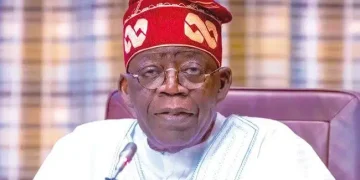



























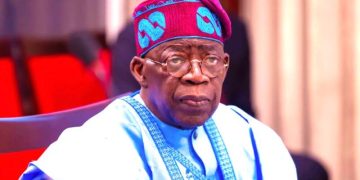





WorldStage— The camp of former Vice President Atiku Abubakar has criticized President Bola Tinubu over reports that he may skip the United Nations General Assembly (UNGA), alleging the move stems from fear of international embarrassment rather than genuine national priority.
Reports emerged indicating that President Tinubu might bypass the global summit, with Vice-President Kashim Shettima reportedly poised to lead the Nigerian delegation.
The reported decision by President Bola Tinubu not to attend the 81st United Nations General Assembly in New York has raised questions from the camp of former Vice President Atiku Abubakar.
Paul Ibe, Atiku’s media adviser, raised the questions in a statement posted on X, following reports that Tinubu would not travel to New York for the high-level UNGA meetings scheduled to begin next week.
According to a report published on Friday, a source close to the Presidency said Tinubu would not attend the annual gathering of world leaders.
“Tinubu will not be attending the UN General Assembly,” the source was quoted as saying, without giving a reason for the reported decision.
The development came after several indications that Tinubu was expected to attend the meeting and deliver Nigeria’s national statement.
A provisional programme had earlier listed the Nigerian President among the speakers for the high-level General Debate, while Nigeria’s Permanent Representative to the United Nations, Ambassador Jimoh Ibrahim, had also publicly said Tinubu would be present.
The United Nations has scheduled the high-level General Debate from September 22 to 28, with the organisation listing the gathering as part of the 81st session of the General Assembly.
Earlier reports indicated that Tinubu was scheduled to speak on September 23, although the provisional speaking order has subsequently been updated.
If Tinubu does not attend, Vice President Kashim Shettima could represent Nigeria at the gathering. Shettima previously represented the President at the 79th and 80th sessions of the General Assembly in 2024 and 2025.
Ibe, however, argued that the reported change in Tinubu’s plans should not be viewed simply as a routine adjustment to the President’s travel schedule.
“For months, the Tinubu administration has spent enormous political and financial capital trying to repair its standing in Washington,” Ibe wrote.
He referred to a reported $9 million lobbying arrangement involving the Federal Government and argued that the administration had invested considerable resources in improving Nigeria’s image and strengthening relations with the United States.
Ibe also pointed to the activities of senior Nigerian officials, including National Security Adviser Nuhu Ribadu, who has been involved in engagements with American officials, as part of the administration’s broader diplomatic efforts.
He further questioned the status of a proposed Nigeria-US mining agreement that had been presented as an issue that could receive attention around the UN General Assembly.
“Then came the retreat,” Ibe wrote, referring to the reported decision by Tinubu not to attend the meeting.
Another issue raised by the Atiku camp was an ongoing Freedom of Information Act case in the United States involving requests for US law-enforcement records concerning Tinubu. The controversy has generated competing claims in recent weeks.
Political analysts noted that this development follows intense activities by US-based lobbying firms linked to political opposition.
These groups had previously threatened public awareness campaigns regarding historical legal controversies involving the Nigerian leader.
The opposition camp claimed that the choice to stay away from New York highlights a reluctance to face scrutiny on the global stage.
Representatives for Atiku argued that a confident administration should fulfill international diplomatic obligations openly.
They asserted that avoiding high-profile global platforms does little to solve pressing domestic concerns. Instead, they framed the shifting itinerary as a reactive measure prompted by external pressure.
But supporters and diaspora groups aligned with the ruling All Progressives Congress (APC) quickly pushed back against the opposition’s remarks.
They condemned the use of foreign lobbyists to target national leaders, warning that such tactics damage Nigeria’s broader international reputation.
Defenders maintained that delegation adjustments are standard diplomatic practice and that the presidency remains fully focused on domestic governance and economic reforms.
Official confirmation regarding the final composition of Nigeria’s UNGA delegation is still awaited from the presidency