
















































By Abiodun Folarin
WorldStage– A former Vice Chancellor of the University of Uyo, Nigeria, Prof. Akpan Ekpo, has cautioned that Nigeria, Africa most populous economy, may emerge the “big loser” in the £746 million port rehabilitation deal with the United Kingdom.
The economist argued that the agreement is structured to primarily benefit British industries while leaving Nigeria with long-term debt obligations.
The proposed port upgrade deal is increasingly being viewed through the lens of value chain control, with indications that key inputs, steel, equipment, and financing are likely to be sourced from the UK. This model, analysts say, could significantly limit Nigeria’s ability to capture downstream economic benefits.
Analysts believe the entire deal is centred on rebuilding the British steel industry, which has either collapsed or is in decline, as well as strengthening its banking system an outcome they say offers little benefit to Nigeria.
Prof. Ekpo, speaking on the Arise Morning Show on Monday, condemned the £746 million port rehabilitation Memorandum of Understanding (MoU) with the United Kingdom. He argued that the debt implications of the deal could impose a long-term burden on future generations if not carefully structured.
He criticised the government’s approach to the agreement, suggesting that relevant technical agencies should have been more involved in negotiating the terms to ensure a more balanced outcome.
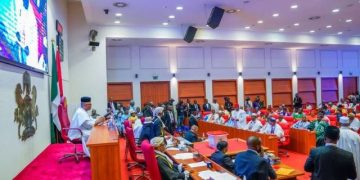
He also raised concerns over the lack of legislative scrutiny, calling for major economic agreements to be subjected to parliamentary review before final approval, in the interest of transparency and national interest.
He said, “The British government is very clever. They’ve turned economic diplomacy upside down and reinforced our neocolonial status. That deal you’ve mentioned would only benefit the British economy.
“It will revitalise their steel industry, which was ailing, and also strengthen their banks. At the end of it, Nigeria will be in debt. The so-called job creation will be for the British, not Nigerians.
“So my view is that, aside from the sumptuous banquet and glamorous reception, the Nigerian government should have allowed experts, including those in investment promotion agencies, to structure this deal. If you look closely, all the equipment needed to renovate the ports will come from the British government and their export investment unit. So, there is little gain for Nigerians.
“That is why, at times, such deals should be handled by experts and not rushed into through the signing of an MoU. In my view, the MoU should be submitted to the country’s parliament for proper scrutiny before approval, especially since it could put citizens into long-term debt.
“If you look at the president’s trips to Europe and other countries, what has been the outcome in terms of job creation and poverty reduction? Such visits should focus on critical issues like stable electricity supply, insecurity, and even the question of reparations.
“The relationship between Nigeria and Britain is not equal. It is historically imbalanced due to colonial exploitation. Instead of pursuing deals that may further impoverish our people, attention should be given to more strategic national priorities.
“And when you consider the resources spent on such visits, with large government delegations travelling abroad, it is disappointing if no tangible benefits accrue to Nigerians.”
He also stressed the need to revive Nigeria’s domestic steel industry, citing the moribund Ajaokuta Steel Complex as a critical asset that has remained underutilised.
According to him, “We cannot allow our steel industry to collapse while entering agreements that promote steel imports. Instead of revamping our local capacity, we are signing deals that make us dependent on foreign supply.”
He reiterated that the deal appears largely designed to rebuild Britain’s steel industry and strengthen its financial system, maintaining that it does not represent a win-win outcome for Nigeria.





