















































WorldStage– A visiting U.S. congressional delegation has praised Nigeria’s recent security gains, including the rescue of 100 abducted schoolchildren in Niger State, while urging President Bola Tinubu’s government to translate “openness” into sustained action against extremist violence.
The assessment came from Rep. Riley Moore (R-WV), a member of the House Appropriations Committee, following days of meetings with senior Nigerian officials in Abuja.
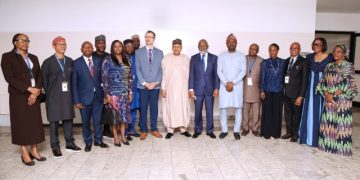
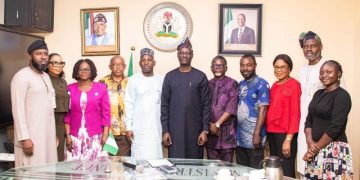
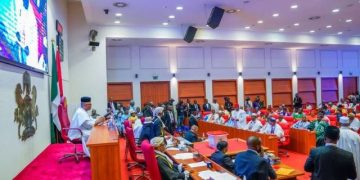
The bipartisan delegation which included Reps. Mario Díaz-Balart (R-FL), Norma Torres (D-CA), Scott Franklin (R-FL) and Juan Ciscomani (R-AZ) held talks focused on counterterrorism, intelligence cooperation, and rising attacks in Nigeria’s Middle Belt and northeast.
According to statement from the office of the National Security Adviser, U.S. Ambassador Richard Mills joined the meetings, where National Security Adviser Nuhu Ribadu outlined new steps Nigeria is taking to disrupt terror networks and protect vulnerable communities.
Moore later shared highlights of the trip in a statement posted on X.
According to Moore, both sides agreed to strengthen a new U.S.-Nigeria joint task force targeting Boko Haram, ISWAP, and bandit militias responsible for kidnappings and deadly raids.
He described the conversations as “productive” but cautioned that “openness has to translate to concrete action,” signaling that Washington will continue to scrutinize how Nigeria implements the commitments.
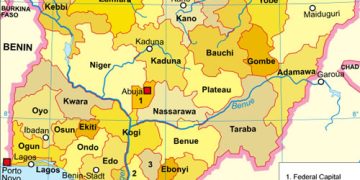
A major point of praise was Nigeria’s rescue of 100 students abducted from St. Mary’s Catholic School in Papiri, Niger State.
The November 21 mass kidnapping in which more than 300 children and a dozen staff members were seized is one of the largest school abductions in the country’s recent history.
Around 50 students escaped shortly after the attack, and the latest group was released over the weekend, confirmed by state officials, the Christian Association of Nigeria, and Kontagora Diocese’s Bishop Bulus Dauwa Yohanna.
The students were handed over to Niger State authorities on Monday for medical evaluations and reunions with their families. More than 165 children and staff, however, remain in captivity.
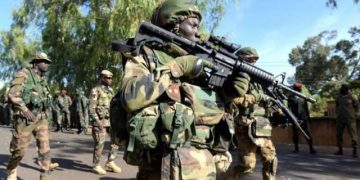
Moore said the rescue demonstrated “increasing responsiveness and capability” under Tinubu’s emergency security directives, which have intensified military operations and intelligence efforts across the northwest and Middle Belt.
The lawmaker also noted that the operation aligns with U.S. priorities for protecting at-risk communities, particularly Christians who have faced recurrent attacks by extremist groups and armed militias.
In a notable shift in tone, Moore dismissed claims circulating in some U.S. political circles that the Nigerian government is overseeing a “systematic extermination” of Christians.
The congressman, who had previously echoed calls from Sen. Ted Cruz and President Donald Trump to classify Nigeria as a “Country of Particular Concern” for religious persecution, now says evidence points instead to a complex mix of terrorism, banditry, and communal clashes affecting both Christians and Muslims.
Nigerian officials have long rejected accusations of state-driven religious persecution, arguing that violence stems from long-running resource conflicts, criminal networks, and jihadist activity.
They cite recent security gains including more than 700 terrorism convictions in 2025 to bolster their case. Christian advocacy groups, however, maintain that repeated attacks on churches, clergy, and rural Christian communities amount to a pattern of persecution that meets international definitions of genocide.
Independent analysts say the truth lies in a complicated middle ground, while not state-orchestrated, the violence disproportionately affects certain Christian areas in the Middle Belt, and inadequate state response has deepened grievances.
Moore’s updated stance suggests the congressional delegation saw signs of improvement, potentially easing earlier U.S. threats of sanctions or punitive designations.
The visit builds on earlier security discussions in Washington and could pave the way for expanded U.S. support, including training, intelligence sharing, and joint counterterrorism operations.
For now, according to sources, both governments are touting the trip as a diplomatic step forward but with hundreds of kidnapped students still missing and extremist violence continuing in multiple states, the pressure on Abuja to deliver sustained progress remains high.





