

























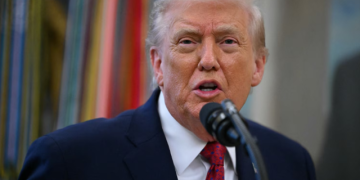














WorldStage– The Nigerian Presidency has dismissed as “politically motivated” renewed efforts by U.S. Republican lawmakers and Christian advocacy groups to pressure President Donald Trump’s administration into re-designating Nigeria as a Country of Particular Concern (CPC) under the U.S. International Religious Freedom Act of 1998.
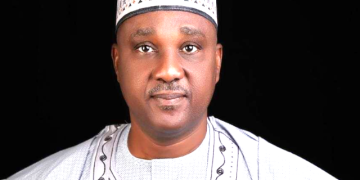
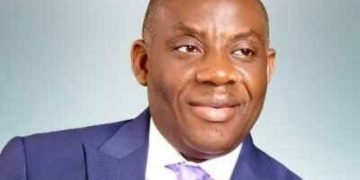
Presidential aide Dr. Daniel Bwala, speaking on Arise News Prime Time accused what he described as a “pack-backed alliance” of senators and lobbyists of waging a disinformation campaign that misrepresents Nigeria’s complex security challenges driven by terrorism, banditry, and criminality as government-enabled persecution of Christians.
According to Bwala, if Washington truly accepted these claims, the designation would have been made “weeks ago,” a sign, he said, that the campaign was more about ideology than evidence.
Nigeria’s sensitivity to the CPC issue is rooted in its past experience.
The country was first designated a CPC in December 2020 during Trump’s first term, after lobbying by groups such as the U.S. Commission on International Religious Freedom (USCIRF) and International Christian Concern (ICC).
The Biden administration reversed that decision in 2021, citing improved counter-terrorism cooperation, but with Trump’s return to office in 2025, Capitol Hill conservatives have revived the push.
Representative Chris Smith’s House Resolution 220 and Senator Ted Cruz’s Nigeria Religious Freedom Accountability Act both demand sanctions on Nigerian officials accused of ignoring or abetting religiously motivated violence claims Nigerian officials say are exaggerated or unverified.
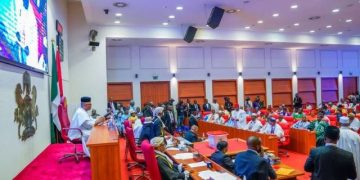
In Abuja, the response has been swift and coordinated. On October 8, the House of Representatives, led by Deputy Speaker Benjamin Kalu, condemned the U.S. bill as “a distortion of facts” inspired by local actors bent on “de-marketing” the country.
Also, Information Minister Mohammed Idris and the Ministry of Foreign Affairs have since reiterated that Nigeria’s insecurity is criminal, not doctrinal, and that CPC status would unfairly stigmatize Africa’s most populous democracy while undermining joint counter-terrorism efforts with the United States.
Officials insist the government remains committed to protecting all faiths under Section 38 of the 1999 Constitution, which guarantees freedom of religion and conscience.
Government said beyond the diplomatic rhetoric lies a more strategic contest of narratives, emphasizing that while Washington’s faith-based lobby frames the crisis as a war on Christianity, Abuja insists it is a war on criminals.
Warning against fanning the redesignation threat, government stated it could jeopardize over $1.5 billion in annual U.S. aid, strain trade ties, and complicate shared security operations in the Sahel.
As advocacy groups like Open Doors and ICC have continued to publish reports claiming more than 5,000 Christians killed in Nigeria in 2024, pressure is mounting on the Trump administration to act.
The State Department has expressed concern but stopped short of a decision, with the 2025 CPC list expected by December.
For now, some analysts say, Nigeria stands at the intersection of faith, politics, and foreign policy caught between American evangelism and its own fight to redefine its global image.