

























































WorldStage Newsonline– Besides the creation of the Ministry of Marine And Blue Economy by President Bola Tinubu, Nigeria must consider serious further legal and institutional reforms tailored towards optimally harnessing the maritime potentials as a nation, according to Mr Angus Obinna Chukwuka ESQ , President Admiralty Lawyers Society Of Nigeria.
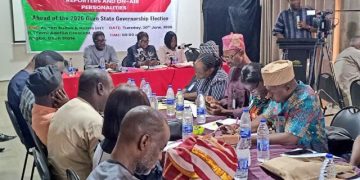
In his presentation “The Nigerian Maritime Legal Landscape And Its Readiness For Integrating A Blue Economy Regime” at the three day forum (26-28 November, 2024) tagged Sustainable Nigerian Blue Economy – Ecosystem Conference at the Hotel Presidential Hotel, Port Harcourt, Rivers State, the legal expert, said this will involve putting the round poles in round holes, but the efforts will be worthwhile .
The three day forum organised by Alfe City Institution and supported by the Ministry of Marine and Blue Economy attracted top officials of the ministry from Nigerian Port Authority (NPA), Nigerian Shippers’ Council (NSC), National Inland Waterways Authority (NIWA), along with other maritime sector’s operators.
Chukwuka observed that Nigeria’s blue economy preceded President Bola Tinubu’s assumption of office, but the creation of the Marine And Blue Economy is a very strategic one which will afford Nigeria the opportunity of paying adequate attention to the marine sector and thereby turning Nigeria into a world economic power.
“But this will involve serious research efforts , legal and institutional reforms , Observance of international best practices, sincerity of purpose and determination,” he said.
The Managing Solicitor, Law Sector described Blue Economy as the totality of the investments, both government and nongovernmental as well as the returns thereon, capital outlays , fiscal policies, budgets , financial activities and income and expenditures arising from ventures into the maritime sector.
“All the financial exposures of individuals, institutions , and government which add or subtract from the profit or losses of the maritime sector forms part of blue economy,” he said.
“All earnings and spending of government agencies whose operations have bearing with the sea or the maritime sector are clearly within the purview of the blue economy.”
He went the memory lane on Nigeria’s maritime journey saying the “Nigerian Maritime Legal history can be traced to the Nigerian colonial ties with Britain and as Nigeria advances further into the Blue economy regime the question is whether our history so far can guarantee us a comfort both for the present and the future.”
He acknowledged some significant strides made by the country in the area of Maritime legislations since independence which include enactment of the CouncilvFor The Regulation Of Freight Forwarders In Nigeria Act, 2007; Nigerian Maritime Administration And Safety Agency Act, 2007; Nigerian Shippers Council Act 1977; Inland Fisheries Act 1992; Cabotage Act 2003.; Merchants Shipping Act 2007; and The Marine Insurance Act, saying, all though much of the laws derived content from English common law and statutes, “over time they have increased in local content through periods of successive amendments, or judicial interpretations.”
Looking critically at Nigeria’s blue economy as an innovation or a reinforcement, Chukwuka, who is into Consultancy / Expertize on Arrest And Release of Ships, Blue Finance, Oil And Gas, said President Tinubu did not create Nigeria’s blue economy in the real sense of it, but because admiralty concerns were perhaps not properly harnessed or even given the deserving visibility or adequate attention, hence the carving out of the ministry.
“The creation of the ministry therefore is both an innovation as well as a reinforcement to Nigeria’s blue economy regime despite the prior existence of the regime,” he said.
Before the creation of the ministry, the federal ministry of transportation had been in charge of marine transportation and marine affairs generally.
He said the creation of the Ministry Of Marine And Blue Economy will culminate in more diversification, and deeper organic development in the industry which would require; Overhaul of the current legal framework on the maritime sector through legal reforms and reviews; Enactment and or promulgation of new legislations to align with current realities having regard to technical trend and international best practices now prevailing globally; Overhaul of maritime institutions in line with the emerging legal reforms and current trend in the global maritime community; and Investment in diverse areas of the maritime sector to facilitate generation of greater employment opportunities and foster economic development.
While critically reviewing the current state of Nigeria’s blue economy, the legal expert listed some reasons why he believed that Nigeria is not ready for a blue econmomy regime and other reasons why the country can be positioned to cope.
Specifically, he said the country is not ready for the regime as it; “Nigeria is currently paying lip service to the revamping of the eastern ports .The nations maritime developed is in short lopsided and bogged down by unfathomable geo-politics. It takes more energy, resources and time to advance ,maritime causes or transactions .Potential job opportunities are lying wasted. Unemployment, hunger, anger, kidnapping , banditry, ,suicide and other forms of social vices have taken the place of financial freedom and socio economic growth.
“Nigerian maritime system are yet ultimated despite repeated calls for same .Proper utimated can yield optimum divided to our blue economy pursuit .
“The Cabotage Act has established the Cabotage Vessel Financing Fund but the provisions of that has not been put into practical effect till date .The essence of the supposedly available fund is not realized .Meanwhile the proper disbursement of that funds holds great prospects for out blue economy through the growth of indigenous shipping and increase in national income .It is recommended that immediate effect be given to that section of the law. But persons of proven track record of integrity should appointed to drive the process.
“Restrictive constitutional and legal provisions. The schedules to 1999 constitution should be amended to bring admiralty matters into the concurrent legislative list so that both state government and federal governments can jointly participate effectively in harnessing our great maritime endowments . Also Section 251 of the 1999 constitution should be carefully amended to give state high court jurisdiction in certain maritime concerns especially as it touches the states immediate coastlines and marine resources . NIWA Act should also be amended to give the states to participate in the development and or exploration of inland waters for optimum utility and economic growth .
“Rivers State recently made a futile attempt to establish an inland water ways authority to enable the state manage ferry services and earn some revenues from its maritime ambience. The bill sponsored for that effect was declared unconstitutional and of no effect by the federal High court Port Harcourt in 2019. Rivers State and Akwa Ibom States are have unbelievable maritime endowments but are constrained by NIWA Act and the 1999 Constitution from deriving bumper blue economy legitimately there from. Rivers State and Akwa Ibom Ste must go to lagos state and find out how the state is wading through the legal obstacles to derive a powerful maritime economy for itself
“Corruption, tribalism and religion are a real problem. Appointments and employments of best hands/heads into Nigeria’s maritime establishments are hampered by these factors. Also proper discipline is frustrated. Meanwhile continuous looting goes on, masterminded by politicians and their cohorts making sustainable blue economy nearly a pipedream.”
He however listed the areas where the country is qualified for a blue economy regime to the priviledge of having one of the most enviable coastlines and waterways in the world .Nigeria’s maritime environment holds the potential of transforming Nigeria into a world power if Nigeria can truly harness its potentials
“Nigeria has very robust legislations and regulations enough to guarantee sustainable shipping, and a buoyant eco-friendly economy .The Cabotage Act , Merchant Shipping Act , Admiralty Jurisdiction Act , NIMASA Act and others are great legislations begging for proper implementation,” he added.
“Nigeria has the Suppression of Piracy and Other Miscellaneous offences Act , 2019 good enough to support a blue economy by ensuring safety and security in our water ways and in the Gulf of Guinea
“Nigeria also has deep sea ports and dry ports in place .The Lagos ports are relatively highly optimized in their operations .We also have the eastern ports made up of Onne Ports, Port Harcourt Ports, Warri Ports and the Calabar ports . All these ports if revitalized and revamped may end Nigeria’s borrowing experience as Nigeria may be able to lend to the big nations of the world .
“Nigeria is a signatory to very important international maritime treaties , For example Rotterdam Rules, Hamburg Rules , Hague Rules, UNCITAL Model Law On arbitration , The New York Convention on enforcement of awards . These treaties is observed is capable of properly regulating transactions in our blue economy in line with international best practices and can sustain our ecosystem and our blue economic growth.”
Angus Obinna Chukwuka therefore advised the country to think outside the box to explore new areas in order to expand the frontiers of the blue economy.
The areas he prescribed that must be explored include blue pharmacy, blue tourism, blue agriculture and aquaculture, blue technology, blue electricity, blue mining, blue factories/industries, blue wastes and waste management, blue research, and blue reforms.
BLUE PHARMACY
Deliberate investment into research on the utilization of aquatic resources for development of pharmaceutical produce is an area worthy of governmental efforts.
It is recommended that the government partners with institution of higher learning and the private sector in this area of maritime research. And development particularly in the pharmacy area .
There is yet no robust legislation to facilitate this grey area. The blue pharmacy, as I should describe it will require legislative efforts to actualize. As the present legal framework for the maritime sector is bereft of blue pharmacy provisions it is recommended that our scientists and technologists pay particular attention to those in the field of pharmaceutical studies medicine and engineering . Corporate research grants should awarded seasonally to aid elaborate research and investment in that field in synergy with government and non-governmental organizations . The Pharmacists Council of Nigeria and the Maritime University , Bayelsa should be involved in this process
BLUE TOURISM
The corpus of Nigeria’s law is indicative of inadequate or poor blue tourism.
Blue tourism clearly is a vast investment into our coastal or marine environment with the aim of turning them into commercially viable income generating tourist centres. Blue tourism must aim at transforming our marine environment in an eco-friendly, sustainable way from dirt and debris . This way our devastated slums, swamps or streams may turn to modern revenue yielding pleasure ambience. This will require huge capital investment, and advanced technological inputs.
Nigeria is blessed with a coastline of approximately 853 Km long which stretches along the Atlantic ocean and the Gulf of Guinea. The total surface area of Nigeria’s inland waters is approximately 14,991,900 hectares which approximates to about 10 km of inland waterways .This makes Nigeria a truly maritime hub .
If adequate funds are injected into transforming at least a quarter of such coastlines into blue tourist centers, capital flight will be grossly reduced. Foreign investors and investments in that field will be boosted substantially . National income, and foreign reserves will soar creating job opportunities and helping small scale business to prosper by the side. Appurtenant to this is that youths who are gainfully employed and living in a socially viable environment will desist from kidnapping, robbery , cultism and other social menaces . Meanwhile human and capital flights will be reduced to the minimum where the fun abroad can be gotten in Nigeria .
Blue tourism will require legal framework. Presently our laws are sharply deficit in this regard. The Nigerian Tourism Development Corporation Act , 2014 Vol 14 appears in my view inadequate to deal with the subject matter .
BLUE AGRICULTURE AND AQUACULTURE
Generally agriculture is within the Concurrent legislative list in the 1999 constitution of Nigeria . This includes investments in agricultural studies and research. However the National Assembly has power to make law for co ordinate scientific and technological research through out the federation
Blue agriculture goes beyond mere establishment and management of fish ponds or agriculture. Fish ponds and fish cultivation can be considered a small less capital intensive version of blue agriculture.
The State Assembly can make laws with respect to fishing in our small local streams , the National Assembly should deal with legislations relating to agricultural activities extending to the high seas , exclusive economic zones , territorial waters etc
In Nigeria, fish ponds are usually in small scales and have hardly received significant investment or high level international funding can spiral into substantial foreign exchange research, gross domestic product boost and employment opportunities ranging from 10 to 20 million new employment opportunities.
Blue agriculture is diverse and immense; it differs in scope from fishing and fish pond management in the following ways
Blue agriculture will involve deliberate and massive cultivation of sea plants, shrubs, roots, etc. and not limited to animals. Both micro and macro organism of the sea can be cultivated in large scales for multifarious farming including human consumption pharmaceutical purposes, medicine, animal feeds etc.
Blue agriculture is not merely for individual substenance it must translate into a significant boost of the national economy.
Blue agriculture will involve intensive research into the various species of both plant and animal life in the maritime zones ie exclusive economic zone , territorial waters , area outside states jurisdiction etc and the manner of their procreation, propagation etc.
Blue agriculture integrates the rearing and management of diverse animal farms into a system of oceanic husbandry. It is not limited to fishes.
Private – public partnership, and foreign investment injections into blue agriculture will yield positive outcome.
Blue agriculture systems must remain geographically connected with the sea to sustain their natural habitat but managed in such away as to ensure substantial human control.
Blue agriculture must be eco-friendly, and sustainable, however as observed in the earlier points, there is a need by laws governing blue agriculture. Proper legal framework will be required to avoid abuse and ensure positive outcome.
The Inland Fisheries Act ,1992 and the Sea Fisheries Act of 1992 are two existing legislations on the subject matter of fishing .These legislations provide for conditions for carrying out fishing activities on Nigeria’s internal waters, and this includes granting of licenses to prospective fishers. They also prohibits dangerous fishing methods .While the provisions as to licensing and prohibitions are useful for the blue economy regime the legislations would need overhauling to accommodate the contingencies of fishing in other maritime zones and venturing into agriculture that goes beyond fishing
BLUE TECHNOLOGY
Blue Technology can be described as technology that can harness ocean resources, to earn significant economic income or advantage. Blue Technology can also pass for technological device facilitation and system wholly or substantially generated from ocean resources and which can be harnessed for creation or generation of economic resources.
Blue Technology can become a source of significant boost to Nigeria’s blue economy.
Research efforts must be invented into processing high-tech ultra modern technology substantially from the resources of the sea, or using technology to optimally process resources from the sea in a sustainable or eco friendly way.
As in the previous case, private-public partnership will be of considerable advantage.
Also our maritime laws will require reforms and reviews to accommodate the intricacies and contingencies of blue technology.
As blue technology must explore our inland waters and be bound by our relevant laws including National Inland Waters Ways Act however the provisions of the NIWA Act is inadequate to capture the undercurrents or diversities of blue technology . It may become important to enact a new law on the subject or overhaul existing ones .
Also as it is equally embracing of efforts on the territorial waters, Exclusive economic zones and the high seas recourse must be had to relevant international maritime laws and treaties of which the United Nations Convention On The Law Of The Sea , 1982 is part
Relevant experts will have to be consulted to generate enough information on the subject, and a bill sponsored to actualize blue technology.
BLUE ELECTRICITY
Our water are grossly underutilized, but could be a veritable source of achieving optimum electric energy for the entire Nigeria Populace both now and for the future generations.
Our Present electricity legislations are tailored towards generating and distributing adequate energy supply to Nigerians. But it remains a fact that our ocean potentials are not yet properly factored within the framework of those legislations.
More research is required in the use of the oceans in an eco-friendly manner to generate more electricity for industrial and domestic usage .The present electricity regimes will need to be reviewed to enable the country’s income soar from the use of the ocean to generate and distribute more electricity both within and outside the country.
In conclusion maritime law has developed beyond mere paper works to the economic realities. However the horizon must be expanded steadily to actualize a robust viable steady growing blue economy capable of significantly reducing the unemployment index and fast racking the rise of the nation into a modern world power.
BLUE MINING
Purposeful exploitation and exploration of the mineral resources, natural non mineral resources in the seabed, or ocean floor from economic growth and enhancement can be described as blue mining.
These minerals are deposited in different quantities at the different maritime zones, i.e territorial water, internal water, exclusive economic zones, the high seas etc.
Under the United Nations Convention On The Law Of The Sea, each nation has certain degrees by power to exploit such resources depending on the maritime zone in question.
For instance every nation her power to explore or exploit mineral resources within its internal and territorial waters s well as the waters of its EEZ, but Exercise Of such powers or rights With Respect To The High seas or Area outside states jurisdiction is contingent upon legal limitation .
BLUE FACTORIES/INDUSTRIES
It is possible for Nigeria to invest in industrial ships which can house factories and industries at sea .It is also possible to build an under water industries or factories for the manufacture of commodities some of which raw materials are resident on or in the sea , some on the seabed or ocean floor .
While it is common knowledge that fishes can be processed into canned fish at sea, the extent to which other sea plants, shrubs, and animals can be processed while the ship is at sea is not common knowledge.
For a nation in dire need of blue economic development, the risk of investing on research and embarking on development on that area is worthwhile as maritime materials can become variable raw materials for drugs, food, animal feed, textile, deodorants, perfumes, building materials, telephone/wristwatch, accessories, etc.
Such factories or industries would provide employments for the teaming population especially the youths. Mention must therefore be made of the Factories Act of 1987 No 16, cap 126. This Act provides for the registration of factories amongst other things .It makes provisions for the workers safety and occupational hazards. The provisions are also important for the blue factory regime but the said Act will need amendments to deal with the special hazards , contingencies and operations in the maritime zones.
BLUE WASTES AND WASTE MANAGEMENT
Flotsams and wrecks in the sea can become an income generating resource to the government likewise the debris, and plastic materials along our coastlines can be assembled and recycled into other finished products to be used for domestic consumption or exported for income generation .Applying the principle of zero wastes towards our maritime waste management system would no doubt transform our blue economy into an optimum source of revenue. Considering the size of wastes on our waterways and along our coastlines the blue waste program will crate more employment opportunities, increase internally generated revenues and promote peace and social wellbeing
BLUE RESEARCH
The time is ripe for Nigeria to embark on revolutionary research efforts in the blue economy sector .Some time ago an Act was enacted by the National Assembly for the purpose of intense commodity research in the area of Agriculture. This Act called Nigeria Research Institute Act LFN 2014 Vol. 14 was specific to certain agricultural plants like coffee, cocoa, palm oil etc. Although not so much can be said to have been achieved so far but progress is being made in the area of agriculture.
It is here recommended that the National Assembly should enact an Act which may be titled THE NIGERIA BLUE ECONOMY RESEARCH INSTITUTE ACT. By it an institute should be created to focus its research on every area of blue economy as a means to transforming Nigeria’s economic fortunes within a stated time.
BLUE REFORMS
Nigeria must consider serious further legal and institutional reforms tailored towards harnessing optimally our maritime potentials as a nation. This will involve putting the round poles in round holes but the efforts will be worthwhile .