













































By Abiodun Folarin
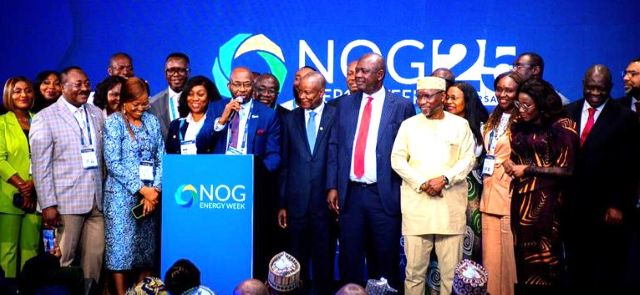
WorldStage– For decades, Nigeria’s energy story was largely written around crude oil. At the 2026 NOG Energy Week in Abuja, however, government officials unveiled a different narrative in which natural gas, supported by policy reforms and strategic investments is expected to drive industrialisation, strengthen energy security, attract global capital and position Nigeria as the energy hub of Africa.
The ministerial panel, featuring Nigeria’s Ministers of State for Petroleum Resources (Oil and Gas) alongside Zimbabwe’s Minister of Energy and Power Development, reflected a broader shift taking place across the continent. The conversation was no longer about whether Africa should participate in the global energy transition, but how the continent can leverage its abundant resources to achieve economic growth while meeting climate objectives.
At the centre of that conversation was Nigeria’s determination to transform its vast gas reserves into a catalyst for development.
Reforms Before Capital
Nigeria’s Minister of State for Petroleum Resources (Oil), Heineken Lokpobiri argued that investment follows confidence rather than mere resource availability.
According to him, the Federal Government has focused on creating a stable and predictable investment climate through reforms that reduce uncertainty and restore investor confidence.
His message was clear: “capital flows to jurisdictions where there is peace, policy consistency and a clear direction.”
Lokpobiri said Nigeria is positioning itself to become not only a reliable supplier of hydrocarbons to international markets but also one of the world’s most attractive destinations for long-term energy investment.
He noted that recent geopolitical developments have reinforced the strategic importance of hydrocarbons, leading to renewed global interest in Nigeria’s upstream sector.
The minister explained that the government’s strategy allows indigenous companies to concentrate on onshore and shallow-water assets where they possess operational advantages and stronger relationships with host communities, while international oil companies deploy their financial strength and advanced technologies in deepwater operations.
That complementary model, he said, is already attracting fresh partnerships and investment commitments.
Gas Takes Centre Stage
If Lokpobiri spoke about creating the right investment environment, Nigeria’s Minister of State for Petroleum Resources (Gas), Ekperikpe Ekpo, focused on what those investments are expected to achieve.
His vision places natural gas at the heart of Nigeria’s economic transformation.
Ekpo maintained that while the global conversation centres on energy transition, developing countries should retain the flexibility to pursue transition pathways that align with their economic realities.
For Nigeria, he said, natural gas represents the most practical transition fuel because of its ability to support cleaner energy while driving industrial development.
He described gas as a strategic national asset capable of powering electricity generation, manufacturing, fertiliser production, transportation and household energy needs.
In his view, gas is no longer simply another petroleum product, it is becoming the foundation of Nigeria’s industrial future.
Infrastructure That Changes Economies
The minister pointed to several flagship projects that demonstrate the government’s commitment to expanding gas utilisation.
The completion of the OB3 (Obiafu–Obrikom–Oben) Gas Pipeline is expected to improve gas evacuation by linking eastern and western supply networks, while the Ajaokuta-Kaduna-Kano (AKK) Gas Pipeline is designed to unlock new industrial and commercial opportunities across Northern Nigeria.
Equally significant is the government’s target of converting about five million households from firewood, kerosene and other biomass fuels to Liquefied Petroleum Gas (LPG), a programme expected to improve public health, reduce deforestation and lower carbon emissions.
These projects, Ekpo explained, are central to the Decade of Gas initiative, which seeks to maximise the country’s estimated 250 trillion cubic feet of proven gas reserves while unlocking additional offshore potential.
Balancing Domestic Growth With Regional Leadership
One of the key policy questions raised during the session was whether Nigeria should prioritise exporting gas or using it domestically to stimulate industrial growth.
Ekpo dismissed the suggestion that both objectives are mutually exclusive.
He disclosed that domestic gas utilisation has grown significantly under the current administration, with increased supplies supporting electricity generation, manufacturing and other productive sectors.
At the same time, Nigeria continues to supply gas to neighbouring countries including Ghana, Togo and the Republic of Benin, while advancing regional pipeline projects connecting Morocco, Algeria, Niger and Equatorial Guinea.
The strategy, he said, is to satisfy domestic demand first while leveraging surplus production to strengthen regional energy integration and generate export earnings.
With around 70 per cent of Nigeria’s electricity generated from gas-fired plants, expanding domestic gas supply remains critical to achieving sustainable economic growth.
Nigeria Emerges as Africa’s Energy Classroom
Beyond discussions on investment and infrastructure, the panel also highlighted Nigeria’s growing influence as a source of technical expertise for emerging petroleum producing countries.
Zimbabwe’s Minister of Energy and Power Development, July Moyo, openly acknowledged that his country is studying Nigeria’s regulatory framework and institutional experience as Zimbabwe prepares for commercial oil and gas production.
He revealed that Zimbabwe has entered production agreements with exploration companies and plans to partner its Mutapa Investment Fund with investors in developing the country’s petroleum resources.
Moyo also disclosed that Zimbabwe is already importing petroleum products from the Dangote Group while exploring broader collaborations in pipelines, cement production and industrial development.
For Zimbabwe, Nigeria’s decades of experience offer valuable lessons on regulation, local content development, technology transfer and investor partnerships.
Beyond Oil, Beyond Transition
The discussions at NOG Energy Week reflected a growing consensus among African policymakers that the continent’s energy future cannot be dictated solely by global climate debates.
Instead, Africa is pursuing an energy transition that supports industrialisation, job creation, energy access and economic resilience.
For Nigeria, that means maintaining investment in oil while aggressively developing natural gas as the country’s next major growth platform.
The country’s expanding gas infrastructure, policy reforms, regional export ambitions and investor-friendly framework are all designed to achieve one objective: transforming abundant natural resources into broad-based economic prosperity.
If the conversations at NOG Energy Week are any indication, Nigeria is no longer presenting gas simply as a transition fuel.
It is positioning gas as the cornerstone of a new industrial economy and inviting Africa to grow alongside it.