






























Lagos State, a vibrant economic hub in Nigeria and a major center for finance, commerce, and industry, driving growth in sectors like technology, entertainment, and manufacturing said its economy has demonstrated significant growth, expanding from ₦33.1 trillion in 2022 to ₦43.1 trillion in 2023, reflecting a 6.59% growth rate.
Lagos State Commissioner for Economic Planning and Budget, Hon. Mosopefoluwa George in his address at the WorldStage Business Forum Q2 2026 and Public Presentation of the WorldStage Nigeria Economic Report Q1 2026 on June 30, 2026 said, Lagos State’s development is guided by the Lagos State Development Plan (LSDP), a comprehensive 30-year roadmap and had recorded a 30.2% year-on-year expansion, contributing 18.73% to Nigeria’s national GDP.
This is coming as the Abuja Chamber of Commerce and Industry (ACCI) expressed commitment to working with government, development partners, and the private sector to build a more resilient, competitive, and globally aligned Nigerian economy.
Hon George who was represented by Mr Olufemi Orojimi, Director Budget said, “Under this plan, the current administration’s economic agenda has been encapsulated in the “THEMES+ Agenda.”
He listed economic challenges, reforms, and impact on residents to include impact of national policies and global uncertainties, fuel subsidy removal, and exchange rate unification.

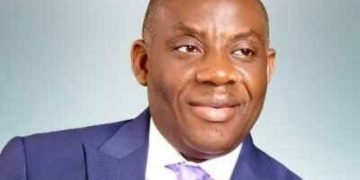
Mr Olufemi Orojimi, Director Budget, Lagos State delivering the speech of Lagos State Commissioner for Economic Planning and Budget, Hon. Mosopefoluwa George at the WorldStage Business Forum Q2 2026 and Public Presentation of the WorldStage Nigeria Economic Report Q1 2026 on June 30, 2026.
“The Lagos economy is influenced by national policies such as the removal of the fuel subsidy and the unification of exchange rates. It is also affected by global events, including the Russia-Ukraine war, instability in the Middle East, and geopolitical tensions,” he said.
“The removal of the fuel subsidy has led to a significant rise in the price of Premium Motor Spirit (PMS), which has increased household expenses (particularly food and transportation costs) and raised production costs for businesses.
“ Lagos, being the hub for many of Nigeria’s economic activities, has been impacted by the unification of foreign exchange rates. Firms involved in the importation of goods and production inputs have experienced cost pressures due to the need for foreign currency.”
Despite the challenges, he said the state had achieved tremendous successes in the transport sector, human capital development, education sector, health sector.
“To mitigate these challenges, the Lagos State Government has implemented a series of impactful reforms across various sectors, demonstrating leadership and innovation,” he said.
“The government has embraced an integrated transport system to enhance mobility across the state.
“Significant investments have been made in the Lagos rail mass transit system, including the development of the blue, red, and planned green metro lines. This remains a major win and achievement for the State.
“Efforts to expand inland water transport have been robust, particularly through the “OMI-EKO” project. This initiative includes the commissioning of the Ilashe Jetty and the establishment of 16 new terminals/jetties to boost water transportation.
“The introduction of 5,000 new smart taxis under the LAGRIDE initiative, which includes 1,000 electric vehicles, represents a $260 million investment in the state’s economy. This initiative reduces dependence on fossil fuels and lowers the state’s carbon footprint.
“These developments have significantly reduced travel time across Lagos, improving economic efficiency and positioning the state as a model for innovation and sustainable growth for other regions in Nigeria.”
On food security in Lagos State, he said the government had launched several key initiatives, including the establishment of food hubs and the commissioning of a 35-metric-tonne Lagos Rice Mill.
“Additionally, efforts to empower farmers within the agricultural value chain are ongoing, along with the construction of a state-of-the-art central food logistics hub,” he said
“We have partnered with Niger State under the “Produce for Lagos” initiative, which aims to ensure a steady supply of food to the state. Moreover, the government has constructed 13.16 kilometers of farm access roads, established 15 cottage processing centers for farmers, and trained 51,476 Lagos residents in agripreneurship across various departments, agencies, and agricultural value chains.”
He also spoke on the support that the government gave to for businesses, saying, “Our government has introduced structured interventions to support businesses, particularly small and medium-sized enterprises (SMEs), and promote economic resilience.”
He listed some of the government interventions to include loans worth ₦579.2 million to 741 MSMEs across all Local Government Areas (LGAs), with 63% of the recipients being female-led businesses; total of 2,493 young people received vocational training, with 1,566 successfully placed in jobs; 1,196 MSMEs benefited from grants totalling ₦270.9 million under the Lagos CARES initiative, providing much-needed financial relief; support for the tech sector includes assistance to 148 techpreneurs with access to well-equipped workspaces and incubation of 51 early-stage startups; mobilized 10,981 individuals through grassroots engagement programs and offered business support services to over 10,000 entrepreneurs, strengthening the local economy and fostering entrepreneurship across the state.
“These interventions have mitigated the adverse effects of exchange rate unification and rising costs on individuals and businesses, promoting economic stability and growth in Lagos State,” he said.
On his part, Chief Emeka Obegolu, President, Abuja Chamber of Commerce & Industry (ACCI) who addressed the Business Forum said the Chamber remained firmly committed to promoting a business environment where enterprise can thrive.
“We continue to serve as a bridge between the private sector and government, advocating for reforms,” he said.
He made key observations from Nigeria’s Q1 2026 economic performance quoting recent data from the National Bureau of Statistics which indicated that Nigeria recorded real GDP growth of 3.89% year-on-year, an improvement over 3.13% in the corresponding period of 2025. This reflects continued resilience in the face of persistent macroeconomic challenges.
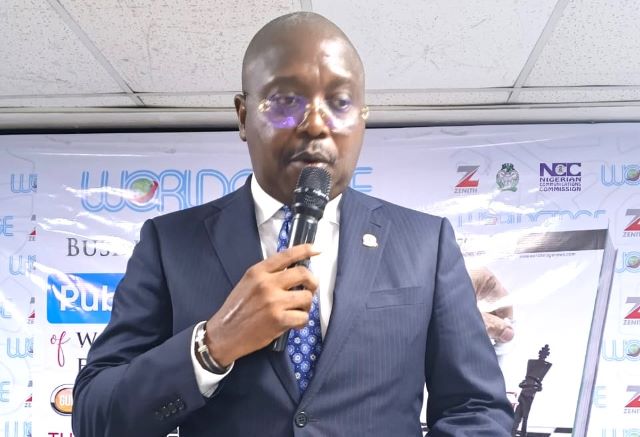
Chief Emeka Obegolu, President, Abuja Chamber of Commerce & Industry (ACCI) addressing the WorldStage Business Forum Q2 2026 and Public Presentation of the WorldStage Nigeria Economic Report Q1 2026 on June 30, 2026.
“The non-oil sector remains the primary driver of growth, contributing over 96% of total GDP. Key performing sectors include: Information and Communication, Financial Services, Construction, Agriculture, which has shown notable recovery, Manufacturing, particularly cement production.
“These developments reinforce the gradual shift of the economy toward a more diversified structure, supported by ongoing reforms.
“However, we must also acknowledge persistent structural challenges affecting growth and competitiveness. These include: Rising inflation and reduced household purchasing power, High energy and logistics costs impacting production, Security challenges affecting agriculture and supply chains, Limited access to affordable credit for businesses, especially MSMEs, and Continued dependence on crude oil for foreign exchange earnings despite non-oil sector expansion.”
He said these constraints highlighted the need for deeper structural transformation if growth is to be sustainable and inclusive.
He provided key economic outlook that “while the current growth trajectory is encouraging, it remains fragile and uneven. Strengthening economic resilience will require Sustained investment in infrastructure, Improved security for productive sectors, particularly agriculture, Expanded access to finance for SMEs, Policy consistency to build investor confidence, Accelerated industrialisation and value addition, and Greater diversification of export earnings.
“Only through these measures can Nigeria fully unlock its economic potential and reduce vulnerability to external shocks.”
He concluded that the Q1 2026 economic performance reflected cautious progress, “however, progress alone is not sufficient—we must ensure that growth translates into jobs, productivity, and shared prosperity.”
He therefore commended WorldStage Limited for consistently providing this important platform for dialogue between policymakers, the private sector, and development partners, saying, “this initiative and encourage all stakeholders to actively contribute to the discussions that will shape our economic future”.
He said platforms such as this “are essential for strengthening evidence-based decision-making and improving the quality of economic governance in our country.”
On the theme of this year’s forum, “Nigeria’s Corporate Culture and Global Standard,” he said it was both timely and compelling.
“It speaks directly to the urgent need for Nigerian businesses to strengthen governance, improve productivity, embrace innovation, and align with global best practices if we are to remain competitive in an increasingly integrated global economy.”
Prof. Lere Baale, CEO, Business School Netherlands International, in his presentation as a Guest Speaker at the Forum said leading organisations in Europe, North America, Asia, or emerging economies have been consistently investing in culture, a pattern that Nigeria cannot ignore.
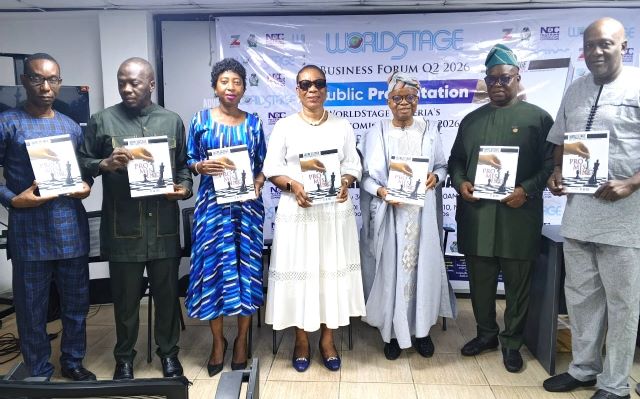
Mr Segun Adeleye, President/CEO, World Stage Limited in his opening remark at the Business Forum said I’m also happy that we have our 196 page WorldStage Nigeria’s Economic Reports Q1 titled ‘Promising’ ready for presentation.”
He said Nigeria’s economy in Q1 2026 as captured in WorldStage Nigeria’s Economic Reports Q1 showed promising signs of improvement, with various sectors experiencing growth and resilience.
“The report offers a comprehensive macroeconomic overview, including regulatory changes, GDP growth, inflation rate, exchange rates, and monetary policy updates. Analysis of all key sectors including oil and gas, agriculture, manufacturing, banking, insurance, and capital market updates also took center stage,” he said.
“Another new dimension to the report is the inclusion of ‘IN WORLDSTAGENEWS.COM’, comprising some business stories published on our news website during the Q1.
“The Q1 report is also enriched by contributions from industry experts such as Dr Muda Yusuf, Alliance for Economic Research and Ethics LTD/GTE, Sea Empowerment & Research Center (SEREC), Sam. Caulcrick, Dr. Joy Ogaji, ESV. Olufemi Adedamola Oyedele, and Mr Luna Bawa.
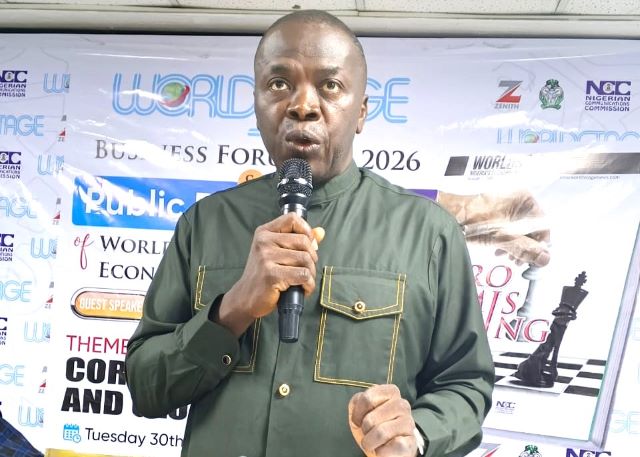
Mr Segun Adeleye, President/CEO, World Stage Limited delivering his opening remark at the WorldStage Business Forum Q2 2026 and Public Presentation of the WorldStage Nigeria Economic Report Q1 2026 on June 30, 2026.
“There is no doubt that as the economy continues to expand, operators will need credible information as detailed in this report to make informed investment decisions.
“For us to sustain this report and the momentum, we definitely need corporate supports. Apart from launching this report with good money here, we will be knocking on your doors to agree on how we can collaborate and sustain the noble idea.
“Meanwhile, work has started on our Q2 2026 report which will provide actionable insights for policymakers, businesses, and investors, informing strategies for growth and development. We are looking forward to seeing you soon at the Q3 Business Forum for its launch.”