





































By Abiodun Folarin
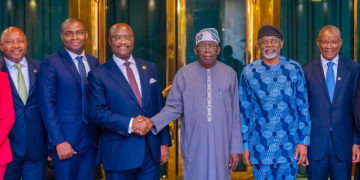
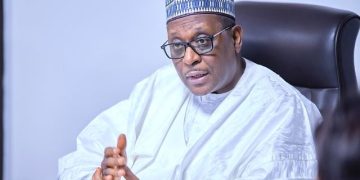
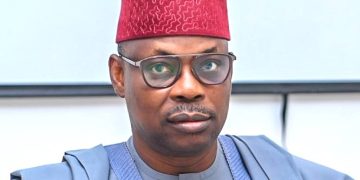
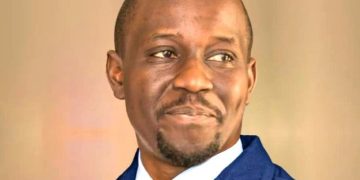
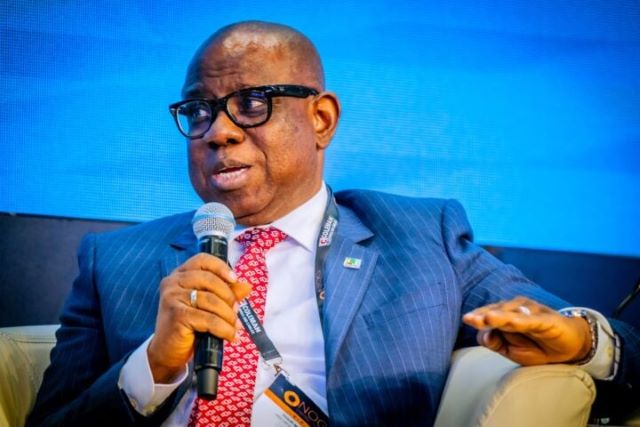
WorldStage— The Group Chief Executive Officer of the Nigerian National Petroleum Company (NNPC) Limited, Engr. Bashir Bayo Ojulari, has called for stronger collaboration across Nigeria’s energy industry to unlock Africa’s vast energy potential, as the Federal Government reaffirmed its ambition to transform the country into a gas powered economy under reforms introduced by the Petroleum Industry Act (PIA) 2021.
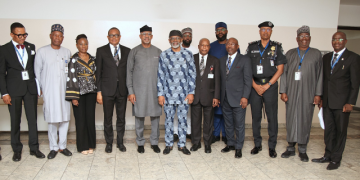
Speaking at the opening of the 25th NOG Energy Week at the Bola Ahmed Tinubu International Conference Centre in Abuja on Tuesday, Ojulari said strategic partnerships across the energy value chain would be critical to attracting investment, accelerating industrialisation and delivering sustainable economic growth.
He said no single organisation could unlock Africa’s enormous energy potential, urging governments, investors, regulators, financiers, academia, national oil companies and service providers to move beyond transactional relationships to long-term strategic partnerships.
“At NNPC Limited, we see ourselves not just as an energy producer but as an ecosystem builder connecting capital, technology, policy, talent and markets to create lasting value for Nigeria and Africa,” Ojulari said.
He noted that despite Africa holding about 17 per cent of global natural gas reserves, alongside significant oil and renewable energy resources, the continent continues to attract only a small share of global energy investments due to fragmented collaboration among key stakeholders.
“The future of African energy will not be determined solely by the resources beneath our soil, but by the quality of the partnerships we forge above it. The opportunity before us is extraordinary. The responsibility is ours. And the time to act is now,” he added.
Highlighting NNPC’s performance over the past year, Ojulari disclosed that the company recorded an average 98 per cent recovery across its five crude oil export terminals between April 2025 and May 2026, a sharp improvement from operational lows of about one per cent recorded at the Bonny Oil and Gas Terminal in June 2022.
He also announced that Nigeria’s crude oil production had risen to 1.71 million barrels per day, the highest level in five years, while NNPC Exploration and Production Limited (NEPL) achieved a record production of 365,000 barrels per day.
According to him, gas production reached 7.5 billion standard cubic feet per day following the successful completion of the River Niger crossing on the Ajaokuta-Kaduna-Kano (AKK) Gas Pipeline and the commissioning of the ANOH Gas Processing Plant.
Ojulari further revealed that NNPC maintained 100 per cent compliance with all Joint Venture cash call obligations throughout 2025 and up to June 2026, while sustaining efforts to increase crude oil production to two million barrels per day.
He said the company had signed landmark Gas Sale and Purchase Agreements (GSPAs) covering 1.29 billion standard cubic feet per day for long-term LNG feed gas and 750 million standard cubic feet per day for domestic industrial gas supply to DFL FZE and Dangote Refinery.
“These agreements represent more than US$20 billion in associated investments, with seven additional commercial transactions in the pipeline,” he said.
Ojulari also disclosed that NNPC resumed full monthly remittances to the Federation Account in July 2025, reinstated monthly business performance reporting and hosted its first-ever earnings call in November 2025 as part of efforts to strengthen transparency, accountability and investor confidence.
Also speaking at the conference, the Minister of State for Petroleum Resources (Gas), Ekperikpe Ekpo, said reforms under the Petroleum Industry Act had replaced regulatory uncertainty with a transparent and investor-friendly framework, restoring investor confidence in Nigeria’s gas sector.
“We are moving from a nation that simply processes gas to a nation that is entirely powered by gas,” Ekpo said.
He noted that Nigeria’s estimated 215 trillion cubic feet of natural gas reserves the largest in Africa position the country to strengthen global energy security while driving domestic industrialisation.
Ekpo disclosed that the AKK gas pipeline had been laid and would be commissioned before the end of the year, alongside the completion of the OB3 gas project.
“What is remaining is to cross the T’s and dot the I’s and hand over the project for commissioning before the end of this year,” he said.
The minister also said the Nigeria LNG Train 7 expansion project would increase production capacity from 22 million tonnes per annum to 30 million tonnes upon completion.
He highlighted the National Clean Cooking Programme, which targets the distribution of liquefied petroleum gas (LPG) to five million households by 2030, and the Presidential Compressed Natural Gas (CNG) Initiative, which is expected to reduce transportation costs by up to 50 per cent.
On regional energy integration, Ekpo reaffirmed Nigeria’s commitment to the Trans-Saharan Gas Pipeline and the West African Atlantic Gas Pipeline, projects designed to expand Nigerian gas exports to North African, European and West African markets.
He also described Nigeria’s admission as an association country of the International Energy Agency (IEA) on July 2, 2026 the first member of OPEC to attain the status as a strong signal of growing international confidence in the country’s energy reforms.
“Nigeria is open for business, and we have established a stable, competitive, and highly predictable investment environment,” the minister said.
Now in its 25th edition, NOG Energy Week remains Africa’s premier oil, gas and energy conference, bringing together policymakers, global energy leaders, investors and industry stakeholders to shape the future of energy, sustainability and industrial development across the continent.