


























































Nigeria’s digital transformation faces risks as nearly 40 per cent of states lack local Internet Service Providers (ISPs), widening the digital divide, stakeholders warned.
The concerns were raised on Wednesday at the fifth IoT West Africa Conference and Exhibition 2026 in Lagos, where experts examined connectivity gaps and infrastructure challenges.
The panel focused on ‘From Connectivity to Cognitive Infrastructure: How Telecom and Internet Leaders Are Architecting West Africa’s AI-Integrated IoT Future’.
The News Agency of Nigeria (NAN) reports the conference runs from April 28 to April 30, bringing together industry leaders and policymakers.
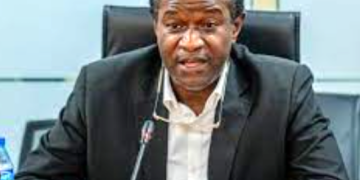
Mr Muhammed Rudman, Chief Executive Officer of IXP Nigeria, identified limited ISP presence as a major barrier to digital inclusion nationwide.
He said about 40 per cent of states lacked a single local ISP due to high transmission and infrastructure deployment costs.
“The cost of connectivity remains high because operators bear huge expenses in fibre deployment, security and maintenance.
“Without affordable backbone infrastructure, smaller ISPs cannot thrive,” Rudman added, calling for open-access national fibre infrastructure.
He urged government-backed investments and subsidies to support a nationwide open-access fibre network and boost competition.
Rudman expressed optimism about the Federal Government’s “Project Bridge”, noting it could significantly reduce connectivity costs if effectively implemented.
Mr Ina Alogwu, Chief Digital and Innovation Officer of T2 Mobile, highlighted the role of Artificial Intelligence and IoT in improving operational efficiency.
He cited the airline industry, where cognitive infrastructure and digital twins monitor aircraft performance and predict maintenance needs in real time.
According to him, similar models can improve telecommunications service delivery and enhance customer experience.
“For instance, cognitive digital twins can identify network faults and resolve issues proactively,” he said.
Alogwu added that such systems could optimise energy use, cut costs and enable personalised services.
Stakeholders, however, stressed that foundational connectivity challenges must be addressed before advanced technologies can deliver meaningful impact.
Mr Debo Dauda, Head of Network at Infratel, said urban infrastructure models were ineffective in rural areas.
“Rural connectivity requires a different approach, with last-mile access posing major challenges,” he said.
Dauda noted that rural deployment was often not commercially viable without policy support and targeted incentives.
He called for infrastructure sharing policies and linking connectivity projects to economic activities in rural communities.
“Connectivity must be tied to services such as telemedicine, e-commerce and mobility solutions to ensure sustainability,” he added.
Stakeholders also advocated a “dig-once” policy, integrating fibre ducts into road construction to reduce repeated excavation and disruptions.
They emphasised the importance of local internet exchange points in reducing latency for AI and IoT applications requiring real-time processing.
Routing internet traffic locally, they said, would improve speed, reduce delays and enhance service delivery across sectors.
“Latency is critical for applications such as remote healthcare and smart transport systems,” a participant said.
The panel identified organisational and skills gaps as major constraints to digital transformation efforts.
They noted poor coordination between data and operations teams, alongside limited understanding of emerging technologies among decision-makers.
To address this, organisations announced plans for capacity building, collaboration and restructuring initiatives.
A commitment was made to train 1,000 professionals in AI and data infrastructure over the next two years.
Stakeholders stressed that stronger collaboration between government, regulators and the private sector was essential.
They warned that without clear policies and measurable targets, Nigeria risked widening its digital divide despite growing investment in AI and IoT.
The conference was organised by Vertex Next, a subsidiary of the Vertex Group.





