


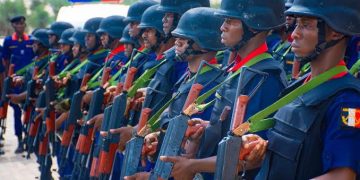













































Troops of the Nigerian Army’s Bravo Company, 159 Battalion, have arrested 13 suspected members of a Boko Haram logistics network in the country’s north eastern Kanama area of Borno State.
The Boko Haram logistics network in Borno State is a sophisticated and resilient system that has evolved from a local religious study group into a complex insurgent supply chain.
According to reports shared by security analyst Zagazola Makama, the operation occurred during a routine stop-and-search exercise.
The group consisted of 12 men and one woman travelling in a Toyota pickup vehicle toward Dekwa.
Two of the male suspects were found with gunshot wounds, with preliminary investigations suggesting they were part of a group ambushed by troops a day earlier while attempting to move supplies to a terrorist camp in the Usmadi axis.
Troops seized eight torchlight mobigle phones from the suspects, which are expected to provide intelligence for further investigations.
The insurgents’ logistics network relies heavily on a web of civilian collaborators, geographic advantages, and diversified smuggling routes to sustain operations in the face of intense military pressure from Operation HADIN KAI.
The network is built on several pillars that allow the group to bypass conventional security measures, including civilian collaborators and suppliers.
The group employs a network of “logistics suppliers”—often local civilians driven by either ideological alignment or economic hardship. These individuals transport critical items like food (rice, biscuits, corn flour), fuel (PMS and AGO), and cash to insurgents in remote areas.
Supplies are often sourced from local markets, such as the Cross Kauwa Market in Mongunu, where items like prayer beads, grains, and livestock are purchased and then smuggled to terrorist enclaves.
The network utilizes the difficult terrain of the Sambisa Forest, the Lake Chad Basin, and the Mandara Mountains to hide supply caches and movement.
Logistics are often moved under the guise of “normal waybill logistics,” using commercial vehicles and motor parks (like Madagali and Damasak) to transport sensitive items like military uniforms, high-voltage batteries, and even drones.
The network’s foundations were laid in the early 2000s in Maiduguri when Mohammed Yusuf established a religious complex and school in in the town that served as a recruiting ground and early organizational hub.
Following the death of Yusuf and a massive military clampdown, the group went underground, dispersing into the countryside and refining its ability to coordinate activities across remote locations.
At its peak between 2014 to 2015, the group controlled territory the size of Belgium, allowing for more overt logistics.
After losing its major territories, the group reverted to a highly mobile, decentralized logistics model that relies on small-scale smuggling and “strangulation-resistant” supply lines.
Its critical supplies transported include fuel (petrol and diesel), solar panels, generators, and communication equipment (drones, batteries).
For sustenance, bulk bags of rice, maize, and processed snacks, assorted drugs and first aid items for treating injured combatants are also supplied in many instances by motorcycles and tricycles, which are the primary modes of transport through difficult terrain.