













































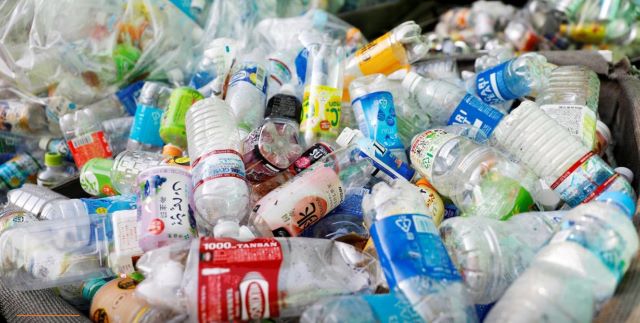
WorldStage– The Federal Government of Nigeria, United Nations Development Programme (UNDP) and Digital Peers International (DPI) have reaffirmed commitment to supporting youth-led innovation, digital technology and partnerships to combat plastic pollution and promote Nigeria’s circular economy.The commitment was reiterated on Monday in Abuja at the close of the Global Environment Facility Small Grants Programme-supported Plastic Waste Solutions 2.0 Project implemented by DPI with support from UNDP.
Speaking virtually, Dr Ibironke Olubamise, National Coordinator of the UNDP GEF-SGP, said the project empowered hundreds of young Nigerians with practical knowledge and digital skills to tackle plastic waste.
Olubamise said the initiative reflected UNDP’s belief that sustainable environmental solutions were most effective when community-driven, locally owned and strengthened through strategic partnerships among key development stakeholders nationwide.
“Young people have been equipped with practical knowledge and skills to build innovative solutions, while digital platforms have been developed to support environmental learning and circular economy activities,” she said.
According to her, the project generated valuable research and evidence to guide future environmental interventions, while many innovations developed by participating youths showed strong potential for commercial viability.
She emphasised the need for sustained investment, mentorship and enterprise development to enable innovations evolve from prototypes into scalable businesses capable of creating jobs and delivering environmental benefits.
Olubamise underscored the importance of documenting lessons learned through the project’s knowledge management process to strengthen future environmental programming and improve implementation outcomes across the country.
“As we move forward, sustaining the gains of this project will require continuous collaboration among government institutions, development partners, the private sector and communities.
“Young people, who remain at the heart of this initiative, must also continue to be actively engaged,” she said.
Also speaking, Dr Ibukun Odusote, Chief Executive Officer of DPI, described the project’s completion as the beginning of a broader effort to build a sustainable innovation ecosystem.
Odusote said the true measure of success would be the ability of innovations developed by participants to grow into sustainable enterprises creating jobs and solving environmental challenges.
“Our success will not be measured simply by the number of activities completed.
“It will be measured by how these ideas grow into market-ready solutions that create impact beyond the lifespan of the project,” she said.
According to her, the project deliberately focused on building long-term systems through institutional strengthening, digital innovation and youth empowerment rather than relying on temporary interventions.
She disclosed that the innovation challenge attracted 46 concepts from young Nigerians, with the best ideas emerging after rigorous technical evaluation by experts from various sectors.
Odusote added that DPI would establish a structured innovation support programme providing mentorship, business development services, prototype refinement and investment-readiness coaching for participating young innovators nationwide.
She said the programme would also offer enterprise registration support, product testing, market access opportunities and strategic partnerships to help participants commercialise their innovations successfully.
Odusote expressed confidence that many beneficiaries would emerge as leaders of Nigeria’s growing green economy, contributing significantly to environmental sustainability and inclusive economic development.
She highlighted the Green Genius App and Eco Trade Hub developed under the project, noting that both platforms would continue supporting environmental education and circular economy activities.
Odusote called for stronger collaboration with government institutions to scale up innovations capable of converting plastic waste into construction materials and other value-added products nationwide.
“Our responsibility now is to build on these foundations through innovation, sustained collaboration and investment.
“This project has not merely responded to today’s environmental challenges; it has created a foundation for tomorrow’s solutions,” she said.
Mr Umaru Murtala, Senior Scientific Officer, Department of Pollution Control and Environmental Health, Federal Ministry of Environment, said the ministry provided technical guidance and policy support throughout implementation.Murtala described the initiative as one of the most impactful youth-focused environmental programmes supported by the ministry, noting participants developed technology-based solutions in spite of initially lacking digital skills.