











































WorldStage– The Federal Government of Nigeria is partnering with the Organisation for Economic Cooperation and Development (OECD) to enhance access to quality seeds for Nigerian farmers.
The collaboration is part of broader efforts to strengthen food and nutrition security across the country.
The OECD Seed Schemes provide an international framework for certifying the varietal identity and purity of agricultural seeds in global trade.
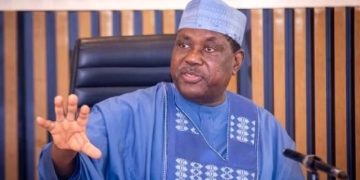
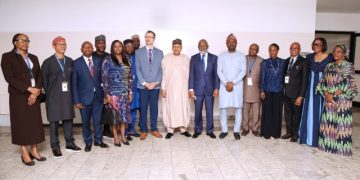
Sen. Aliyu Abdullahi, Minister of State for Agriculture and Food Security, said this during a meeting with the OECD Evaluation Mission Team on Monday in Abuja.
Abdullahi emphasised the importance of affordable, quality seeds in achieving food security, in line with President Bola Tinubu’s Renewed Hope Agenda.
“If we are to guarantee food security, farmers must have access to affordable quality seeds at all times. That is why this scheme is in place.
“We are committed to year-round farming, expanding irrigation, and adopting seed varieties that thrive under irrigation systems,” he said.
The minister added that the administration was focused not just on food security, but also on food sovereignty, emphasising the need for Nigerians to produce what they eat and eat what they produce.
Earlier, Mr Fatuhu Buhari, Director-General of the National Agricultural Seeds Council (NASC), explained that 64 countries currently participated in the OECD Seed Schemes, with Nigeria becoming the 62nd member in October 2022.
“This visit is part of a post-accession evaluation. Another review is scheduled for 2026.
“In spite of being new to the scheme, Nigeria now serves as Secretary of the OECD Africa Forum, reflecting our leadership role on the continent.”
Buhari added that Nigeria had trained seed system actors from Gambia, Sierra Leone, Liberia, Rwanda, Congo, and Benin Republic, showcasing Nigeria’s technical capacity.
He also highlighted Nigeria’s vast arable land and favorable agroecological zones as attractive to international seed companies aiming to serve African and Middle Eastern markets.
“Nigeria’s diverse climate allows us to produce nearly all types of seeds.
“Our strategic location within ECOWAS also gives us the leverage to influence more countries to join the scheme,” he said.
In his remarks, Mr Christophe Rouillard, OECD Seed Schemes Officer, said the collaboration would contribute to economic growth, improved seed quality, and greater food security in Nigeria.